
Varicella Immunity for I-693: What Immigrants Must Bring
For Form I-693, USCIS accepts three types of proof of varicella immunity: documented vaccination records showing age-appropriate doses with dates, laboratory evidence of immunity via a VZV IgG blood test, or a healthcare-provider-verified history of chickenpox disease supported by an epidemiologic link or contemporaneous medical records. Bring originals and translated copies to your civil surgeon appointment. If your only evidence is a vague childhood memory of having chickenpox, plan for a titer test or vaccination before you go.
The two governing authorities are USCIS vaccination requirements and the CDC Technical Instructions for Civil Surgeons. Civil surgeons record varicella immunity in Part 10 of Form I-693 and seal the completed form for USCIS submission.
- Acceptable proof option 1: Vaccination records with vaccine name, dates, and provider or clinic name
- Acceptable proof option 2: Lab report showing a positive VZV IgG result (test name, result, lab name, date)
- Acceptable proof option 3: Written provider verification of varicella disease, backed by an epidemiologic link or medical records
- If none of the above: The civil surgeon will order a titer or administer the required vaccine doses
Key Takeaways
Acceptable proof of varicella immunity for Form I-693 is vaccination records with dates, a positive VZV IgG lab result, or a written provider-verified history of disease backed by an epidemiologic link or medical records.
| Point | Details |
|---|---|
| Three accepted proof types | Vaccination records with dates, positive VZV IgG lab result, or provider-verified history of disease with supporting evidence. |
| Titer sensitivity limit | Commercial VZV IgG assays can miss vaccine-induced immunity; a negative result in a vaccinated person warrants discussion with the civil surgeon. |
| Vaccination schedule for adults | Two doses are required for school-age children, adolescents, and adults without evidence of immunity, with the second dose given 4–8 weeks after the first. |
| Key exemptions | Varicella vaccine is contraindicated in pregnancy and for immunocompromised applicants; lab evidence of immunity can satisfy the requirement without new doses. |
| Immigrationmedicalexams | Offers on-site VZV IgG titer coordination, vaccination administration, and sealed I-693 delivery in 2–3 business days at Southern California clinics. |
Table of Contents
- What counts as evidence of varicella immunity for the I-693?
- When should you get a VZV titer vs. getting vaccinated?
- What should you bring to your civil surgeon appointment?
- How does a civil surgeon record varicella immunity on Form I-693?
- Special situations: pregnancy, immunocompromise, healthcare workers, and the birth-before-1980 rule
- Top documentation problems that delay I-693 processing
- How Immigrationmedicalexams handles varicella proof and your sealed I-693
- Sources
What counts as evidence of varicella immunity for the I-693?
USCIS and the CDC recognize three categories of acceptable proof, and each has specific document requirements that civil surgeons check before completing Part 10.
Vaccination records
Your immunization card or clinic printout must show the vaccine name (varicella or Varivax), the date each dose was given, and the name of the provider or clinic that administered it. A handwritten card without a clinic stamp is weaker than a printed clinic record, though civil surgeons can accept either when the required fields are present. If your records are from another country, a plain translated copy is usually sufficient, but a certified translation is required when the original is in a non-Roman script or when the document is a formal medical certificate rather than a routine immunization card.
Laboratory evidence of immunity
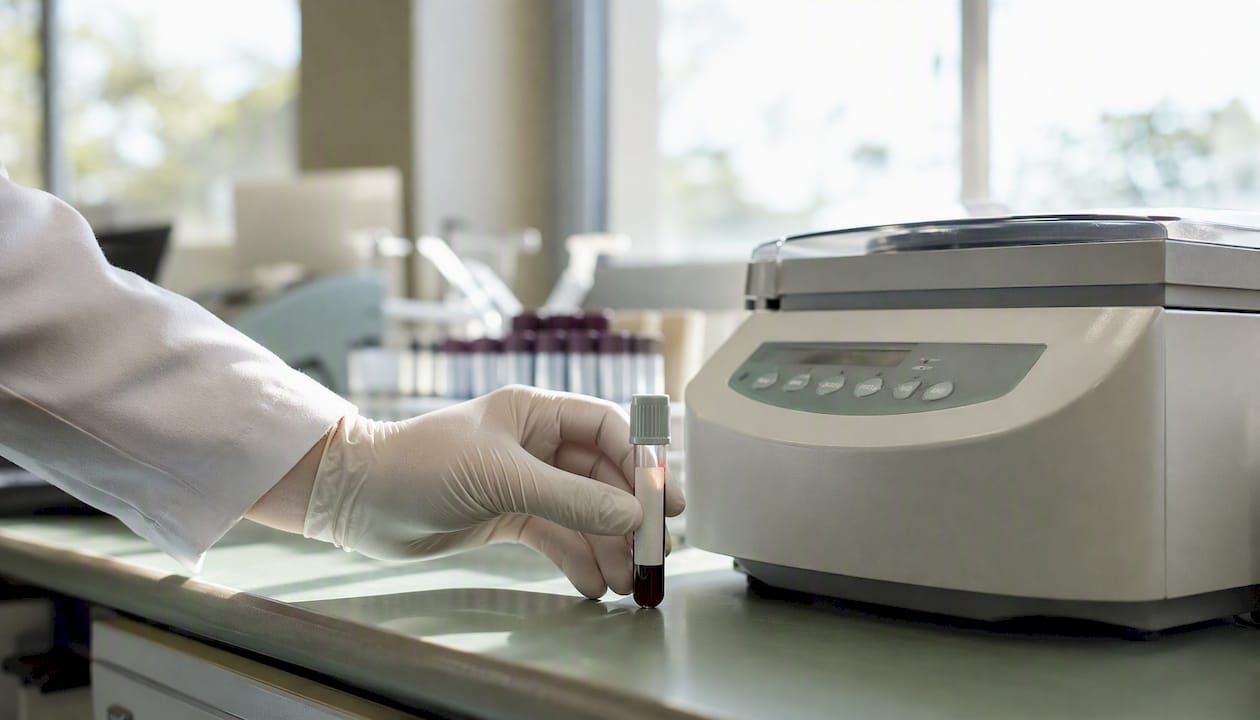
A VZV IgG blood test is the standard lab confirmation. The report you bring should show the assay name, a qualitative result (reactive/positive or non-reactive/negative), the reference range, the lab’s name and CLIA number, and the collection date. A result marked “reactive” or “positive” satisfies the civil surgeon’s requirement for lab evidence of immunity.
Provider-verified history of disease
A written note from a physician, school nurse, or public health official stating that you had chickenpox is acceptable only when it is supported by an epidemiologic link to a confirmed case or by contemporaneous medical records showing the typical varicella rash. A parent’s recollection passed along verbally does not meet this standard. State public health forms, such as the Texas DSHS form for documenting history of varicella, illustrate the fields a provider letter should include: patient name, date of illness, clinical description, and provider signature.
Translations and certified copies
A plain English translation is acceptable for most foreign-language immunization cards. Certified translations are required for formal medical certificates or documents in non-Roman scripts. Bring both the original and the translation; civil surgeons need to see the source document.
Pro Tip: When calling a former clinic or school for records, ask specifically for a letter on clinic letterhead that states the vaccine name, each dose date, and the provider’s name and license number. That format matches exactly what civil surgeons look for in Part 10.
When should you get a VZV titer vs. getting vaccinated?
The choice between a titer test and vaccination comes down to what records you have and how much time you have before your appointment.
What a VZV IgG titer shows
A VZV IgG blood test detects antibodies to the varicella zoster virus. A positive result means your immune system has encountered the virus, either through natural infection or vaccination. Civil surgeons accept a positive IgG result as laboratory evidence of immunity and document it in Part 10 without requiring additional doses.
The sensitivity limitation you need to know
Here is the catch: commercial VZV IgG assays can produce false-negative results in people who were vaccinated rather than naturally infected. Vaccine-induced antibody levels are often lower than those from natural disease, and some assays are not sensitive enough to detect them. If your titer comes back negative but you know you received two doses of varicella vaccine, discuss this with your civil surgeon before accepting a repeat vaccination schedule.
Vaccination schedule when no evidence exists
When neither records nor a positive titer can be produced, CDC and ACIP recommend the following:
- Preschool-age children (12 months to 3 years): 1 dose is sufficient for this age group under certain schedules
- School-age children, adolescents, and adults: 2 doses, with the second dose given 4–8 weeks after the first
The second dose timing matters for your I-693 timeline. If you need two doses, schedule your civil surgeon appointment at least 8 weeks after your first shot, or ask the civil surgeon whether an operational waiver applies to your situation.
Titer vs. vaccination: practical decision guide
| Situation | Recommended path |
|---|---|
| No records, no memory of chickenpox | Order VZV IgG titer first; vaccinate if negative |
| Vaccinated abroad, records unavailable | Order titer; if negative, discuss with civil surgeon before re-vaccinating |
| Records show 1 dose only | Civil surgeon will likely administer second dose |
| Positive titer result in hand | Bring lab report; no vaccination needed |
| Negative titer, confirmed prior vaccination | Discuss assay sensitivity with civil surgeon |
Pro Tip: Ask your civil surgeon whether they can order the VZV IgG titer on-site. Many immigration clinics coordinate lab draws the same day, which saves you a separate lab visit and speeds up the overall timeline. See titer testing for immigration exams for what to expect from the lab report.
What should you bring to your civil surgeon appointment?
Gathering the right documents before you arrive is the single most effective way to avoid delays. The Department of State advises immigrant visa applicants to have vaccination records ready before the medical exam, and the same logic applies to adjustment-of-status applicants.
Ready-to-hand documents at check-in
- Original immunization card or clinic printout showing varicella vaccine name, dates, and provider
- Translated copy of any foreign-language records (certified translation for formal certificates or non-Roman scripts)
- VZV IgG lab report (if you had a titer drawn), showing assay name, result, reference range, lab name, and collection date
- Provider verification letter for history of varicella disease, on letterhead with clinical description and provider signature
- Government-issued photo ID and appointment confirmation
- Any prior Form I-693 if you have had a previous immigration medical exam
- Prior medical records showing hospitalization or lab confirmation of chickenpox, if available
For a full document checklist, see what to bring to your immigration medical exam.
Handling foreign records
Bring the original document alongside the translation. Civil surgeons need to see the source. If your records carry a foreign clinic stamp but are otherwise in English, no translation is needed. For records in Arabic, Chinese, Korean, Russian, or other non-Roman scripts, a certified translation from a qualified translator is required. When requesting records from a former clinic abroad, ask for a letter that includes the patient’s full name, date of birth, vaccine name, lot number if available, and each dose date.
Pro Tip: When contacting a former provider for records, use this phrasing: “Please provide an official immunization record or letter on clinic letterhead listing the vaccine name, each dose date, and the administering provider’s name and credentials.” That language produces a document civil surgeons can use directly. For more guidance on requesting medical records for your exam, Immigrationmedicalexams has a dedicated resource.
How does a civil surgeon record varicella immunity on Form I-693?
Part 10 of Form I-693 is where the civil surgeon documents every vaccine-related finding. Understanding what gets written there helps you confirm your form is complete before it is sealed.
- Record review. The civil surgeon reviews your vaccination records, lab reports, or provider letter and determines which evidence category applies.
- Part 10 entry for documented vaccination. The surgeon enters the vaccine name, each dose date, and whether the series is complete. If a dose is missing, the surgeon either administers it on the spot or notes that the applicant must return.
- Part 10 entry for lab-confirmed immunity. The surgeon notes the VZV IgG result, the lab name, and the collection date. No vaccination is required.
- Part 10 entry for provider-verified history. The surgeon documents the history of disease, the supporting evidence (epidemiologic link or medical records), and confirms the standard is met per CDC Technical Instructions.
- Waiver or deferral notation. If a live vaccine like varicella is contraindicated (pregnancy, immunocompromise) or if an insufficient time interval applies, the surgeon annotates the reason in Part 10 and may use a blanket waiver to avoid delaying the exam.
- Sealing. Once Part 10 is complete, the civil surgeon signs and seals the I-693 envelope. USCIS officers use these annotations in admissibility determinations, as explained in USCIS Policy Manual Chapter 9.
A civil surgeon documenting a positive VZV IgG titer might write: “Varicella: Lab evidence of immunity. VZV IgG reactive [Lab Name], [Date]. No vaccination required.” For a completed two-dose series, the entry would list each dose date and mark the series complete. For a deferred vaccine due to pregnancy, the entry would note the contraindication and the expected follow-up requirement.
Keep your personal copy of the completed I-693 before it is sealed. If USCIS requests additional documentation or the form expires before a decision is made, that copy is your reference.
Special situations: pregnancy, immunocompromise, healthcare workers, and the birth-before-1980 rule
Not every applicant follows the standard vaccination path. Several medical and demographic situations change how varicella immunity is handled on Form I-693.
- Pregnancy. Varicella vaccine is a live attenuated vaccine and is contraindicated during pregnancy. The civil surgeon documents the contraindication in Part 10 and defers vaccination. The applicant will need to receive the vaccine after delivery and may need a follow-up exam. Proof of immunity through a positive VZV IgG titer or prior vaccination records can still satisfy the requirement without any new doses. See pregnancy and the immigration medical exam for a full breakdown of deferred vaccines.
- Immunocompromised applicants. When vaccination is medically inappropriate due to a condition such as HIV with low CD4 count, active cancer treatment, or organ transplant immunosuppression, the treating physician must provide written documentation. The civil surgeon records the medical contraindication in Part 10. Lab evidence of existing immunity (positive VZV IgG) is still acceptable and avoids the contraindication issue entirely.
- Healthcare personnel. The birth-before-1980 presumption of immunity does not apply to healthcare workers. This group requires documented vaccination or laboratory evidence regardless of birth year, because occupational exposure risk is higher.
- The birth-before-1980 rule. For the general population, persons born in the United States before 1980 are presumed immune to varicella based on high natural infection rates before the vaccine era. Civil surgeons may accept this presumption for non-healthcare applicants. However, this is a presumption, not a guarantee, and a civil surgeon may still request lab confirmation if the history is unclear.
- Medical contraindication examples. Documented allergy to a vaccine component (gelatin, neomycin), recent receipt of blood products or immunoglobulin, and certain immunodeficiency conditions are all recognized contraindications that a physician can document to legitimately exempt an applicant from vaccine administration.
Top documentation problems that delay I-693 processing
Most I-693 delays tied to varicella come down to a handful of preventable documentation gaps.
Common problems:
- Vague oral history of chickenpox with no written verification
- Untranslated foreign-language records
- Lab reports missing the assay name, reference range, or collection date
- Immunization cards with dates but no provider name or clinic stamp
- Name discrepancies between the ID and the vaccination record
- Single-dose records when two doses are required for the applicant’s age group
What to do instead:
- Secure a written provider letter or lab report before your appointment, not the day of.
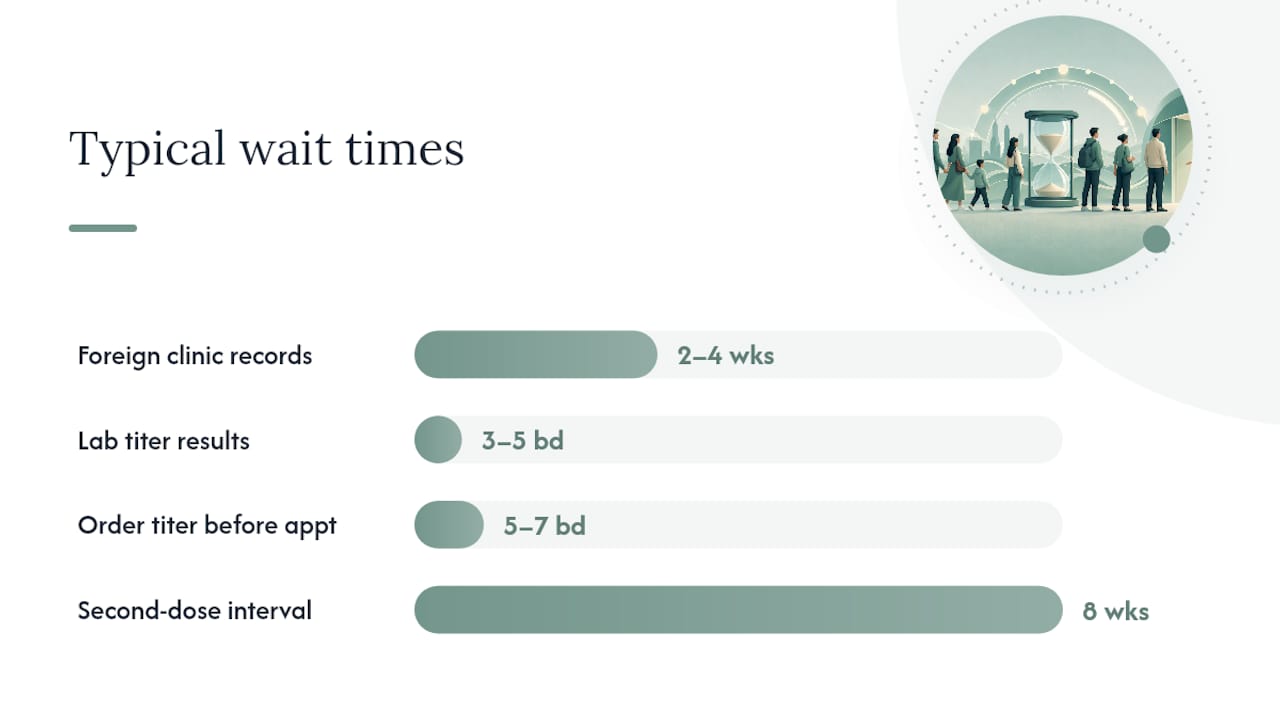
- Order a VZV IgG titer at least 5–7 business days before your civil surgeon appointment to allow time for results.
- Request certified translations for any formal medical certificate in a non-Roman script.
- Ask your former clinic to correct name discrepancies in writing before the exam.
- If records are genuinely unavailable and a titer is negative, schedule your first varicella dose immediately and plan the civil surgeon appointment at least 8 weeks later for the second dose, unless the civil surgeon can apply a waiver.
Timeline note: Obtaining records from a foreign clinic can take 2–4 weeks. Titer results from most U.S. labs return within 3–5 business days. Build that time into your scheduling. If you are on a tight deadline, vaccination is often faster than waiting for overseas records. For guidance on organizing your medical records before the exam, Immigrationmedicalexams has a step-by-step resource.
Sample phrasing to request records from a former clinic: “Please provide an official immunization record listing the patient’s full name, date of birth, vaccine name, each dose date, and the administering provider’s name, credentials, and clinic address.”
How Immigrationmedicalexams handles varicella proof and your sealed I-693
Immigrationmedicalexams operates USCIS-approved civil surgeon clinics in Southern California, including Orange County and Los Angeles, exclusively for immigration medical exams. The clinic’s workflow is built around exactly the documentation issues described above.
- Civil surgeon exam with full vaccination review and Part 10 completion
- On-site VZV IgG titer coordination, so you do not need a separate lab visit
- Vaccination administration for missing doses, including varicella, on the same day
- Record review assistance for foreign immunization cards and translated documents
- Sealed Form I-693 delivery with a guaranteed 2–3 business-day turnaround for eligible appointments
- Same-day and weekend appointments with multilingual staff
Pro Tip: Call ahead and describe your varicella documentation situation before your appointment. The clinic can tell you whether to order a titer in advance or whether your existing records are likely to satisfy Part 10, saving you an extra visit.
A note from the civil surgeon team
The most common varicella issue we see is an applicant who says, “I had chickenpox as a child,” but has no written record and no titer result. That verbal history alone does not meet the CDC Technical Instructions standard. What resolves it quickly is a VZV IgG titer drawn before the appointment. When the result is positive, the exam moves forward without any vaccination. When it is negative, we administer the first dose the same day and discuss next steps for the second dose. The other frequent problem is a single-dose record for an adult applicant. One dose is not sufficient for adults; the civil surgeon will need to administer the second dose or document a plan for it. Calling your former provider for a complete record before you come in is the single fastest fix for either situation.
Ready to complete your I-693 with varicella documentation handled?
Immigrationmedicalexams is the civil surgeon clinic for adjustment-of-status applicants who want their I-693 completed correctly the first time, without unnecessary repeat visits. The clinic handles the full exam, on-site lab coordination, vaccination review, and sealed Form I-693 delivery in 2–3 business days. Same-day and weekend appointments are available, and multilingual staff can help with foreign records. Book your appointment at Immigrationmedicalexams and bring whatever varicella documentation you have. The team will tell you exactly what is needed before the exam is sealed.
Sources
These primary sources are where civil surgeons and applicants can verify current rules and technical requirements:
- Vaccination | Technical Instructions for Civil Surgeons
- Vaccination Requirements | USCIS
- Important Notice to Immigrant Visa Applicants — Vaccinations
- Chickenpox and shingles tests
This article is general information, not a substitute for advice from a qualified doctor. Consult a qualified healthcare professional about your own circumstances before acting on anything here.
Recommended
- What to Bring to Your Immigration Medical Exam (I-693 Checklist) | ImmigrationMedicalExams.com
- Is the MMR Vaccine Required for Immigration? | Immigration Medical Exams
- What Vaccines Are Required for Immigration? | Immigration Medical Exams
- What to Bring to Your Immigration Medical Exam | ImmigrationMedicalExams.com