

Can You Give Vaccines While Sick? A Parent’s Guide

If your child has a runny nose, mild cough, low-grade fever, or an ear infection, you can almost certainly keep that vaccine appointment. Both the CDC and the American Academy of Pediatrics are clear: mild illness does not impair the body’s immune response to vaccines, and skipping the appointment only creates a missed opportunity that is harder to recover than most parents realize.
Here is what to do right now:
- If symptoms are mild (runny nose, low-grade fever, mild cough, ear infection): keep the appointment and tell the clinic what is going on when you arrive.
- If symptoms are moderate or severe (high fever, difficulty breathing, signs of dehydration, extreme lethargy): call the clinic and postpone until your child improves.
- If you are unsure which category applies: call the clinic, describe the specific symptoms, and let the care team decide.
- Bring vaccination records to every visit so the provider can confirm what is due and document any deferral on the spot.
Key Takeaways
Vaccinating a child with a mild illness is safe and recommended by both the CDC and AAP; only moderate or severe acute illness warrants postponing the shot.
| Point | Details |
|---|---|
| Mild illness: proceed | Runny nose, low-grade fever, ear infection, and mild cough do not require delaying vaccination. |
| Moderate/severe illness: delay | High fever, dehydration, respiratory distress, or extreme lethargy are reasons to postpone and reschedule. |
| Antibiotics are not a barrier | Children taking antibiotics for a mild illness can be safely vaccinated without reduced effectiveness. |
| Tell the clinic specifics | Share symptom onset, measured temperature, current medications, and allergy history before the visit. |
| Immigrationmedicalexams | Screens for contraindications, administers vaccines on-site, and documents any deferral on Form I-693 within 2–3 business days. |
Table of Contents
- What counts as a mild illness versus a moderate or severe one?
- Do vaccines make mild illnesses worse, or do antibiotics interfere?
- Special-case vaccines and conditions that change the decision
- Why do clinicians sometimes postpone vaccination anyway?
- What should you tell the clinic before the appointment?
- How do you tell a vaccine reaction from illness getting worse?
- Clear red flags that mean you should delay vaccination
- What CDC COVID-19 Table 3 means for your family
- Vaccines for an immigration medical exam: what to know when your child is sick
- A practical perspective for parents who are worried
- Immigrationmedicalexams handles vaccine timing and sick visits
- Sources
What counts as a mild illness versus a moderate or severe one?
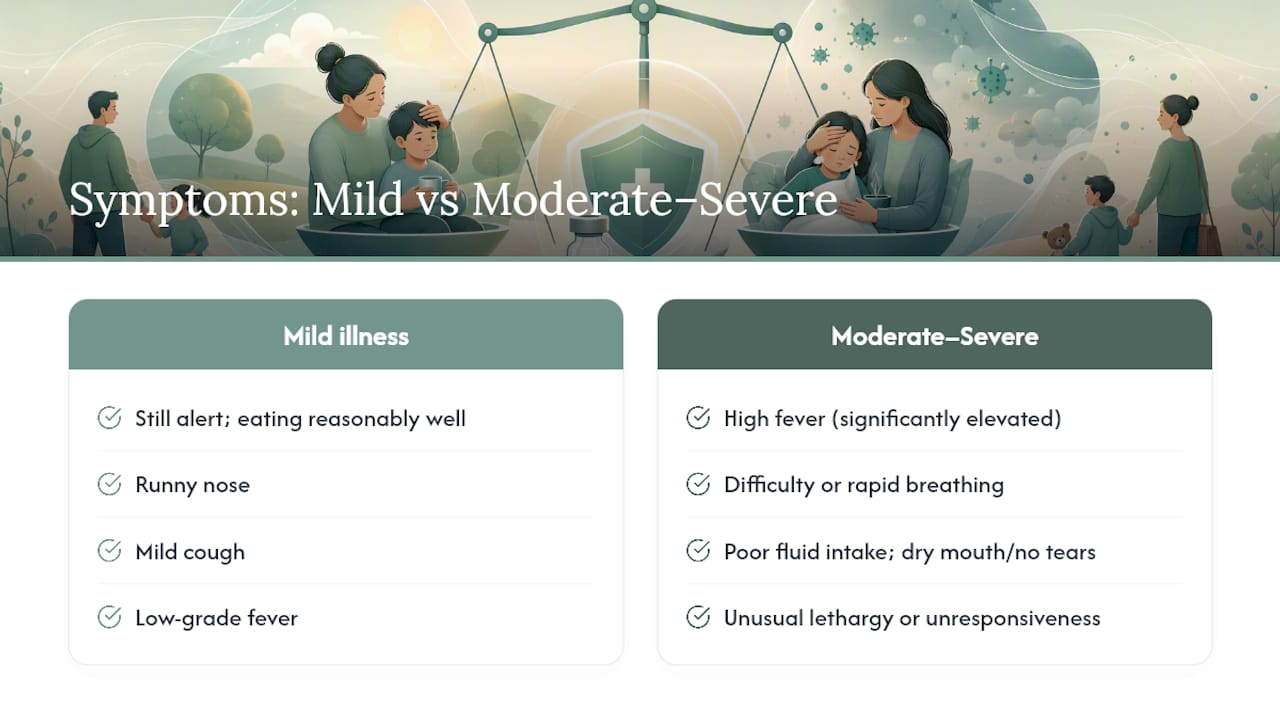
The distinction matters because it drives the entire decision. A mild illness means your child is uncomfortable but still alert, eating reasonably well, and not showing signs of serious distress. Everyday examples include a runny nose, a mild cough, a low-grade fever (generally mild fever below a threshold indicative of mild illness), mild diarrhea, and otitis media (a common ear infection). According to CDC guidance, none of these require delaying vaccination.

Moderate or severe illness looks different. Think high fever (significantly elevated fever generally considered moderate or severe illness), difficulty breathing or rapid breathing, poor fluid intake with dry mouth or no tears, unusual lethargy or unresponsiveness, or a condition serious enough to require hospitalization. These symptoms suggest the body is under significant stress, and vaccination should wait until the child has recovered.

The gray zone is real. A child with a 101.5°F fever and a hacking cough might feel genuinely miserable, but that still falls on the mild side clinically. A child who has barely eaten in two days and is not tracking faces in the room is a different story.
Pro Tip: When you call the clinic, skip vague language like “my child seems sick.” Instead, say: “She has a 101°F fever since yesterday morning, a runny nose, and is eating about half her normal amount.” Specific details help the nurse triage accurately in under a minute.
Do vaccines make mild illnesses worse, or do antibiotics interfere?
No, and no. This is one of the most persistent worries parents bring to the clinic, and the evidence is straightforward.
Vaccinating during a mild illness does not worsen the illness or slow recovery. The immune system handles multiple challenges at once routinely. Peer-reviewed pediatric literature confirms that children with minor illnesses can be safely immunized, with no increased risk from proceeding on schedule.
Antibiotics are also a non-issue. If your child is taking amoxicillin for a strep infection or azithromycin for an ear infection, that does not reduce how well the body responds to a vaccine. The CDC confirms that children on antibiotics for a mild illness can be vaccinated safely.
A few things that ARE worth knowing:
- Post-vaccine symptoms like a low-grade fever, soreness at the injection site, or fussiness are signs the immune system is responding to the vaccine. Mayo Clinic describes these as expected immune responses, not evidence the vaccine made the child sick.
- These reactions typically appear within about a day and resolve within a few days.
- A child who was already running a low fever before the shot may run a slightly higher one afterward. That is not the vaccine making the illness worse; it is two immune processes overlapping.
Special-case vaccines and conditions that change the decision
Most routine childhood vaccines follow the mild-okay, moderate/severe-delay rule. A few situations require a closer look.
-
Live attenuated vaccines (such as the nasal-spray flu vaccine, MMR, and varicella) carry additional considerations for children who are severely immunocompromised. A child on high-dose immunosuppressants or with certain immune deficiencies may need to defer live vaccines entirely, not just during illness. The CDC’s vaccine-specific guidance lists per-vaccine contraindications in detail.
-
COVID-19 vaccines follow the same general precaution: moderate or severe acute illness is a reason to defer. The CDC’s COVID-19 vaccine contraindications and precautions page (Table 3) is the clearest operational reference for clinicians and maps specific patient histories to recommended actions, including myocarditis/pericarditis history and MIS-C considerations. Parents can review it, but the provider will apply it at screening.
-
Severe allergic reaction history is a genuine contraindication, not just a precaution. A child who had anaphylaxis to a prior vaccine dose or to a known vaccine component should not receive that vaccine without an allergist-immunologist consultation. A mild allergy (hives, mild rash) is a precaution that warrants observation after the shot, not automatic deferral.
-
Immunocompromised children need individualized assessment before each dose. The civil surgeon or pediatrician will review the child’s current immune status and the specific vaccine before proceeding.
For immigration medical exams, any vaccine deferral or contraindication must be documented on Form I-693, so bring complete records and disclose any known allergies or immune conditions at intake.
Why do clinicians sometimes postpone vaccination anyway?
Even when a child’s illness looks mild to a parent, the provider may still choose to wait. The main reason is diagnostic clarity, not excessive caution.
If a child receives a vaccine and then develops a high fever or a rash two days later, the provider needs to determine whether that symptom is a vaccine reaction or a progression of the underlying illness. When the child was already sick at vaccination, that distinction becomes genuinely difficult. CDC guidance on contraindications and precautions explicitly names this diagnostic confusion as the rationale for deferring vaccines during moderate or severe acute illness.
Scenarios that typically trigger a delay:
- Fever above 102–103°F at the time of the visit
- A systemic infection (not just a localized one like an ear infection)
- Hospitalization or recent discharge within the past few days
- Symptoms that the provider cannot yet classify as mild versus moderate
The flip side is equally important. Clinics that routinely defer vaccines for any illness, even mild ones, create missed opportunities that compound over time. The AAP’s immunization schedule guidance specifically encourages providers to vaccinate during minor-illness visits rather than send families away and hope they return.
What should you tell the clinic before the appointment?
Give the intake team enough detail to triage before your child sits in the exam room. A quick phone call or a note at check-in with the following information covers everything the provider needs:
- Symptoms and when they started (e.g., “runny nose and low-grade fever since Tuesday”)
- Measured temperature and when it was taken
- Current medications, including any antibiotics, and the dose
- Any known allergies, especially to vaccines, eggs, gelatin, or latex
- Prior vaccine reactions, even mild ones (redness, swelling, fever, fainting)
- Whether any household member is severely immunocompromised (this affects live-vaccine decisions)
Clinic staff will then screen for contraindications and precautions, assess current illness severity, and confirm which vaccines are due. Documenting symptom onset at triage also helps the provider distinguish any post-vaccine symptoms from the illness that was already present, a step the CDC recommends for exactly that reason.
Pro Tip: Keep a simple note on your phone with your child’s vaccine history, known allergies, and any prior reactions. Pulling it up at intake takes ten seconds and removes the most common source of triage delay.
How do you tell a vaccine reaction from illness getting worse?
The timeline is your clearest guide. Common post-vaccine reactions tend to appear within hours to a day and usually last several days, including soreness or redness at the injection site, low-grade fever, fussiness or irritability, and mild fatigue or decreased appetite.
If a symptom appears within this window and stays mild, it is almost certainly a vaccine response. Mayo Clinic describes these as the immune system learning to recognize the vaccine, not a sign of illness.
Call the clinic if you see any of the following, because these fall outside the expected reaction profile:
- Fever above 104°F or a fever that persists beyond 48 hours
- Worsening breathing, wheezing, or stridor
- Persistent vomiting or signs of dehydration (no wet diapers, sunken eyes, dry mouth)
- Extreme lethargy or difficulty waking
- Hives, swelling of the face or throat, or any sign of anaphylaxis within minutes of the shot
Pro Tip: For mild post-vaccine discomfort, offer extra fluids, apply a cool damp cloth to the injection site, and follow your provider’s dosing instructions for acetaminophen or ibuprofen. Never give aspirin to a child.
Clear red flags that mean you should delay vaccination
Some situations call for postponing the appointment outright rather than calling to discuss. Delay and seek care if your child has:
- A fever above 102–103°F at the time of the scheduled visit
- Signs of dehydration (no urination in 8+ hours, no tears when crying, dry cracked lips)
- Respiratory distress (labored breathing, flaring nostrils, retractions between the ribs)
- Extreme lethargy or unresponsiveness
- A known history of severe allergic reaction (anaphylaxis) to a prior vaccine dose, without having seen an allergist first
- A systemic infection requiring urgent medical evaluation
For fever above 104°F, difficulty breathing, or signs of anaphylaxis, go to urgent care or the emergency room rather than waiting for a callback. Postpone the vaccine appointment and reschedule once the child has fully recovered.
What CDC COVID-19 Table 3 means for your family
The CDC’s COVID-19 vaccine contraindications and precautions guidance separates two categories that parents often conflate.
A contraindication means the vaccine should not be given at all (or without specialist clearance). A history of anaphylaxis to a COVID-19 vaccine component falls here.
A precaution means the provider should weigh risks and benefits and may choose to defer. Moderate or severe acute illness is a precaution, not a contraindication. So is a history of myocarditis or pericarditis after a prior mRNA dose, or a recent diagnosis of MIS-C. In practice, precautions usually mean “wait until the child is better and then vaccinate,” not “never vaccinate.”
Key Table 3 points that affect families:
- History of severe allergic reaction to any vaccine component: contraindication; refer to allergist-immunologist before proceeding.
- Moderate or severe acute illness: precaution; defer until illness resolves.
- Myocarditis or pericarditis after a prior mRNA COVID-19 dose: precaution; discuss timing with the provider.
- MIS-C diagnosis: discuss timing with the treating physician before scheduling.
Pro Tip: Bring a printed or digital copy of your child’s prior vaccine records and any allergy documentation to the visit. Providers can make faster, safer decisions when they are not reconstructing history from memory.
Vaccines for an immigration medical exam: what to know when your child is sick
If your child needs vaccines as part of a USCIS immigration medical exam and Form I-693 completion, the same mild-versus-moderate rule applies, but the stakes around timing are higher because vaccine deferral can delay I-693 processing.
Checklist for applicants coming in with current symptoms:
- Bring complete vaccination records so the civil surgeon can identify exactly which vaccines are due and which are already documented.
- Disclose current symptoms at intake, including onset date, fever measurement, and any medications. Civil surgeons are required to document any vaccine deferral on Form I-693.
- Ask about rescheduling windows and whether an expedited appointment is available once the illness resolves.
- Confirm whether the clinic offers same-day or weekend appointments to minimize delays to your application timeline.
- If a vaccine is deferred, ask the civil surgeon what documentation will be included in the sealed I-693 and what the next step is.
The on-site vaccination and lab services at an immigration medical exam clinic are designed to handle exactly this kind of situation: screening for contraindications, administering due vaccines in a single visit when appropriate, and documenting any deferrals accurately for USCIS.
Pro Tip: Call the clinic before your appointment if your child is sick. Most immigration medical exam clinics, including those with multilingual staff and same-day options, can advise over the phone whether to keep the appointment or reschedule, saving you a wasted trip and protecting your I-693 timeline.
A practical perspective for parents who are worried
Parental anxiety about vaccinating a sick child is completely understandable. The instinct to protect a child who is already uncomfortable is strong, and “wait until they feel better” sounds like the safe choice. The evidence says otherwise, at least for mild illness.
Delaying vaccines for a runny nose or a mild fever does not protect the child. It creates a gap in protection during a period when the child is already in contact with illness. The peer-reviewed literature and every major clinical body in the U.S. agree: mild illness is not a reason to skip the shot.
The practical next steps are simple. Call the clinic with specific symptom details. Keep the appointment if the illness is mild. Postpone only when symptoms are genuinely moderate or severe, and reschedule as soon as the child recovers.
Immigrationmedicalexams handles vaccine timing and sick visits
When a child’s immigration medical exam falls during an illness, timing matters for the I-693 and for the child’s health. Immigrationmedicalexams screens every applicant for contraindications and precautions before administering any vaccine, administers required immunizations on-site, and documents any deferral directly on Form I-693 so nothing falls through the cracks.

If your child is sick at exam time, the clinic can advise whether to proceed or reschedule, with same-day and weekend appointments available across Southern California to minimize delays to your application. Multilingual staff are on hand to walk families through the process in their preferred language. The step-by-step exam process is designed to be clear and efficient, with I-693 forms completed and sealed within 2–3 business days. To discuss vaccine timing for your child’s exam, contact Immigrationmedicalexams or book an appointment at the clinic nearest you.
Sources
These are the primary references behind the guidance in this article. Bookmark them and cite them when speaking with your child’s provider.
- Vaccines When Your Child Is Sick | Childhood Vaccines | CDC
- Vaccine and immunization guidance from Mayo Clinic - Mayo Clinic
- Healthychildren
- Can children with minor illnesses be safely immunized? - PMC
This article is general information, not a substitute for advice from a qualified doctor. Consult a qualified healthcare professional about your own circumstances before acting on anything here.