

You can get through your immigration medical exam when you fear needles by telling the clinic beforehand, bringing your vaccination records, and agreeing on a plan before any blood draw or injection. Fear alone does not remove required testing or vaccination requirements for Form I-693, Report of Immigration Medical Examination and Vaccination Record. For your 2026 examination, ask which procedures apply to you and explain whether needles cause anxiety, panic, or fainting.
- Afraid of needles at your immigration medical exam? Tell the clinic before your visit and describe any previous fainting.
- CDC requires a tuberculosis blood test for applicants aged 2 years and older undergoing the civil surgeon examination.
- Vaccination records can prevent unnecessary repeat doses; antibody blood tests still require a needle.
- ImmigrationMedicalExams.com provides dedicated Form I-693 examinations; discuss needle concerns before your appointment.
Why this matters
The goal is not to make you stop feeling afraid before you attend. It is to help you complete the required parts safely, with clear explanations and fewer surprises. A blood draw, a vaccine injection, and the physical examination are different parts of the visit; knowing which ones you actually need makes preparation more specific.
Write down your concerns using this guide to preparing questions for your civil surgeon visit. Include what happened at previous appointments, not just that you dislike needles. A history of losing consciousness needs a different discussion from wanting to avoid seeing the equipment.
How do you get through your immigration medical exam if you fear needles?
Tell the clinic early, review your records, and ask for a procedure-by-procedure plan. You do not need to hide your fear or wait until the needle is ready to mention it.
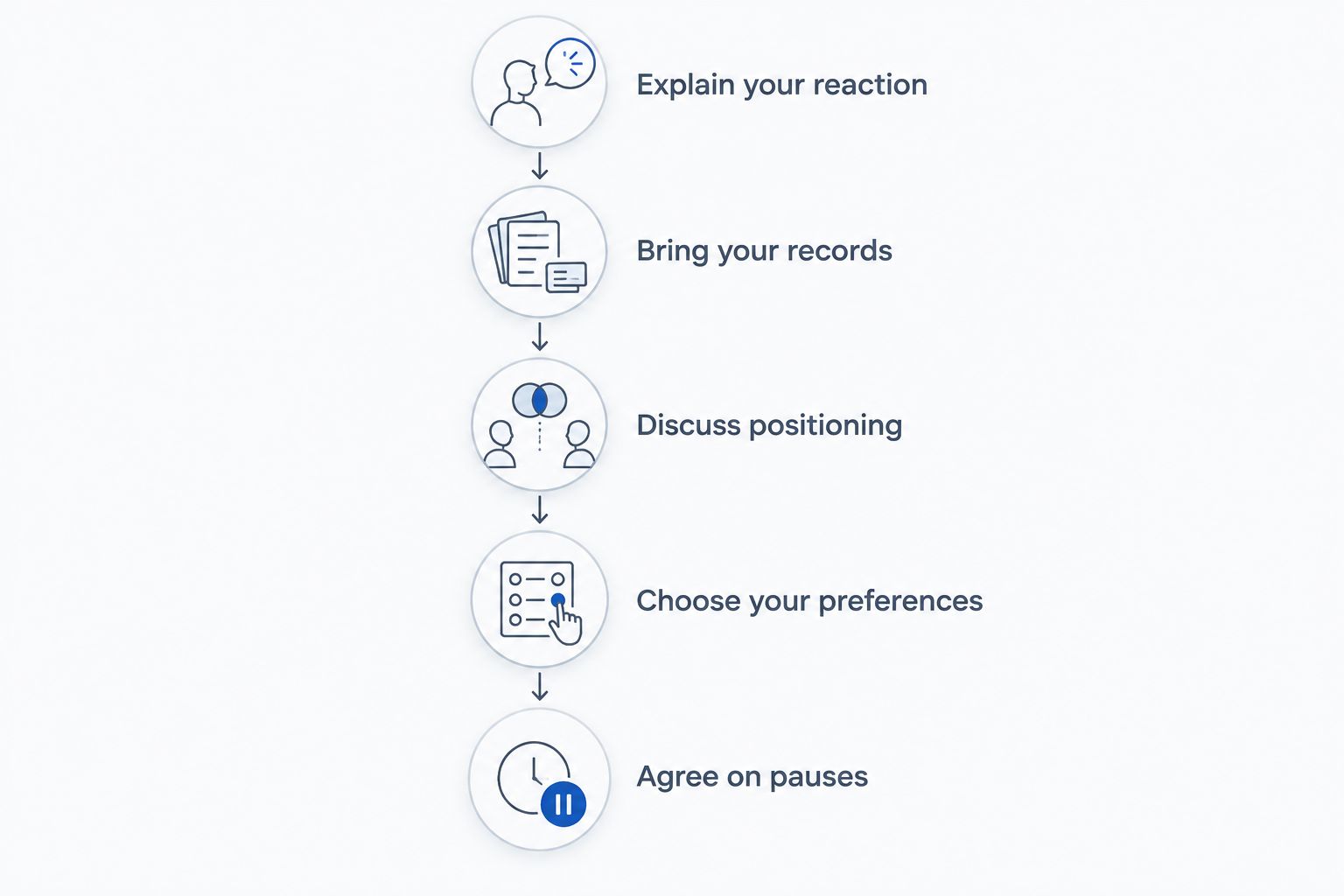
- Explain your reaction. Tell the clinic whether you become tearful, feel panicked, pull away, or have fainted. Mention any injury during a previous fainting episode.
- Bring your records. Bring vaccination documentation, relevant laboratory reports, and information about previous vaccine reactions. The civil surgeon decides what meets the examination requirements.
- Discuss positioning. If you have fainted during injections or blood draws, ask whether you should lie down for the procedure. Do not wait until you feel dizzy.
- Choose your preferences. Ask whether you can look away, hear an explanation before each step, or avoid a countdown. Request permission before using headphones or bringing a support person.
- Agree on a pause signal. Tell the staff how you will communicate discomfort. If you need a pause during a procedure, say so and follow the clinician's instructions rather than moving your arm suddenly.
Ask questions while you are seated and before equipment is prepared. That gives you room to understand the plan without feeling rushed into a decision.
Which parts of the examination involve needles?
CDC's Civil Surgeon Technical Instructions govern the medical screening and vaccination assessment used for Form I-693. For your 2026 visit, the civil surgeon applies the instructions relevant to your age, medical history, and findings. You should not assume every applicant needs the same tests or injections.
| Examination component | Does it involve a needle? | What to understand |
|---|---|---|
| Tuberculosis screening | Yes, for the required blood test | Applicants aged 2 years and older require an interferon-gamma release assay, called an IGRA. |
| Syphilis screening | Yes, for blood testing | Routine screening applies to applicants aged 18 through 44 years; other ages are tested when indicated. |
| Gonorrhea screening | Usually no; urine testing is commonly used | Routine screening applies to applicants aged 18 through 24 years; other ages are tested when indicated. |
| Vaccination assessment | Reviewing records does not; injections do | Required doses depend on age, acceptable records, and medical considerations. |
| Physical examination | Not ordinarily | The examination itself is separate from blood collection and vaccination. |
These are screening rules, not a personal test order. Additional evaluation depends on the civil surgeon's assessment. Tell the clinic about previous testing, but do not assume outside results replace tests required during the immigration examination.
Tuberculosis testing is not replaced by a chest X-ray
For applicants aged 2 years and older, the required IGRA uses a blood sample. A chest X-ray is not a needle-free substitute chosen because you fear the blood draw. CDC instructions determine when a chest X-ray or further evaluation is needed.
A previous BCG vaccination does not remove the IGRA requirement. Bring any records of prior tuberculosis testing or treatment so the civil surgeon can review them alongside the current examination requirements.
Can vaccination records reduce the number of injections?
Acceptable vaccination records can prevent unnecessary repeat doses. Bring official records showing vaccine names and administration dates, including records from another country. Tell the clinic beforehand if the records need an English translation and ask what documentation to provide.
For the 2026 vaccination assessment, the civil surgeon reviews age-appropriate requirements and identifies any acceptable reason a vaccine is not medically appropriate. You do not automatically need every vaccine listed in general immigration guidance. Your age, documented doses, and clinical circumstances matter.
If records are missing, ask about acceptable evidence of immunity for particular diseases. Laboratory evidence is accepted for certain vaccine-preventable diseases under CDC instructions, but an antibody test requires a blood sample. It is not automatically the best way to avoid needles.
The guide to vaccination records and antibody titers explains that distinction. Do not arrange a broad set of antibody tests yourself before asking the civil surgeon which results would be useful.
Remembered childhood vaccinations are not the same as documented doses. Try to request records before your appointment rather than relying on memory at the examination.
What can help during a blood draw or vaccination?
Comfort measures support the procedure; they do not replace required care. Ask which measures are appropriate for you and available at the clinic. None guarantees a painless procedure or prevents every fainting episode.
| Approach | Best for | Benefit | Limitation |
|---|---|---|---|
| Looking away or using a distraction | Applicants distressed by seeing needles | Keeps attention away from the equipment | Does not numb the skin or prevent fainting |
| Discussing a lying-down position | Applicants with previous needle-related fainting | Lets staff plan a safer position | Requires a clinical discussion and suitable setup |
| Asking about topical numbing medicine | Applicants mainly concerned about skin pain | Can reduce pain at the skin when appropriate | Needs correct timing and does not remove every sensation |
| Planning with your treating clinician | Applicants whose fear prevents procedures | Allows individualized help before the examination | Requires advance preparation rather than a last-minute fix |
If you have fainted before
Tell staff before the procedure and report symptoms immediately. Warning signs can include feeling hot, nauseated, sweaty, lightheaded, or having dimmed vision. Do not stand up or try to walk away when these symptoms begin.
Ask your clinician whether muscle-tensing techniques are appropriate for a fainting tendency. Do not improvise exercises or assume that breathing exercises alone address fainting. Follow staff instructions about when it is safe to sit up and leave.
If you are mainly afraid of pain
Ask about topical numbing options before the visit rather than applying a product without guidance. Staff need to know what you used, where you applied it, and whether it is suitable for the planned procedure.
You can also ask for a brief explanation instead of watching the preparation. Some applicants prefer advance notice; others find a countdown harder. State your preference clearly without expecting staff to promise that you will feel nothing.
Why does the needle plan vary between applicants?
The right plan depends on the required examination and your response to procedures, not on how well you can hide your fear.
- Age: Routine tuberculosis, syphilis, gonorrhea, and vaccination requirements use different age rules.
- Vaccination documentation: Acceptable records help establish which doses are already documented.
- Medical history: Previous reactions, contraindications, and other clinical information affect the assessment.
- Fainting history: Prior loss of consciousness calls for a positioning and safety discussion.
- Severity of fear: Anxiety you can manage with preparation differs from fear that prevents the procedure entirely.
Do not compare your expected injections with a friend's examination. Even family members attending together can have different requirements and preparation needs.
Can I skip the blood test because I am afraid of needles?
Fear of needles does not cancel a required blood test. Tell the civil surgeon if you cannot proceed so you can discuss preparation and what remains incomplete. Do not expect the sealed Form I-693 to be ready while required testing is unfinished.
If severe fear has caused you to abandon previous medical appointments, contact your treating clinician before the immigration examination. That gives you time to discuss individualized support without making a filing deadline the only reason to rush.
Does needle fear qualify me for a vaccination exception?
Needle fear alone is not a routine medical reason to mark a required vaccine as medically inappropriate. The civil surgeon evaluates recognized medical considerations under CDC instructions and documents the findings that apply.
A previous severe allergic reaction is different from fear, pain, or fainting. Bring records of any suspected reaction so the clinician can assess what happened. Do not label an event as an allergy solely to avoid an injection.
Can I take anxiety medicine before my appointment?
Do not take borrowed medication, change a prescription, or use alcohol to get through the examination. Ask your prescribing clinician and the examination clinic before taking medicine specifically for procedure-related anxiety.
Tell both clinicians what you take and whether you will need transportation or other precautions. A medication plan requires individual advice; it is not something to arrange from a general article or assume the civil surgeon provides.
What should you do before the appointment?
Use this checklist to prepare for your 2026 examination without adding unnecessary tests or treatments:
- Bring the identification and documents requested by the clinic.
- Gather vaccination records and relevant medical reports.
- List your medications, allergies, and previous reactions.
- Explain any history of fainting, difficult blood draws, or panic during procedures.
- Follow the clinic's eating and drinking instructions; do not fast unless instructed.
- Ask whether a support person can attend and what the clinic permits during procedures.
- Tell staff whether you prefer explanations, distraction, or no countdown.
Choose clothing that allows easy access to your upper arm. If you are arranging examinations for children, tell staff about each child's specific concerns instead of assuming one approach will work for the whole family.
Avoid promising a child that there will be no needles before the requirements have been reviewed. A simple, honest explanation protects trust and gives the child a chance to ask questions.
Planning your examination in Costa Mesa
ImmigrationMedicalExams.com is best suited to applicants seeking a dedicated Form I-693 immigration medical examination clinic in Costa Mesa. The practice focuses on immigration examinations and coordinates the civil surgeon examination, required testing, vaccination review, and form preparation.
That focus does not remove CDC requirements or guarantee that every needle-related concern can be resolved during one appointment. Describe your needs in advance, especially if previous attempts at blood collection or vaccination could not be completed.
ImmigrationMedicalExams.com describes standard completion as 3 business days, with a 2-business-day expedited option subject to scheduling, laboratory results, required vaccinations, and additional documentation. An appointment on a particular day is not the same as a completed examination that day.
Discuss your needle concerns before your exam
Ask ImmigrationMedicalExams.com about preparing for your Form I-693 examination.
FAQ
Can I complete my immigration medical exam if I am terrified of needles?
You can work toward completing the examination by telling the clinic early and discussing a preparation plan. Required testing and vaccinations still apply, and severe fear that prevents procedures needs advance discussion with your treating clinician.
Do adults need a TB blood test for the immigration medical exam in 2026?
Adults need an IGRA tuberculosis blood test under CDC civil surgeon screening instructions. The routine requirement applies to applicants aged 2 years and older; prior BCG vaccination does not remove it.
Can I ask to lie down for my immigration medical blood draw?
You can ask to lie down, especially if you have fainted during previous blood draws or injections. Tell staff before the procedure so they can assess positioning and safety needs.
Can I use numbing cream before my immigration medical exam?
Ask the clinic before using numbing cream for your examination. The product, application site, and timing need to be appropriate, and numbing the skin does not prevent every uncomfortable sensation or fainting episode.
Will vaccination records mean I do not need any shots?
Vaccination records can prevent unnecessary repeat doses, but they do not guarantee that no vaccinations are needed. The civil surgeon checks documented doses against age-appropriate requirements and applicable medical considerations.
Does fear of needles mean I will fail my immigration medical exam?
Fear of needles alone does not mean you fail the immigration medical examination. However, required procedures must be addressed before the civil surgeon can complete the form, so explain your concerns rather than skipping them.
One last thing
The most useful detail is what happens to you around needles, not how afraid you feel. Saying that you fainted during a previous blood draw gives staff information they can use to plan positioning and observation. Saying that watching the needle triggers panic points toward a different conversation. Bring that description with your records; it belongs in your preparation plan.