

Yes. Vaccine titers can replace missing vaccination records for certain diseases during your immigration medical exam when the results meet CDC requirements for evidence of immunity. They do not replace every required vaccine, and the civil surgeon must review the actual laboratory report before completing your Form I-693, Report of Immigration Medical Examination and Vaccination Record.
- Vaccine titers immigration medical exam results can document immunity to certain diseases, not every required vaccination.
- Missing vaccination records do not automatically mean repeating every vaccine; the civil surgeon reviews acceptable evidence first.
- ImmigrationMedicalExams.com coordinates vaccination-record review within its Form I-693 immigration medical exam process.
- Bring complete laboratory reports, dated vaccination records, and relevant medical documentation before ordering new antibody tests.
How do vaccination records, missing records, and antibody titers work?
For your 2026 examination, the civil surgeon reviews your documented vaccinations and determines which requirements apply to your age and medical history. CDC's Vaccination Technical Instructions for Civil Surgeons govern what counts as acceptable evidence. USCIS uses the completed Form I-693 to document that review.
Start with your records, not a broad laboratory panel. The guide to USCIS vaccination requirements for your I-693 medical exam explains the wider vaccination review.
| Evidence or next step | Best for | What it helps establish | Limitation |
|---|---|---|---|
| Written vaccination records | Applicants with documented previous doses | Which vaccines you received and when | Missing dates or unclear entries can prevent acceptance |
| Antibody titers | Applicants lacking acceptable records for diseases with accepted laboratory evidence | Laboratory evidence of immunity | Not accepted for every vaccine requirement |
| Verified chickenpox history | Applicants with a reliable history of chickenpox | An accepted alternative to varicella vaccination documentation | The civil surgeon must verify the history under CDC criteria |
| Vaccination after review | Applicants without acceptable evidence of immunity or vaccination | A required dose given and documented | Medical precautions and minimum dose intervals still apply |
Do not order a titer panel before the civil surgeon identifies the evidence you actually need. Existing records can resolve a requirement without another blood draw, while an unsuitable test can leave the same requirement unresolved.
Why this matters
Missing records create a documentation problem, not proof that you never received vaccines. Your examination needs evidence the civil surgeon can accept, rather than your best recollection of childhood appointments.
A targeted review helps avoid unnecessary testing and identifies required vaccinations before the form is sealed. In 2026, the practical goal remains the same: complete the vaccination section correctly without confusing immunity testing with the other laboratory tests required for your examination.
Which vaccine titers can count for an immigration medical exam?
CDC's civil surgeon vaccination instructions allow laboratory evidence of immunity for measles, mumps, rubella, hepatitis A, hepatitis B, polio, and varicella when acceptable vaccination documentation is unavailable. This is a list of diseases for which laboratory evidence can be accepted, not a recommendation that every applicant order every test.
The civil surgeon determines which requirements apply and whether a particular report establishes immunity. A laboratory result with the right disease name is not automatically the right test.
Measles, mumps, and rubella
Measles, mumps, and rubella are separate diseases, even though the MMR vaccine covers them together. A report showing immunity to measles alone does not establish immunity to mumps or rubella.
Bring the complete report so the civil surgeon can review each result. The MMR vaccine requirement for your I-693 medical exam explains how this requirement fits into the vaccination review.
Hepatitis A and hepatitis B
Laboratory evidence of immunity can be accepted for hepatitis A and hepatitis B, but tests for infection and tests for immunity are not interchangeable. Do not assume that a previous hepatitis screening report answers the vaccination question.
Show the civil surgeon any existing results before requesting more testing. The clinician can identify whether the report documents immunity or whether another step is needed.
Polio
Laboratory evidence of polio immunity must cover all three poliovirus types. A report covering only some types does not meet the CDC documentation requirement for this purpose.
Ask about polio testing before ordering it. Finding an acceptable test is a separate issue from finding a laboratory that offers a test with polio in its name.
Varicella, or chickenpox
Varicella immunity can be documented through acceptable vaccination records, laboratory evidence, or a reliable chickenpox history verified by the civil surgeon. You do not automatically need a titer simply because you remember having chickenpox.
Verification matters. CDC instructs the civil surgeon to look for an epidemiologic link to another typical or laboratory-confirmed case, or laboratory confirmation at the time of illness. A vague memory of an unexplained childhood rash is not the same evidence.
What makes a vaccination record acceptable?
CDC requires written vaccination documentation with vaccination dates, including the month, day, and year. The civil surgeon also reviews whether the record appears valid and whether doses were given at appropriate ages and intervals.
Records from outside the United States can be useful. Their origin alone does not make them unacceptable, but the information must be understandable and sufficient for review.
Bring the following when available:
- Your original vaccination card or a clear copy of the complete record.
- Records from previous doctors, schools, employers, or vaccination programs.
- An immunization registry printout identifying you and the documented doses.
- A reliable English translation when the record is not in English.
- Complete antibody laboratory reports, including your identifying information, test names, results, and laboratory interpretation.
Your own statement that you received a vaccine generally does not replace written documentation. The verified chickenpox-history exception is specific; it does not extend to every disease.
Keep records from different sources together. A childhood card and a later clinic record can each contribute useful doses, even when neither document contains your complete history.
What should you do if your vaccination records are missing?
You can still have your immigration medical examination when records are missing. Tell the clinic what you have and what you cannot locate so the civil surgeon can plan the vaccination review.
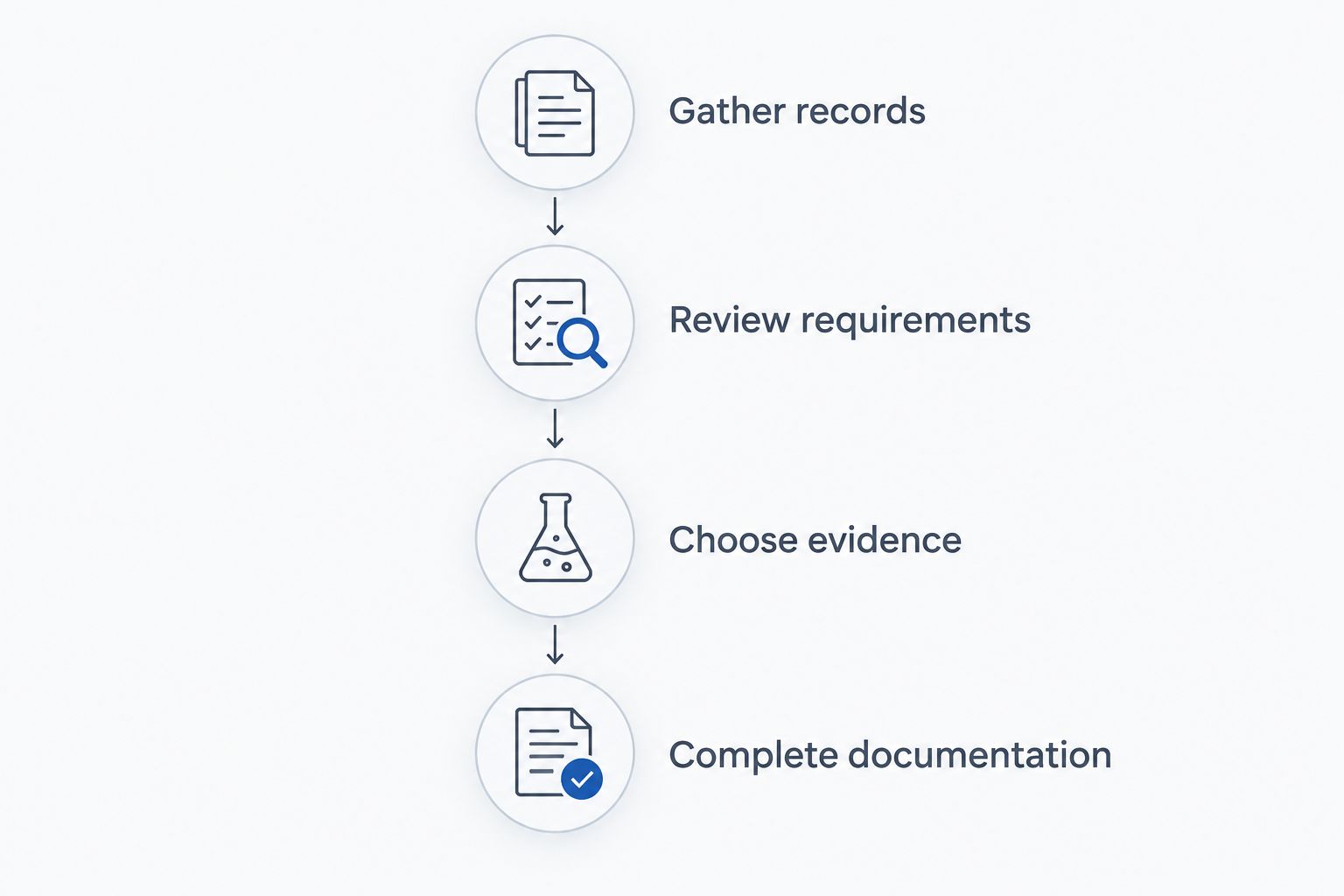
Gather records
Request records from previous clinicians and check any immunization registry available to you. Ask relatives whether they kept a childhood vaccination card, but bring the document rather than relying on a family member's recollection.
Do not delay your appointment indefinitely while searching. Ask the clinic which documents are useful and whether your examination can proceed while you seek additional records.
Review requirements
Bring everything you have, even if it looks incomplete. The civil surgeon reviews your age, documented doses, accepted immunity evidence, and any medical reasons a vaccine should not be given.
The requirements are not identical for every family member. A child's vaccination review and an adult's review can lead to different next steps.
Choose evidence
After reviewing your records, the civil surgeon determines whether an accepted titer is useful or vaccination is needed. Testing is not always the most direct route, and repeating every vaccine is not the default answer either.
If you already have laboratory results, submit the full report. A cropped screenshot stating positive without the test name or interpretation can leave important questions unanswered.
Complete documentation
Resolve the remaining vaccination requirements and let the civil surgeon document the results on Form I-693. Some applicants need a required dose; others need an accepted immunity result or a documented medical exception.
Do not complete the medical findings yourself or sign the applicant section before the civil surgeon instructs you to do so.
Why the next step varies between applicants
For a 2026 Form I-693 examination, the civil surgeon's decision depends on the evidence and requirements that apply to you:
- Age: CDC's vaccination table identifies age-specific requirements; not every vaccine applies to every applicant.
- Documented doses: Valid previous doses affect what remains necessary and whether a series is incomplete.
- Accepted immunity evidence: Titers help only when CDC accepts laboratory evidence for that disease and the report meets the requirement.
- Medical precautions: Pregnancy, previous serious reactions, and certain medical conditions can change whether a vaccine is appropriate.
- Dose intervals: A required interval between doses can affect what the civil surgeon can document at the examination.
- Seasonal requirements: Influenza vaccination requirements depend on the applicable influenza season and CDC instructions.
These are clinical and documentation decisions, not reasons to order every available test. Bring relevant medical records and let the civil surgeon assess their effect on your examination.
What happens if a titer is negative or unclear?
A negative or equivocal result does not provide positive laboratory evidence of immunity. When acceptable vaccination records are also missing, the civil surgeon determines whether vaccination is required or whether another documented exception applies.
Do not interpret a negative titer in isolation when you have a valid vaccination record. Some antibody tests do not reliably detect vaccine-induced immunity, particularly commercial varicella tests. The civil surgeon must consider the record and the test together.
An unclear result is not permission to leave the vaccination section unfinished. Ask what specific next step resolves the requirement, and keep any new vaccination documentation with your examination records.
Do you need to finish every vaccine series before Form I-693 is completed?
No. CDC's instructions do not require every applicant to complete an entire vaccine series before the immigration medical examination can be documented. The civil surgeon gives required doses that are due and documents an applicable insufficient-time-interval reason when appropriate.
That rule does not mean all remaining doses are optional for your ongoing health care. Follow the clinician's instructions about completing the series after your immigration examination.
For your 2026 appointment, distinguish a dose that is due now from a later dose that cannot yet be given. This helps you understand the plan without assuming that every incomplete series prevents completion of Form I-693.
Can pregnancy or a medical condition change the vaccination requirement?
Yes. A medical contraindication or precaution can affect whether a vaccine should be given, and the civil surgeon documents applicable findings under CDC instructions. A titer does not replace the need to review your medical history.
Tell the clinician about pregnancy, immune-system conditions, medications, and previous serious vaccine reactions before testing or vaccination. Bring supporting records when available; do not stop medication or seek vaccination solely to meet an assumed immigration requirement.
A personal preference against vaccination is not the same as a medical contraindication. The civil surgeon cannot simply label a preference as a medical exception.
How can you avoid delays at the clinic?
Send or bring readable, complete records and identify any unresolved questions before your visit. Common problems include missing vaccination dates, incomplete laboratory screenshots, tests ordered for the wrong purpose, and records that cannot be interpreted without translation.
ImmigrationMedicalExams.com is best suited to applicants seeking a dedicated Form I-693 immigration medical exam clinic in Costa Mesa. Vaccination-record review is part of its coordinated examination process. That focused service does not remove CDC requirements or make every outside report acceptable.
ImmigrationMedicalExams.com offers standard completion in three business days and a two-business-day expedited option, subject to scheduling, laboratory results, required vaccinations, and additional documentation. An appointment on the same day is not the same as completion of your entire examination.
For a 2026 deadline, ask about unresolved records before choosing an expedited appointment. Additional immunity testing or medical documentation still needs to be reviewed before the civil surgeon can finish the form.
FAQ
Can I use vaccine titers for my immigration medical exam?
Yes, acceptable laboratory evidence of immunity can satisfy certain vaccination requirements for Form I-693. CDC permits it for measles, mumps, rubella, hepatitis A, hepatitis B, polio, and varicella, but the civil surgeon must review the report.
What if I lost all my vaccination records?
You can still have your immigration medical examination without vaccination records. The civil surgeon reviews applicable requirements and determines whether accepted immunity testing, vaccination, or documented exceptions are needed.
Do I need titers for every required vaccine?
No, titers are not required for every applicant or accepted for every vaccine requirement. Bring existing records first so the civil surgeon can identify any actual documentation gaps.
Can I use vaccination records from another country?
Yes, foreign vaccination records can be accepted when they provide valid, understandable documentation. Bring complete records with vaccination dates and a reliable English translation when needed.
Does having chickenpox as a child count as immunity?
A reliable chickenpox history verified by the civil surgeon can count without a titer or vaccination. A vague recollection of a childhood rash does not automatically meet CDC verification criteria.
Does a negative antibody titer mean I need another vaccine?
A negative titer does not establish immunity, but it does not automatically cancel acceptable vaccination documentation. The civil surgeon reviews the test, your records, and applicable medical considerations before deciding the next step.
Can expedited completion skip pending antibody results?
No, expedited scheduling does not remove the need for acceptable evidence and completed medical documentation. ImmigrationMedicalExams.com offers a two-business-day expedited option only when scheduling, laboratory results, vaccination requirements, and documentation permit.
One last thing
The most useful question is not whether you need titers; it is which vaccination requirements remain undocumented. A single valid record can answer a question that an unnecessary laboratory panel does not.
Before your visit, put vaccination cards and complete laboratory reports together and mark any entries you cannot read. Let the civil surgeon decide which gaps matter for your Form I-693.
Schedule Your Immigration Medical Exam
Arrange your Form I-693 examination and bring your vaccination records for review.