
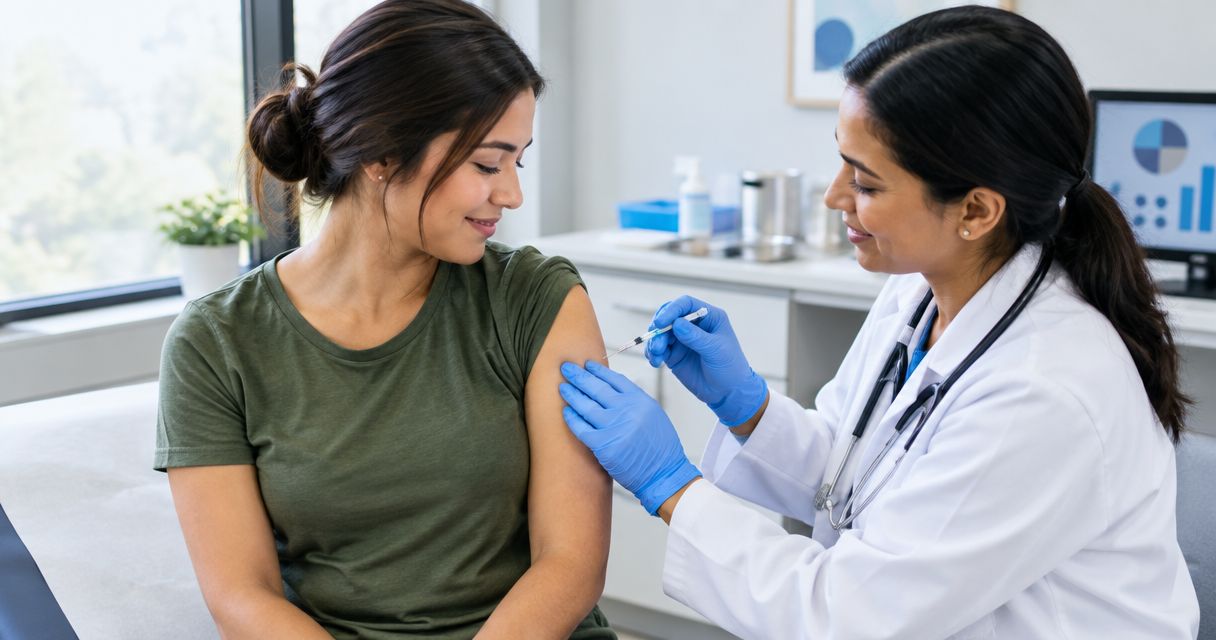
The MMR vaccine I-693 requirement means most green card and adjustment-of-status applicants must show proof of two doses of the measles, mumps, and rubella vaccine, or lab evidence of immunity, before a civil surgeon can sign Form I-693. Without that proof, the exam does not move forward until the gap is closed one way or another.
- MMR vaccine is one of the required immunizations most applicants must document for Form I-693 in 2026.
- Proof means a written vaccination record or a blood test (titer) showing immunity to measles, mumps, and rubella.
- No proof usually means the civil surgeon can give the MMR vaccine at the same visit if there's no contraindication.
- MMR is a live vaccine, so pregnant applicants get a temporary deferral instead of the shot.
- Applicants born before 1957 are often presumed immune to measles under CDC guidance, but rubella and mumps proof can still apply.
Why the MMR vaccine requirement matters for your I-693 exam
Civil surgeons follow current CDC-based Civil Surgeon Technical Instructions when they complete Form I-693, and MMR sits on the list of vaccines USCIS expects every applicant to address in some way. That doesn't mean every applicant gets the shot. It means every applicant's file needs an answer: documented immunity, a lab result, a vaccine given at the visit, or a properly noted exception.
A missing answer is one of the more common reasons an I-693 comes back incomplete. If your vaccination history is thin, patchy, or from a country with different childhood immunization schedules, expect the MMR line to come up during your appointment. Reviewing the USCIS vaccination requirements for your I-693 exam before your visit gives you a full picture beyond MMR alone.
Gather your vaccination records before your appointment
Bring whatever paper or digital record you have, even if it looks incomplete. A civil surgeon can often work with a partial record faster than with no record at all.
- Childhood immunization cards from a pediatrician or clinic
- School immunization records, including from schools outside the U.S.
- Records from a prior immigration medical exam, if you had one
- Military immunization records, if applicable
- Records from your home country, translated if not in English
- Adult vaccination records from a primary care provider or pharmacy
Check your birth year against the presumed-immunity rule
CDC guidance treats applicants born before 1957 as presumed immune to measles, since the disease circulated widely before the vaccine existed. That presumption is useful, but it doesn't automatically clear mumps or rubella.
- Presumed measles immunity generally applies to those born before 1957
- Rubella vaccination became routine later in many countries, so older applicants may still lack documented rubella immunity
- Mumps history follows a similar pattern and isn't automatically covered by the measles presumption
- Bring any record you have, even a partial one, so the civil surgeon can sort out which components still need proof
- Ask directly whether your birth year affects your specific case rather than assuming it clears the entire requirement
Request a blood test if you have no written record
A titer measures antibody levels for measles, mumps, and rubella separately, even though the vaccine is given as one shot. This is the most common path for applicants who lost their records or grew up without formal documentation.
- A titer checks each of the three components on its own, not as a single combined result
- Lab turnaround typically fits inside the standard 3-business-day completion window, but timing depends on the lab
- A positive result on all three counts as proof of immunity, so no vaccine is needed
- A negative or borderline result on any component usually means the civil surgeon recommends the vaccine for that gap
- Plan your appointment date with lab turnaround in mind if you're also trying to use the 2-business-day expedited option
Get vaccinated at your civil surgeon visit if proof isn't available
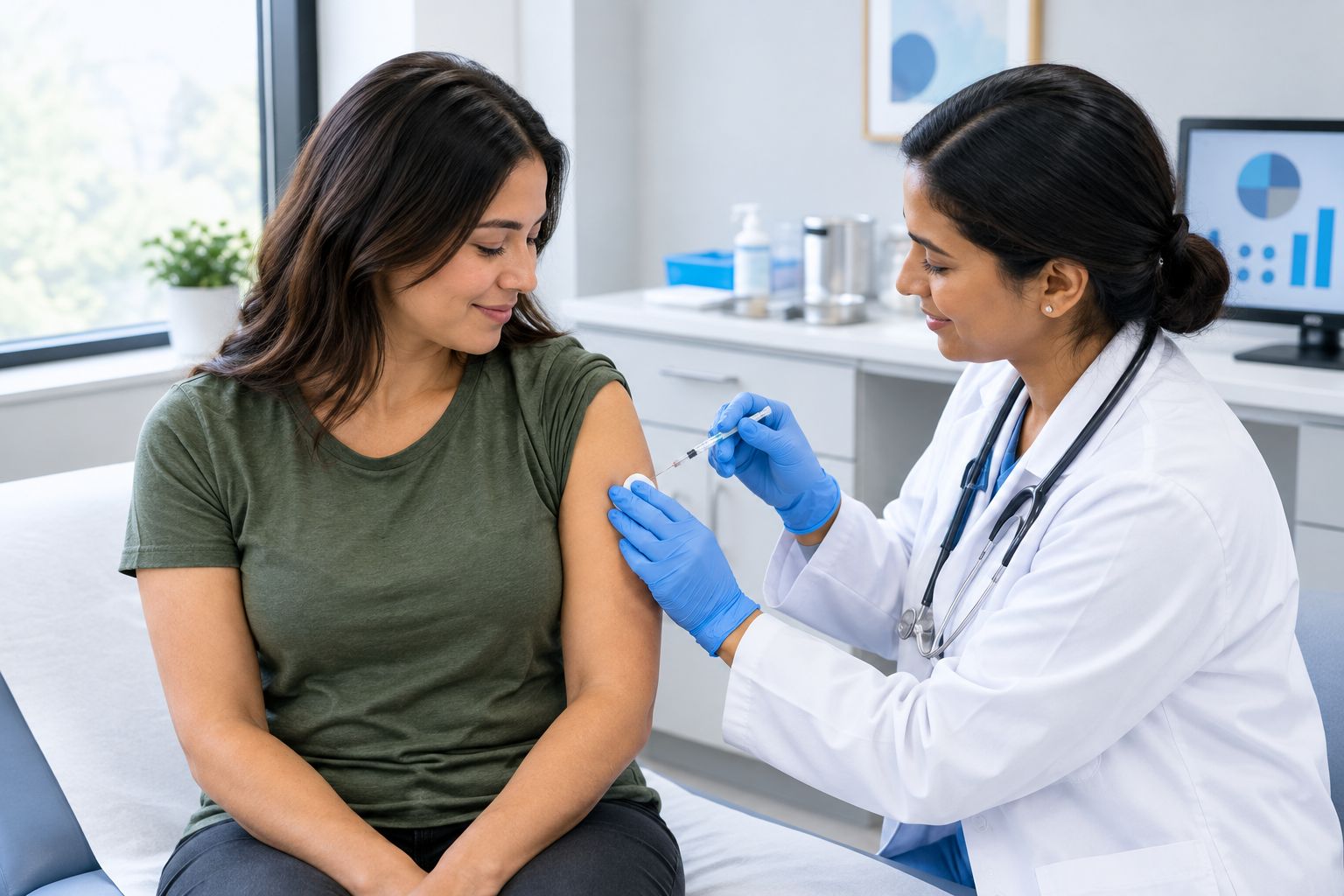
When there's no record and no time or reason for a titer, the civil surgeon can usually give the MMR vaccine during the same visit, as long as there's no medical reason not to.
- MMR is typically given as a single dose during the exam when history is unclear
- The standard schedule calls for two doses, so a second dose on your own timeline may still be needed later for general health, separate from the I-693 requirement
- The civil surgeon documents the dose given directly on Form I-693
- Getting vaccinated at the visit usually doesn't push the exam past the standard 3-business-day completion
- Contraindications, including pregnancy and certain immune conditions, rule this option out
Tell the civil surgeon if you're pregnant
MMR is a live vaccine, which means it isn't given during pregnancy. This isn't a permanent exemption from the requirement, just a timing issue.
- Say so at the start of your visit, before the exam gets underway
- The civil surgeon documents a temporary deferral rather than a waiver
- Bring your estimated due date if you know it
- Ask about timing for catching up on MMR after delivery, since USCIS still expects the requirement addressed eventually
See how pregnancy affects other parts of the exam, including chest X-rays, in pregnancy and vaccines during your I-693 exam.
Ask about the religious or moral objection waiver if it applies
A small number of applicants qualify for a vaccination waiver on religious or moral grounds. This route is narrower than most people expect.
- The objection has to be to vaccination in general, not to MMR specifically
- The belief has to be sincere and consistently held, not adopted just for this application
- The civil surgeon documents your history and objection; USCIS, not the civil surgeon, decides the waiver
- Filing this waiver typically adds processing time compared with simply getting the vaccine
- This path doesn't apply to children the way it can apply to adults, since age and consent factor into the review
Children have their own age-related distinctions on required vaccines. Details on how that works appear in I-693 medical exam for children under 18.
Confirm your MMR status matches Form I-693 before it's sealed
Before you leave the appointment, check the vaccination section of your form against what you understand your status to be.
- Ask the civil surgeon to walk through what was documented and why
- Request a copy of your updated vaccination record for your own file
- Flag anything that doesn't match your understanding before the packet is sealed
- Never open a sealed I-693 packet yourself once it's complete; a broken seal can create new problems with USCIS
Handle your MMR requirement in one visit
Book your Form I-693 exam and address vaccine gaps the same day.
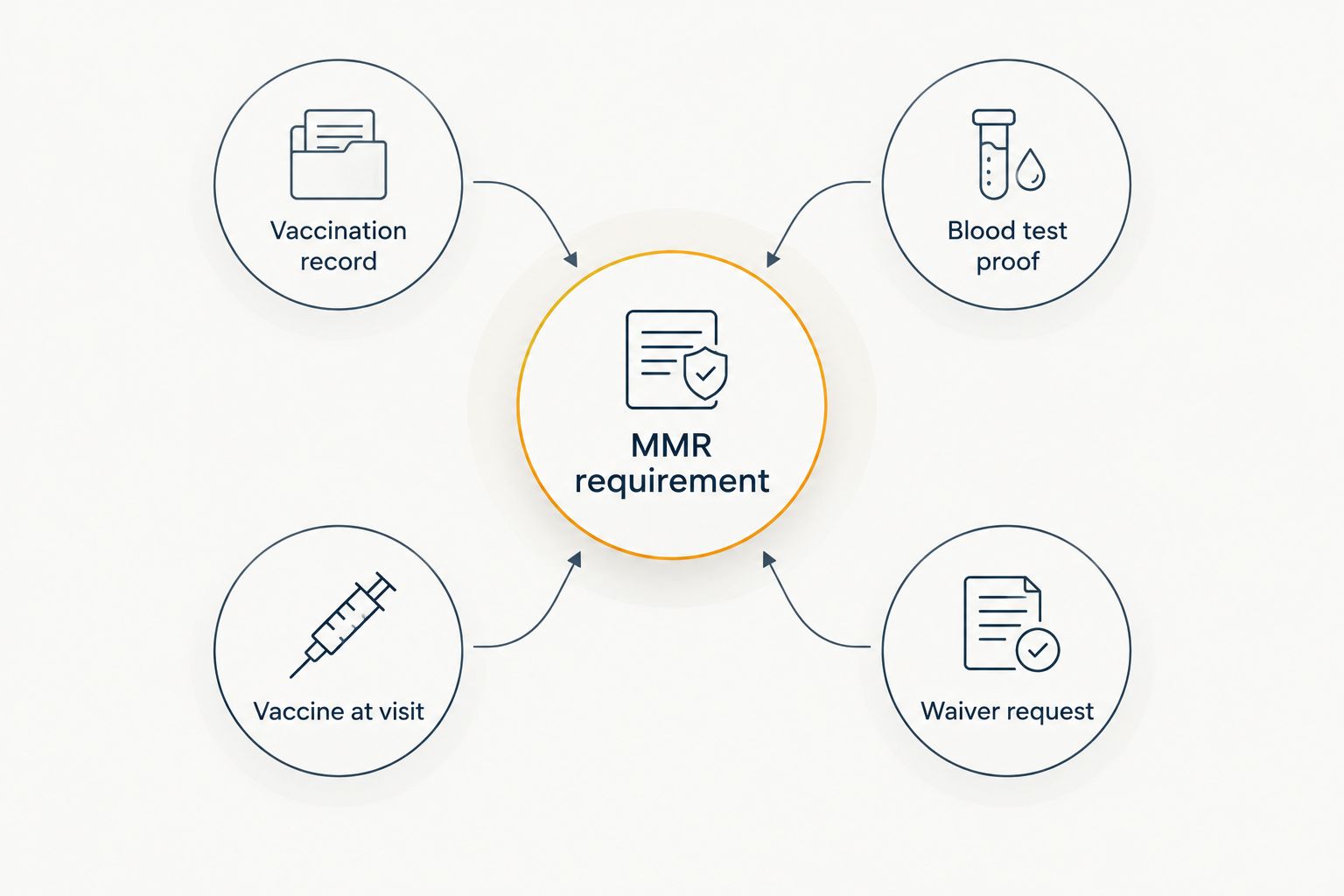
Comparing your options for the MMR requirement
| Option | Best for | Key limitation |
|---|---|---|
| Written vaccination record | Applicants with documented childhood or school records | Lost or incomplete records are the most common source of delay |
| Blood test (titer) | Applicants with no paperwork who need to confirm immunity | Adds lab turnaround time before the form is finished |
| Vaccine at the civil surgeon visit | Applicants with no proof and no medical contraindication | Not an option during pregnancy or with certain immune conditions |
| Religious or moral objection waiver | Applicants with a sincere, general objection to vaccination | Decided by USCIS, not the civil surgeon, and can extend the timeline |
The fastest path for most applicants without a record is a titer or an on-the-spot vaccine, not a waiver. A waiver is the right tool for a small group of applicants with a genuine general objection, not a shortcut around paperwork.
Common mistakes applicants make with the MMR requirement
- Assuming presumed immunity by birth year covers measles, mumps, and rubella together, when it usually only speaks to measles.
- Bringing a partial childhood record and expecting it to be accepted without a titer to fill the gaps.
- Not mentioning a possible pregnancy before the exam starts, which can force a repeat visit later.
- Treating a waiver request as an automatic exemption instead of a USCIS decision that takes extra time.
- Waiting until right before a biometrics appointment to deal with MMR, leaving no room for a titer or a second dose if one turns out to be needed.
Timing your exam correctly around other USCIS deadlines matters just as much as the vaccine itself. See how to time your I-693 exam before your biometrics appointment for the full picture.
FAQ
Do I need the MMR vaccine for my I-693 medical exam?
Most applicants need to show proof of MMR immunity, either through vaccination records, a blood test, or a vaccine given during the exam. USCIS civil surgeons follow current CDC-based guidance when applying this requirement in 2026.
What counts as proof of MMR immunity for USCIS?
A written vaccination record showing two doses, or a lab blood test (titer) showing positive antibody levels for measles, mumps, and rubella, both count as proof. Without either, the civil surgeon usually offers the vaccine during the visit.
Can I get the MMR vaccine during my civil surgeon visit?
Yes, in most cases, if there's no medical reason it shouldn't be given that day. The civil surgeon documents the dose directly on Form I-693.
Is the MMR vaccine required if I'm pregnant?
No, MMR is a live vaccine and isn't given during pregnancy. The civil surgeon notes a temporary deferral rather than giving the shot at that visit.
Am I exempt from the MMR requirement if I was born before 1957?
You're often presumed immune to measles under CDC guidance, but that presumption doesn't always extend to mumps or rubella. Ask the civil surgeon to review your specific case.
What happens if I refuse the MMR vaccine for religious reasons?
You may qualify for a waiver if your objection is to vaccination in general and is sincere, not limited to MMR alone. USCIS decides the waiver, not the civil surgeon, and this route typically adds processing time.
How long does a measles antibody blood test take?
Turnaround depends on the lab, but results generally fit inside the standard 3-business-day Form I-693 completion window. Ask about timing if you're also trying to use the 2-business-day expedited option.
Will getting the MMR vaccine delay my Form I-693 completion?
Usually not. Getting vaccinated at the same visit is often faster than waiting on a titer or a waiver decision.
One last thing
MMR is one shot, but CDC guidance scores measles, mumps, and rubella immunity separately. An old record that clearly documents measles doesn't automatically prove mumps or rubella immunity too. If your only proof is decades old or from a country with a different childhood schedule, ask the civil surgeon to check each of the three components on its own instead of assuming one covers all three.