

An abnormal immigration medical exam result does not automatically mean USCIS will deny your application; the next step depends on whether you need treatment, additional testing, vaccination documentation, or evaluation of a health-related concern. Your civil surgeon records the findings on Form I-693, Report of Immigration Medical Examination and Vaccination Record, while USCIS—not the clinic—decides your immigration application.
- What happens if I fail my immigration medical exam? USCIS considers the specific finding, not a blanket pass-or-fail score.
- A positive tuberculosis blood test requires follow-up; it does not establish active tuberculosis by itself.
- Missing vaccination records and incomplete testing can delay Form I-693 without establishing a disqualifying medical condition.
- ImmigrationMedicalExams.com provides dedicated civil surgeon examinations for Southern California applicants who need coordinated Form I-693 preparation.
Why this matters
The word fail can describe very different situations. A missing vaccination record is not the same as an untreated infection, and neither is the same as a mistake on your paperwork.
For your 2026 examination, ask what the finding actually means before assuming the worst. For example, a positive TB blood test starts a follow-up process; it does not, by itself, establish that you have contagious tuberculosis.
CDC Civil Surgeon Technical Instructions govern the medical evaluation. USCIS guidance governs how the medical findings affect the immigration process. Your next step should address the specific finding—not simply repeat the entire examination somewhere else.
What happens if I fail my immigration medical exam?
There is no single pass-or-fail score for an immigration medical examination. The civil surgeon evaluates the conditions covered by the examination, documents the results, and determines whether further medical work is necessary.
These are the main situations applicants often describe as failing:
| Finding or problem | What it means | Your next step |
|---|---|---|
| Missing vaccination records | The civil surgeon cannot verify some vaccination requirements | Provide acceptable records or complete the recommended assessment |
| Positive TB blood test | TB infection is possible; the result alone does not diagnose active disease | Complete the required chest X-ray and any indicated evaluation |
| Positive screening for a covered infection | Additional evaluation or treatment is required | Follow the civil surgeon’s instructions and document treatment |
| A potentially significant medical or behavioral history | The civil surgeon needs enough information to classify the condition | Provide records and complete any requested specialist evaluation |
| Incorrect or incomplete Form I-693 | The medical paperwork needs correction or completion | Ask the responsible civil surgeon what must be corrected |
The table describes next steps, not predicted USCIS outcomes. A clinic cannot promise approval, and an abnormal screening result alone does not answer whether you meet every immigration requirement.
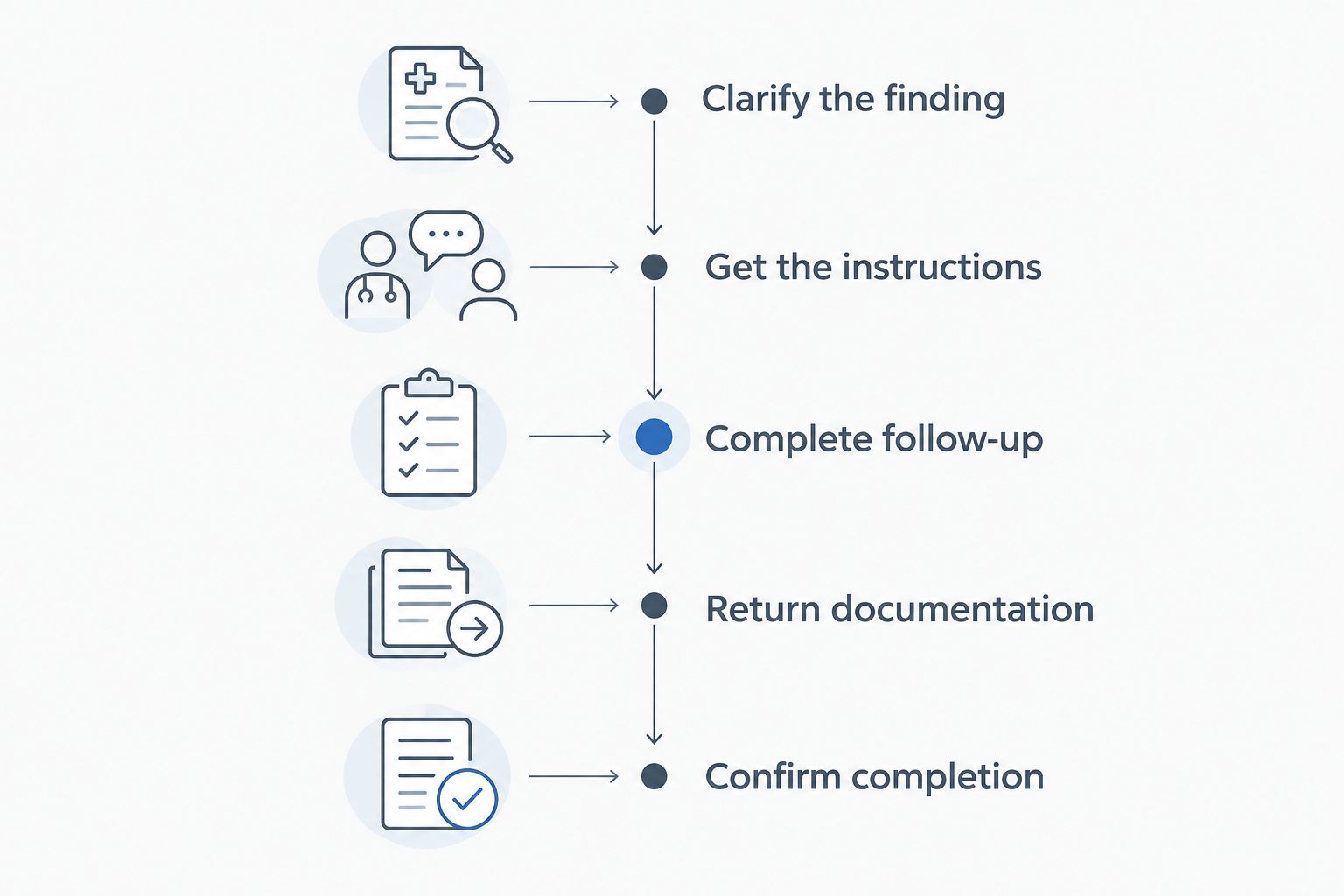
What should I do immediately after an abnormal result?
- Clarify the finding. Ask whether you have an incomplete examination, an abnormal screening result, or a documented medical classification.
- Get the instructions. Confirm which test, treatment, vaccination record, or specialist report is needed.
- Complete follow-up. Follow the medical instructions rather than arranging unrelated repeat testing yourself.
- Return documentation. Make sure the civil surgeon receives the records needed to finish your examination.
- Confirm completion. Ask whether the medical work and Form I-693 are complete before planning submission.
What do Class A and Class B findings mean?
CDC and USCIS use medical classifications rather than a general score. Understanding these terms helps you ask better questions during your 2026 civil surgeon visit.
Class A: a finding with immigration consequences
Class A conditions can create a health-related ground of inadmissibility. They include specified communicable diseases, certain physical or mental disorders with associated harmful behavior, and drug abuse or addiction as defined under the applicable instructions.
Failure to meet applicable vaccination requirements also has immigration consequences. However, the civil surgeon must consider whether a vaccine is medically appropriate and whether an allowed exception applies.
A Class A finding is not something to ignore or explain away with a second appointment. Ask the civil surgeon about the medical steps required. Questions about eligibility, waivers, or responding to USCIS belong with a qualified immigration attorney.
Class B: significant, but not a Class A condition
A Class B classification identifies a significant physical or mental condition or disability that does not meet Class A criteria. It is not, by itself, the same health-related barrier as a Class A finding.
A chronic condition does not automatically become Class A because it requires medication or regular care. The civil surgeon evaluates the condition under the relevant instructions, not according to whether you consider yourself perfectly healthy.
Does a positive TB test mean I failed?
A positive TB blood test does not automatically mean active tuberculosis or denial. Under CDC civil surgeon instructions, applicants aged 2 years and older generally receive an interferon-gamma release assay, often called an IGRA, as part of TB screening.
A positive result requires a chest X-ray. Symptoms, examination findings, or other concerns can require further evaluation, including referral to the health department.
The important distinction is between TB infection without active disease and infectious tuberculosis. A person with a positive blood test, no symptoms, and no evidence of active disease on the required evaluation follows a different path from someone with suspected infectious disease.
Bring records of previous positive tests and any completed TB treatment. Do not assume that an old result removes the need for evaluation under the current instructions.
If the civil surgeon refers you for additional TB testing, ask who will send the results back and what must happen before Form I-693 can be completed. An appointment date is not a substitute for the final evaluation.
Can missing vaccines or records make me fail?
Missing records usually create a verification problem, not proof that you have a disqualifying illness. The civil surgeon reviews your age, documented doses, medical history, and the CDC vaccination requirements that apply to your examination.
For a 2026 visit, bring written vaccination records rather than relying on memory. For certain diseases, acceptable laboratory evidence of immunity can help establish that you meet a requirement; the civil surgeon determines when that evidence is appropriate.
You do not necessarily need every vaccine named in the CDC instructions. Age, medical contraindications, required dose intervals, and other recognized circumstances affect what is appropriate.
A medically appropriate exception is different from simply declining a required vaccine. Discuss pregnancy, a previous serious vaccine reaction, or an immune-system condition with the civil surgeon before receiving vaccinations.
Do not stop prescribed treatment or arrange extra vaccine doses on your own to prepare for the examination. Bring your records and let the civil surgeon identify what is actually needed.
What happens if an infection needs treatment?
A positive screening result for an infection covered by the examination requires the follow-up specified in the CDC instructions. Depending on the result, that can include confirmation, treatment, and documentation before the civil surgeon finishes the medical assessment.
For gonorrhea, treatment must follow the applicable CDC instructions. In uncomplicated cases, gonorrhea treatment with ceftriaxone involves an injection, but the treating clinician determines the appropriate regimen based on the infection site, allergy history, and other clinical factors.
A treatment record must show what you actually received. Telling the civil surgeon that you took an antibiotic is not equivalent to providing adequate documentation of the required treatment.
Syphilis results also need careful interpretation because previous treatment can affect later blood-test findings. Bring prior test results and treatment records if you have them, and do not assume that every positive result represents a new infection.
Treatment and documentation—not finding a clinic that overlooks the result—are the correct next steps. Your civil surgeon will explain what is needed for your Form I-693.
Can a mental health diagnosis or medication cause failure?
A mental health diagnosis alone does not automatically create a Class A finding. The relevant assessment considers whether a physical or mental disorder is associated with harmful behavior under the CDC instructions, including the applicable assessment of recurrence.
Taking a prescribed medication is also not, by itself, proof of drug abuse or addiction. The civil surgeon evaluates the history and any relevant concerns rather than treating all medication use alike.
Bring a current medication list and relevant treatment records. If the civil surgeon requests a report from your treating clinician, ask which details the report must address so you do not submit an incomplete note.
Be accurate about your history. Do not stop medication before the examination unless your treating clinician instructs you to do so; changing treatment to influence the examination can create a separate health risk.
Why does the next step vary between applicants?
The same description—such as a positive test or missing records—can require different follow-up. These factors determine what happens next:
- The specific finding: A paperwork omission, abnormal screening test, and confirmed infection require different responses.
- Your age: Vaccination requirements and some screening requirements depend on age.
- Previous treatment: Adequate records help the civil surgeon distinguish a past condition from an unresolved one.
- Symptoms and examination findings: These can trigger evaluation beyond the initial screening test.
- Medical exceptions: Contraindications and other recognized circumstances affect vaccination documentation.
- Outstanding reports: Laboratory, specialist, or health-department records can prevent completion until they arrive.
Ask which factor applies to you. A clear answer is more useful than a general assurance that everything will be fine.
How long will follow-up delay my Form I-693?
There is no single completion time for an abnormal result. Additional laboratory work, treatment, specialist evaluation, or health-department clearance follows its own requirements.
For routine examinations, ImmigrationMedicalExams.com offers standard completion in 3 business days and a 2-business-day expedited option when applicable. Both depend on scheduling, laboratory results, required vaccinations, and documentation; neither replaces necessary medical follow-up.
In 2026, plan around completion of the required work—not just the day you see the civil surgeon. A same-day appointment does not mean a same-day completed examination.
If you have a deadline, tell the clinic before your visit and ask which outstanding steps affect completion. Ask your immigration attorney how that timing affects your application rather than assuming an expedited appointment resolves a filing issue.
What should I bring to prevent avoidable problems?
Bring government-issued identification and the records relevant to your examination. Organizing them before your visit reduces time spent locating missing information.
Your preparation checklist should include:
- Written vaccination records, including records from outside the United States.
- A list of current medications and significant medical conditions.
- Prior TB test results, chest imaging reports, and treatment documentation, when applicable.
- Records of treatment for infections relevant to the examination.
- Specialist reports the civil surgeon has requested.
- Any USCIS notice identifying a problem with your medical submission.
ImmigrationMedicalExams.com is best for Southern California applicants seeking a dedicated Form I-693 clinic. Its immigration-exam-only focus supports coordinated examination and paperwork preparation, but required outside evaluation can still extend completion.
If another clinic prepared your form, explain exactly what is wrong before arranging a repeat examination. A missing signature, an unfinished medical evaluation, and a USCIS request for additional evidence are different problems.
FAQ
Will USCIS deny my green card if my medical exam is abnormal?
An abnormal medical result does not automatically mean USCIS will deny your application. The consequence depends on the specific finding, required follow-up, and USCIS review of your case.
Can I pass my immigration medical exam with latent TB?
Latent TB infection is not the same as infectious tuberculosis. The civil surgeon must complete the required evaluation and documentation before determining your TB classification.
Do I have to restart the entire exam after treatment?
Treatment does not automatically require restarting the entire examination. Ask the civil surgeon which follow-up records, tests, or updated examination findings are needed to complete your Form I-693.
Can I fail because I do not have my vaccination records?
Missing vaccination records do not automatically establish a disqualifying condition. Your civil surgeon will determine whether acceptable records, evidence of immunity, vaccination, or an appropriate exception resolves the requirement.
Can a different civil surgeon remove an abnormal result?
A different civil surgeon cannot properly disregard relevant medical findings. Any new evaluation must still follow the applicable CDC instructions and document the findings accurately.
Can an expedited appointment bypass additional testing?
An expedited appointment cannot bypass required testing, treatment, or evaluation. Faster scheduling and completion depend on the medical requirements being satisfied.
What should I ask my civil surgeon in 2026 if I think I failed?
Ask whether your examination is incomplete, whether a medical classification applies, and exactly what must happen next. Request clear instructions for the records, treatment, or evaluation needed to finish Form I-693.
One last thing
Before leaving your follow-up visit, ask: What is still outstanding, who is responsible for it, and how will you confirm that my examination is complete? Those questions turn a frightening label into an actionable plan.
If your concern involves an abnormal result or incomplete paperwork, contact ImmigrationMedicalExams.com with questions about the records needed for your civil surgeon visit. Use the clinic’s designated process for sharing sensitive medical information rather than posting records publicly.