I-693 Photo Requirements: What to Bring to Your Exam

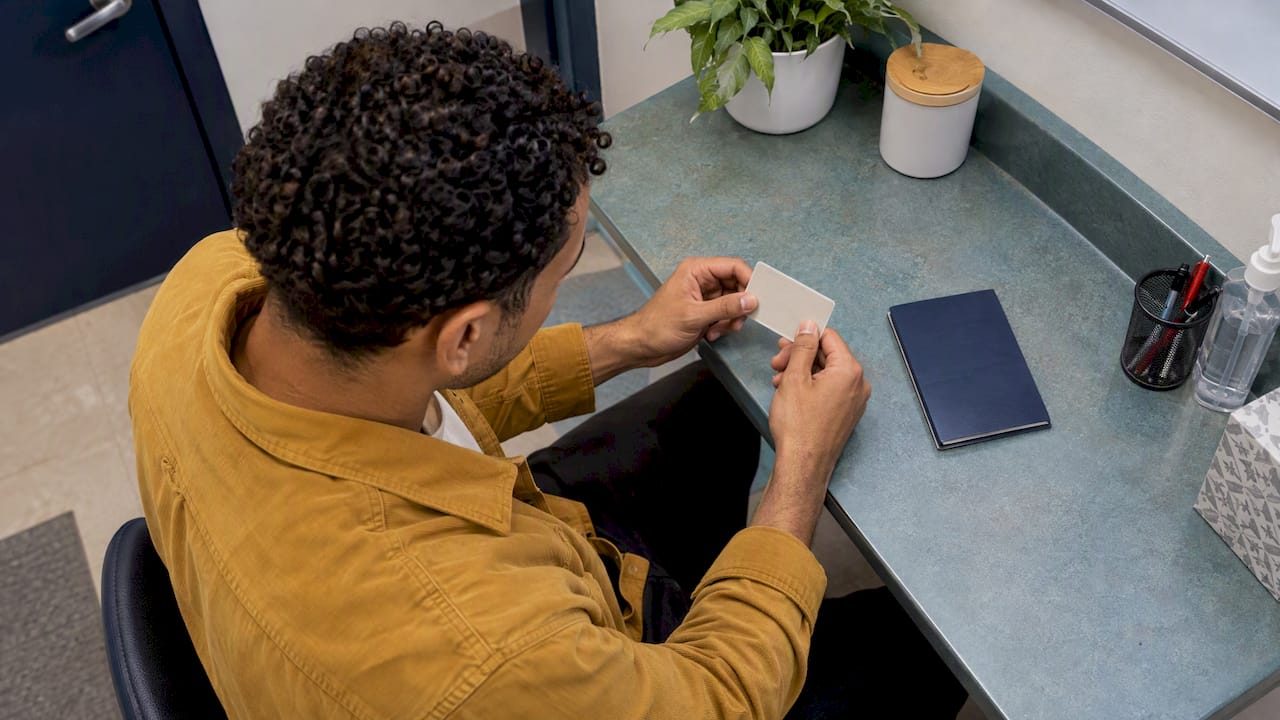
Form I-693 does not ask you to bring or submit passport-style photographs. What the civil surgeon needs is a valid, government-issued photo ID, plus your vaccination and medical records. The “photo” in the I-693 process is your identification, not a 2" x 2" picture. The passport-style photos belong to other parts of your green card filing.
This guide separates the two. It explains what the I-693 instructions say, which ID works, what happens if you have none, and where passport photos do apply.
TL;DR
- The I-693 Instructions tell you to bring a valid government-issued photo ID and your medical and vaccination records. They do not tell you to bring passport-style photos for the I-693.
- Passport-style photos are required elsewhere: the USCIS Policy Manual says two passport-style photographs must be included with an adjustment application.
- Applicants under 14 without a photo ID can use a birth certificate or an affidavit instead. Adults without ID are handled case by case by the civil surgeon.
- Do not open the sealed envelope the civil surgeon gives you, and do not sign the form ahead of time.
Table of Contents
- What the I-693 instructions actually ask you to bring
- Photo ID versus passport-style photo
- Which IDs work at the exam
- If you do not have a photo ID
- Where passport-style photos do apply
- What to bring to the exam: the full checklist
- What happens after the exam
- Our perspective: why photo questions come up so often
- Get the exam done correctly the first time
- FAQ
- Sources
What the I-693 instructions actually ask you to bring
The official instructions for Form I-693 list two things for the civil surgeon appointment: medical records, including vaccination records, and valid government-issued photo identification. Photographs are not on that list.
The confusion is understandable. The phrase “photo ID” contains the word photo, and most green card checklists mention passport photos somewhere. Search results for this topic show the same pattern: pages that rank for this query mostly say to bring a government-issued photo ID and vaccination records, which matches the instructions.
The civil surgeon uses your ID to confirm you are the person being examined. The surgeon records the type of ID you showed and its number in Part 5 of the form, according to the I-693 instructions. That entry is the only place your identification appears on the I-693.
Photo ID versus passport-style photo
These are two different things that get used for two different purposes.
| Government-issued photo ID | Passport-style photograph | |
|---|---|---|
| What it is | A document with your photo, name and ID number, issued by a government | A printed 2" x 2" picture of your face |
| Needed for the I-693 exam? | Yes, bring it to the appointment | No, not under the I-693 instructions |
| Who uses it | The civil surgeon, who records it in Part 5 | USCIS, for the application it goes with |
| Examples | Unexpired passport, driver’s license | Photo taken at a pharmacy or photo studio |
The I-693 itself has no photo box. You will not glue or staple a picture to it, and the clinic will not ask you to supply one for the form.
Which IDs work at the exam
The I-693 instructions call for a valid, government-issued photo ID, such as an unexpired passport or driver’s license. Practical points that keep your appointment from stalling:
- Bring it unexpired. An expired document is a common reason a visit has to be rescheduled. If yours has lapsed, renew it or bring a second valid ID.
- Match your names. The name on your ID should match the name on your immigration paperwork. If it differs because of marriage or a spelling variant, bring the supporting document and tell the clinic before the exam.
- Bring the original. The surgeon needs to see the document in person and note its type and number.
- A passport is the safest choice for most applicants, since it is issued by a government and shows your name, date of birth and photo in one place.
We keep a longer checklist of acceptable documents in our guide to I-693 ID requirements. If your passport is not with you or not available, our Spanish-language article explains the I-693 exam without a passport.
If you do not have a photo ID
This is where applicants worry most, and the rules have room for it.
Children under 14
For an applicant under 14 who has no photo ID, the I-693 instructions allow alternative identity documents. These include a birth certificate (with a translation if necessary) or an affidavit showing the applicant’s name, date and place of birth, and the parents’ full names. Bring the original of whichever you use, and bring the parent or guardian who can speak to the child’s identity.
Adults without a government photo ID
USCIS guidance to civil surgeons says that when an adult has no government-issued photo ID, the surgeon should use their best judgment in accepting other identity documents. USCIS gives examples such as an I-94 card, school records or medical records. The surgeon is then to include a copy of those documents and a brief narrative explanation with the Form I-693.
Two things follow from that:
- Acceptance is a judgment call by the individual surgeon. Call the clinic ahead and ask what it will accept, so you do not learn the answer at the front desk.
- The same USCIS guidance says that resolving identity issues during adjudication is the job of USCIS, not the civil surgeon. The surgeon documents what you showed; USCIS decides what it means for your case.
That note is dated 2017, so confirm current practice with the clinic. In our experience the cleanest path is always to have a valid ID in hand, even if that means renewing a license before you book.
Where passport-style photos do apply
If you landed here after seeing “photo” on a green card checklist, the requirement likely comes from the main application, not the medical form. The USCIS Policy Manual states that two passport-style photographs must be included with an adjustment application.
The same chapter describes what those photos look like when they are required. They must be:
- 2" x 2"
- In color, showing a full face in a frontal view
- On a white to off-white background
- Printed on thin, glossy paper
- Unmounted and unretouched
Treat that as the general standard, and read the instructions for your specific form before you buy prints, because the requirement depends on what you are filing. Your I-485 or other form instructions, and your attorney if you have one, are the final word. Keep photo-taking separate from your medical appointment. Nothing you do on that front changes your I-693.
What to bring to the exam: the full checklist
Photos are not the item that holds people up. Records are. Here is what to have ready.
- Valid government-issued photo ID, original and unexpired.
- All vaccination records you can find, including those from your home country. Records from schools, previous doctors, military service and public health offices all help.
- Other medical records relevant to your history, if you have them. This matters most if you have had a condition that the surgeon needs to review.
- A list of medications, if you take any.
- Glasses or contacts, if you use them, for the vision part of the exam.
- Your form edition information, if your attorney or case worker flagged it. Our article on checking the I-693 edition, vaccines and seal explains why this matters before USCIS reviews your file.
If your vaccine records are on a phone or in a portal, see our comparison of digital and paper immunization records so you bring them in a form the clinic can use.
Do not sign Form I-693 before you see the civil surgeon. Several clinics and guides say the same: the form is completed at the appointment, and your signature goes on it there.
What happens after the exam
Once the exam is finished, the civil surgeon completes and signs the form and gives it to you in a sealed envelope. USCIS states that you submit it, not the doctor, and that you must not open the envelope.
No photos go in with it. If you want to know what the day looks like from check-in to sealed envelope, read our step-by-step guide to the immigration medical exam. For handwritten versus electronic signatures and what a proper seal looks like, see sealed vs electronic I-693.
A related worry: some applicants wonder if they need to notarize or certify copies of their records. We cover that in why notarizing I-693 paperwork is not needed.
Our perspective: why photo questions come up so often
We have done nothing but immigration medical exams since 2007. We do not run primary care, urgent care or sick visits, so every person at our front desk is there for an I-693. That gives us a clear view of what causes problems at check-in.
The passport-photo question is rarely the real problem. It is a symptom of a bigger uncertainty: applicants are handed a pile of checklists for several forms and cannot tell which item belongs to which. We tell them to sort by form. The I-693 needs identification and records at the exam. The main application needs its own photos and evidence.

The trouble we see more often is quieter. An ID that has expired. A name that does not match the case file. A vaccination record that is partial or in another language. Applicants who come to us after an exam elsewhere sometimes arrive with an incomplete record or a form that needs to be corrected, and fixing that costs time that a first-visit check would have saved.
So our advice is plain. Put your ID and your records on the table first. Photos are the smallest part of this form.
— ImmigrationMedicalExams Medical Team
Get the exam done correctly the first time
If you are in Southern California, our practice handles the full I-693 in one location: the civil surgeon exam, lab testing, vaccination review and any required vaccines, and preparation of the form. Our focus is accuracy and USCIS compliance, with an internal quality review before the envelope is sealed.
We offer a standard 3-day exam and a 2-day expedited option, with online scheduling open 24/7. Titer testing, additional vaccines, replacement sealed envelopes and record copies are listed on our pricing page, along with the $210 missed appointment deposit. You can read the full service description on our immigration medical exam page.
FAQ
Do I need a passport photo for my I-693 appointment?
No. The I-693 Instructions ask for valid government-issued photo identification and medical records, including vaccination records. They do not tell you to bring passport-style photographs. Those are needed for other filings, such as the adjustment application.
What ID is accepted for the I-693 exam?
A valid, unexpired government-issued photo ID such as a passport or driver’s license is the standard. The civil surgeon records the type of ID and its number on the form. Call your clinic if your ID is expired or the name differs from your case paperwork.
What if my child has no photo ID?
For applicants under 14, USCIS allows a birth certificate (translated if needed) or an affidavit showing the child’s name, date and place of birth, and parents’ full names. Bring the original. The clinic can tell you which it prefers before the visit.
Can I upload my I-693 online or send it with my photos?
No, the process is paper-based in the way that matters to you: the civil surgeon gives you a sealed envelope and you submit it to USCIS, as USCIS explains. Do not open the envelope, and do not add photos to it.
What if the clinic closes before I get my results?
It is rare but it happens. Our guide to recovering your I-693 results if a civil surgeon closes explains your options.
Sources
- Form I-693, Instructions for Report of Immigration Medical Examination and Vaccination Record (USCIS)
- Medical Exams and Form I-693 (USCIS presentation)
- Policy Manual, Volume 7, Part A, Chapter 4: Documentation (USCIS)
- Finding a Medical Doctor (USCIS)