What’s Included in Form I-693: Exam, Labs, Vaccines

Form I-693 is the Report of Immigration Medical Examination and Vaccination Record. It covers four things: your medical history and a physical exam, required lab tests, a review of your vaccinations, and the civil surgeon’s signed findings, sealed in an envelope for USCIS. Its purpose is to show that you are not inadmissible to the United States on health grounds. This guide walks through each part in the order it happens, what you should bring, and what happens afterward.
TL;DR
- The I-693 records a medical history review, a physical exam, required lab tests, and your vaccination record, all completed and signed by a USCIS-designated civil surgeon.
- The exam looks for four health-related grounds of inadmissibility: communicable diseases of public health significance, missing required vaccinations, physical or mental disorders with harmful behavior, and drug abuse or addiction.
- Bring a valid government-issued photo ID and any medical or vaccination records you have. Children under 14 need identifying documents such as a birth certificate.
- A form signed on or after November 1, 2023 does not expire, though USCIS can still ask for an updated one.
- You pay the exam costs yourself, including any follow-up tests or treatment, directly to the provider.
Table of Contents
- What Form I-693 is, in plain terms
- The four health grounds the exam checks
- What happens during the exam, step by step
- What the completed I-693 contains
- What to bring to your immigration medical exam
- How long does the exam take?
- What is not included
- Costs and what to ask before you book
- How long the I-693 stays valid
- Our perspective: where I-693 exams go wrong
- Getting your exam done in Southern California
- FAQ
- Sources
What Form I-693 is, in plain terms
When you apply for a green card through adjustment of status, USCIS needs proof that you meet the health-related requirements for admission. Form I-693 is that proof. According to the USCIS instructions for Form I-693, the form documents the results of the medical exam, and the exam is designed to determine whether you are inadmissible under health-related grounds in Section 212(a)(1) of the Immigration and Nationality Act.
The form is not a general checkup. It does not diagnose everything about your health or replace your primary care doctor. It answers a narrow set of public health questions that immigration law asks, and it is filled out by a specific kind of doctor.

Only a civil surgeon can complete it
A physician must be designated as a civil surgeon by USCIS to perform the exam and sign the form. Your family doctor or urgent care physician cannot do it unless they hold that designation. The CDC explains that the civil surgeon is responsible for the entire examination and for reporting the required test and consultation results. A DHS officer, not the doctor, then decides whether you are eligible for adjustment of status.
If you want more on this distinction, we wrote about why a general doctor is not enough for your I-693 (in Spanish).
The four health grounds the exam checks
The USCIS instructions say the exam assesses whether you have any of these:
- A communicable disease of public health significance. This is the reason for the tuberculosis and syphilis testing described below.
- A lack of required vaccinations. The civil surgeon reviews your record against the vaccines required for immigration.
- A physical or mental disorder with associated harmful behavior. The civil surgeon evaluates this during the history and examination.
- Drug abuse or addiction. This is also assessed through history and examination.
Most applicants clear all four without any issue. Where something is found, the civil surgeon documents it and explains what follow-up is needed, which is covered further down.
What happens during the exam, step by step
Exact workflow differs a little from clinic to clinic, but the components are set by USCIS and CDC requirements. Here is what a typical visit includes.
1. Identity check and paperwork
The civil surgeon or staff confirms who you are before anything else. This matters because the form is signed under your identity and sealed. Expect to show your photo ID, and for children, supporting documents. Mismatches between the ID and your application name are one of the most common causes of delay, which is why we put together a checklist of ID requirements for the I-693.
2. Medical history review
The civil surgeon asks about your past illnesses, hospitalizations, surgeries, medications, and any history relevant to the four health grounds. Answer honestly and completely. The questions are not meant to judge you. They help the doctor decide whether any further evaluation is needed. If you take regular medication, bring the list.
3. Physical examination
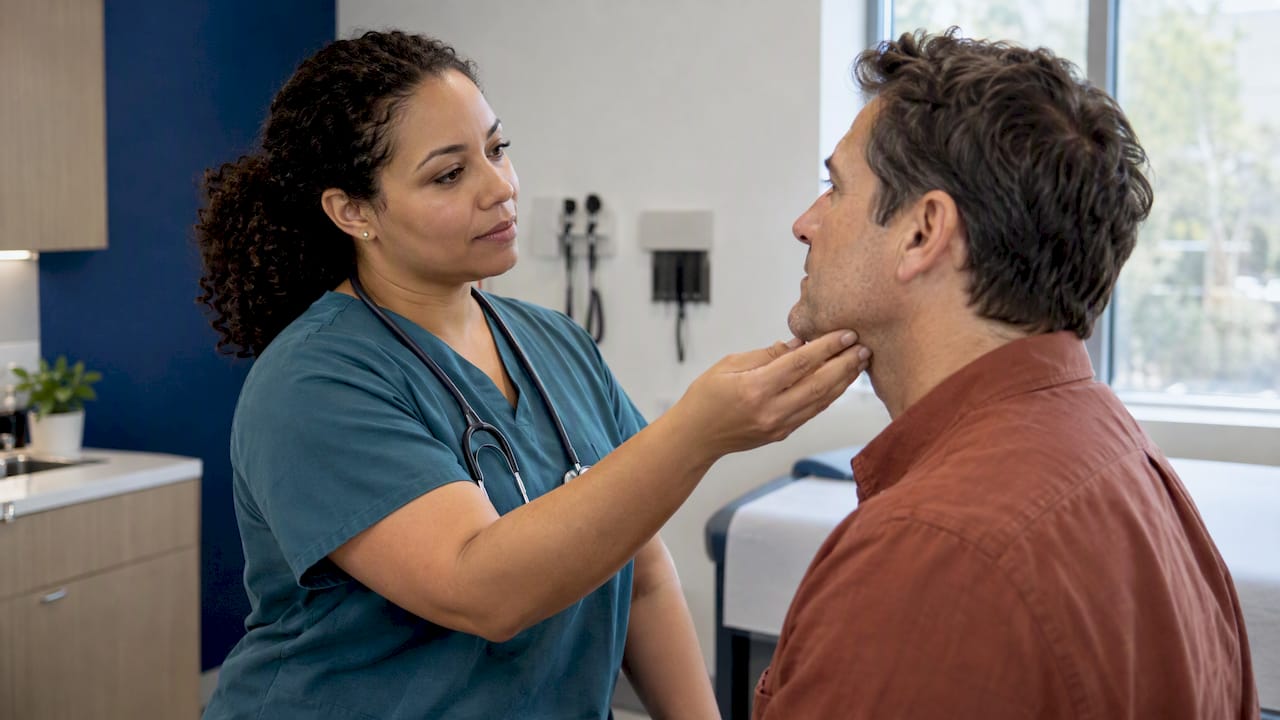
The physical exam is a standard head-to-toe review. The civil surgeon checks general appearance and looks for signs of conditions relevant to the form. It is not invasive beyond what you would expect at an ordinary physical. You will typically be asked to undress partially, and a gown or privacy is provided.
4. Mental health and behavior observation
There is no separate psychological test for most applicants. The civil surgeon observes your behavior and mental status during the visit and asks about substance use as part of the history. A concern only leads to further evaluation if something suggests a disorder with harmful behavior or a substance problem.
5. Laboratory testing
The USCIS instructions state that the civil surgeon is required to perform specific tests for tuberculosis and syphilis. Which tests apply depends on your age and circumstances, and the civil surgeon follows the CDC’s technical instructions for that. For tuberculosis screening, the test may be a skin test or a blood test, and a blood test generally returns results faster because it does not require a return visit to read the skin reaction. Ask the clinic which test it uses so you can plan your timing.
If a screening test is positive, you may need a chest X-ray or other follow-up before the civil surgeon can finish the form. That is a medical step, not a rejection.

6. Vaccination review and any needed vaccines
The civil surgeon compares your vaccination records against the immigration requirements. If records are missing or incomplete, there are usually a few options: provide documentation, take a blood test (titer) to show immunity for certain diseases, or receive the vaccine. Many applicants arrive with records from another country, in another language, or only on a phone. Our notes on digital versus paper immunization records explain what tends to work.
Measles, mumps and rubella is a frequent sticking point, and we cover it in getting your MMR cleared in one visit.
7. Completing, signing and sealing the form
After the exam, labs and vaccine review are finished, the civil surgeon completes the form, signs it, and seals it in an envelope. Do not open the envelope. Submitting an opened envelope is a classic way to get a request for evidence. If you lose the envelope or it is damaged, a replacement is possible through the clinic that issued it.
What the completed I-693 contains
When the envelope is sealed, it holds the documented outcome of everything above. In practical terms that means:
| Part of the packet | What it records |
|---|---|
| Applicant information | Your identifying details, matched to your ID |
| Medical history and exam findings | The civil surgeon’s findings from the history and physical |
| Lab results | Required tests for tuberculosis and syphilis, with results or follow-up outcomes |
| Vaccination record | The vaccines you have, are exempt from, or received at the visit |
| Civil surgeon attestation | Signature and details confirming the civil surgeon completed the exam |
USCIS updates the form edition from time to time, and an outdated edition can cause a problem. We explain how to check this in our guide to avoiding RFEs by checking the edition, vaccines, and seal.
What to bring to your immigration medical exam
The USCIS instructions point to a short list. Bring:
- A valid, government-issued photo ID, such as a passport or driver’s license.
- Any existing medical or vaccination records, including records from other countries and any earlier I-693 you were given.
- For anyone under 14, identifying documents such as a birth certificate.
Beyond that, a few extras save time:
- Your list of current medications and doses.
- Your immigration case details, such as your receipt notice if you already filed.
- Glasses or hearing aids if you use them, so the visit goes smoothly.
- Proof of identity that matches the name on your application.
If you have not gathered vaccination records, bring whatever you have anyway. A partial record still helps the civil surgeon decide what is actually missing.
How long does the exam take?
There are two different clocks. The first is the visit itself, which covers the identity check, history, physical, blood draw or skin test, and vaccine discussion. It is typically a single appointment, and how long it runs depends on how organized your records are and whether you need vaccines on the spot.
The second clock is the turnaround: lab results and the sealed envelope. This is what most people mean when they ask how long it takes. At our practice, standard processing is approximately three days, and a two-day expedited option is available. Elsewhere it can be longer, depending on the lab and the clinic’s workflow. A skin test for tuberculosis adds a return visit to have the reaction read, so ask about this when you book.
Our pages on the standard 3-day exam and the 2-day expedited exam describe how each one works.
What is not included
Knowing the limits of the I-693 prevents surprises.
- It is not primary care. The civil surgeon is not treating illness or managing your health conditions.
- It does not cover the immigration filing itself. The form is evidence you submit with your application. Questions about eligibility belong with an immigration attorney.
- Follow-up care is separate. If a test is abnormal, the USCIS instructions say you pay the costs of required follow-up tests or treatment to the provider.
- Insurance usually does not cover it. Because the exam is required for immigration rather than for treatment, many plans do not pay. Check with your insurer, but plan to pay directly.
Costs and what to ask before you book
USCIS states that applicants must pay all costs of the exam, including required follow-up tests or treatment, directly to the civil surgeon or other provider. There is no government fee schedule for the exam, so prices differ between clinics. The useful question is not just the headline number but what it covers.
Before you book, ask:
- Does the price include the physical, lab tests, vaccine review, and form preparation?
- Are vaccines or titer tests extra if I need them?
- What is the cost for a replacement envelope or printed copies?
- Are there cancellation or missed-appointment fees?
- How many days until I receive the sealed envelope?
At our practice we use a flat-package approach meant to limit unexpected costs. Optional services such as vaccination titer testing, additional vaccinations, a replacement sealed envelope and printed record copies are listed on our pricing page, along with the $210 missed appointment deposit. For more on how to evaluate prices, see our guide to I-693 exam costs.
How long the I-693 stays valid
This changed recently. According to the USCIS policy manual update on validity, a properly completed Form I-693 signed on or after November 1, 2023 does not expire. Forms signed before that date keep their evidentiary value for two years. USCIS announced this guidance in April 2024 and made clear that the form remains subject to USCIS discretion.
In practice, USCIS may ask for further evidence or an updated form if it has reason to believe the form no longer accurately reflects your medical condition. So “does not expire” is not a promise that you will never need another exam. If your health or vaccination status changes significantly, talk to your attorney.
Our perspective: where I-693 exams go wrong
We have performed immigration medical exams exclusively since 2007. We do not provide primary care, urgent care or sick visits, so the whole practice is built around one document and doing it correctly the first time.
What we see most often is not a medical problem. It is a paperwork problem. An applicant arrives with foreign vaccine records that do not match what the civil surgeon needs, an ID whose name differs from the application, an outdated form edition, or an envelope that was opened before filing. Many people come to us after an exam elsewhere left them with delays, errors, or incomplete vaccination documentation, and most of those cases could have been avoided with a clearer explanation up front.
Our advice is simple. Gather your records before the appointment, even if they look incomplete. Ask what the price includes. Ask when the sealed envelope will be ready. And never open it. We also run an internal quality review before the form is released, because a form that is accurate and complete is the best way to avoid a request for evidence.
— ImmigrationMedicalExams Medical Team
Getting your exam done in Southern California
If you live in Los Angeles, Orange, Riverside, San Diego or San Bernardino County, we handle the civil surgeon exam, required lab testing, vaccination review and required vaccines, and preparation of the I-693 in one place. You can book online at any hour. Start with our immigration medical exam page, or read our step-by-step guide to what happens at the exam. Families, children, seniors, attorneys and employers can find the relevant options on our services page.
FAQ
Can any doctor fill out the I-693?
No. Only a physician designated as a civil surgeon by USCIS can perform the exam and sign the form. Your regular doctor can supply your records, but cannot complete or seal the I-693 unless designated.
Is the I-693 covered by insurance?
USCIS requires applicants to pay the costs of the exam, including required follow-up tests or treatment, directly to the provider. Many health plans do not cover an exam performed for immigration purposes, so confirm with your insurer before relying on coverage.
Do I need to bring vaccination records?
Yes, bring whatever you have, including records from other countries. The civil surgeon reviews them against immigration requirements and tells you whether you need additional documentation, a titer test, or a vaccine.
Can I open the sealed envelope to check it?
No. The form should be submitted to USCIS in the sealed envelope the civil surgeon gives you. If the envelope is opened or damaged, ask the issuing clinic about a replacement before you file.
Does a signed I-693 expire?
A properly completed form signed on or after November 1, 2023 does not expire, according to USCIS. USCIS can still request an updated form if it has reason to doubt the form reflects your current medical condition.
Sources
- Form I-693, Instructions for Report of Immigration Medical Examination and Vaccination Record (USCIS)
- Technical Instructions for Civil Surgeons (CDC)
- Validity of Report of Immigration Medical Examination and Vaccination Record (USCIS Policy Manual update)
- USCIS Announces New Guidance on Form I-693 Validity Period