

TB Test During Pregnancy: What You Need to Know
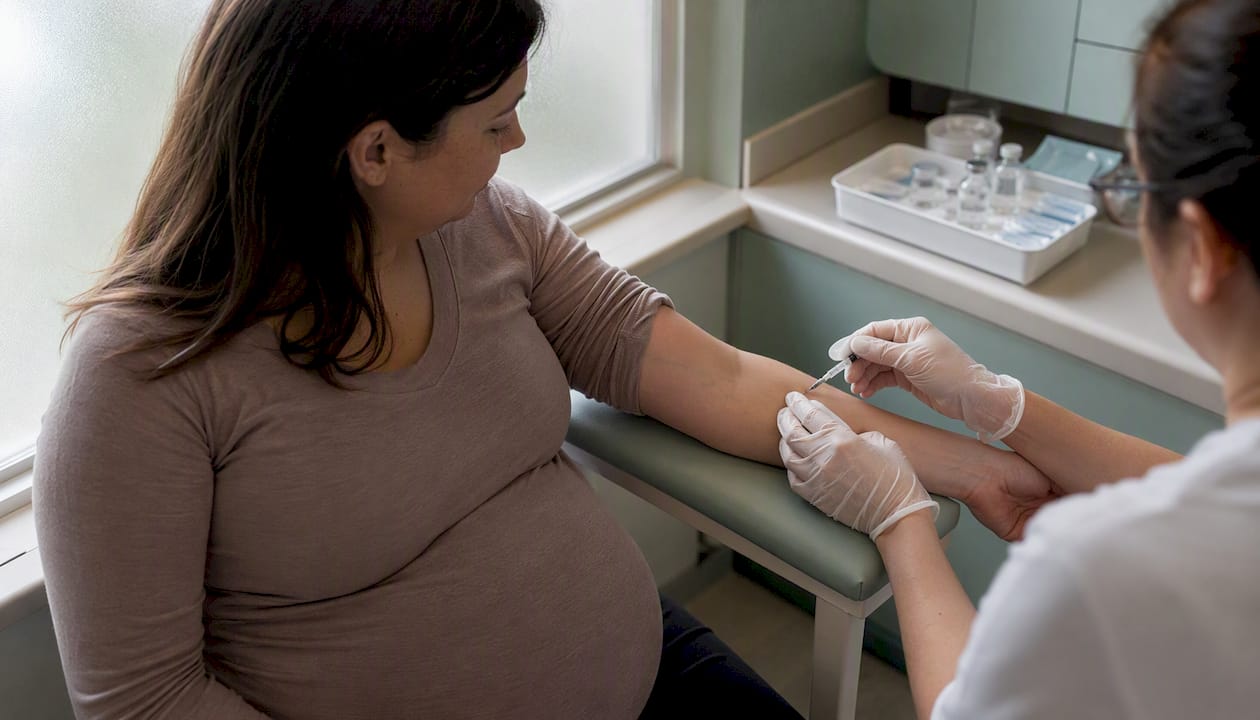
Both the TB skin test (TST) and TB blood tests (IGRAs such as QuantiFERON and T-Spot) are safe to use during pregnancy. A positive result does not mean active disease. It means your clinician needs to take the next step: a symptom review, and if warranted, a chest X-ray with abdominal shielding and possibly sputum testing to distinguish latent TB infection from active TB disease.
If you’ve tested positive or have been exposed to TB during pregnancy, here’s what to do before your next appointment:
- Tell your provider about any recent TB exposure, travel to or residence in a high-burden country, and whether you’ve had a BCG vaccine in the past.
- Report symptoms: persistent cough lasting more than two weeks, night sweats, unexplained weight loss, or fever.
- Ask specifically whether your provider wants a TST or an IGRA blood test, and how they plan to handle imaging safely if your test comes back positive.
Key Takeaways
Both TST and IGRA are safe in pregnancy, and a positive result requires clinical follow-up to distinguish latent TB infection from active TB disease before any treatment decision is made.
| Point | Details |
|---|---|
| Both tests are safe | TST and IGRA are considered safe across all trimesters of pregnancy. |
| Positive ≠ active disease | A positive test shows immune sensitization; further evaluation determines whether infection is latent or active. |
| Active TB is treated immediately | Active TB disease during pregnancy is treated without delay to protect mother and fetus. |
| LTBI treatment often waits | Most low-risk pregnant women defer preventive therapy until 2–3 months postpartum; high-risk patients start sooner. |
| Bring your history | Exposure history, prior test results, BCG vaccination status, and symptom log are the four most useful things to bring to your appointment. |
Table of Contents
- What does a positive TB test actually mean in pregnancy?
- Who should be tested for TB during pregnancy?
- How do TB tests work in pregnancy, and which is more accurate?
- What happens after a positive TB test?
- Treatment in pregnancy: active TB vs. latent TB
- Risks to the pregnancy and steps to protect your newborn
- How to prepare for your TB test appointment during pregnancy
- TB testing and immigration medical exams: what pregnant applicants should know
- The part most pregnancy TB guides get wrong
- Sources
What does a positive TB test actually mean in pregnancy?
A positive TST or IGRA result tells you one thing: your immune system has been sensitized to TB bacteria. It does not confirm active disease. That distinction shapes everything about how your care proceeds.
Latent TB infection (LTBI) means the bacteria are present in your body but inactive. You have no symptoms, you are not contagious, and your fetus is not at direct risk from the infection itself. Most pregnant women with a positive test fall into this category.
Active TB disease is a different situation. The bacteria are multiplying, typically in the lungs, and you may have symptoms: a cough that won’t resolve, night sweats, weight loss, or low-grade fever. Active TB during pregnancy carries real risks for both mother and baby, and treatment cannot wait.
The clinical path after a positive test:
- A positive TST or IGRA alone does not prove active disease; further testing is always required.
- Asymptomatic pregnant women with a positive test and no risk factors for recent exposure are typically evaluated for LTBI and may defer treatment until postpartum.
- Symptomatic women, or those with recent close contact with an infectious TB case, need urgent evaluation for active disease regardless of trimester.
Who should be tested for TB during pregnancy?
Not every pregnant person needs a TB test, but CDC recommends testing for those at higher risk. If any of the following apply to you, bring it up at your first prenatal visit.
Risk factors that indicate TB screening during pregnancy:
- Close contact with a person who has confirmed infectious TB disease
- Living in or recently immigrating from a country with high TB burden (much of sub-Saharan Africa, South Asia, Southeast Asia, parts of Latin America)
- HIV-positive status or other conditions that suppress the immune system
- Use of immunosuppressive medications such as TNF-alpha inhibitors or long-term corticosteroids
- Living or working in congregate settings (correctional facilities, shelters, long-term care)
- Prior positive TB test with no documented treatment
WHO also recommends routine TB symptom screening at every antenatal contact in high-burden settings, because pregnant women face an elevated physiological risk of progressing from latent to active TB, a risk that extends through the first six months postpartum.
Pro Tip: Before your prenatal appointment, write down every country you’ve lived in or visited in the past five years, any known TB contacts, and any prior TB tests or BCG vaccinations. Providers often ask these questions quickly during a busy visit; having the answers ready means you won’t leave anything out.
How do TB tests work in pregnancy, and which is more accurate?
Two test types are used to screen for TB infection. Both are safe across all trimesters.
The TB skin test (TST / Mantoux)
A small amount of purified protein derivative (PPD) is injected just under the skin of the forearm. The injection site is read 48–72 hours later; a raised, firm bump (induration) above a certain size threshold is a positive result. PPD is not a live substance and poses no transmission risk to you or your baby. The NIH clinical review confirms the TST is safe and accurate during pregnancy, and it remains the more established method across trimesters.
IGRA blood tests (QuantiFERON, T-Spot)
IGRAs require a single blood draw. The lab measures how your white blood cells respond to TB-specific proteins. No follow-up visit is needed to read results. A key advantage: IGRAs are not affected by prior BCG vaccination, which means fewer false positives in people vaccinated as children. You can read more about how QuantiFERON works for TB testing in a dedicated clinical explainer.

How pregnancy affects test accuracy
Pregnancy-related immune changes can reduce the sensitivity of both TST and IGRA. In plain terms, a negative result in a pregnant person with genuine TB exposure may occasionally be a false negative. Clinicians factor this in, particularly when symptoms or exposure history are strong, and may rely on clinical judgment alongside test results.
Pro Tip: If you’ve had a BCG vaccine (common in many countries outside the U.S.), tell your provider before testing. An IGRA is generally preferred in BCG-vaccinated individuals because it won’t produce a false positive from the vaccine.
What happens after a positive TB test?
A positive result starts a clinical investigation, not a treatment plan. Here’s the typical sequence:
- Symptom screen. Your provider will ask about cough, fever, night sweats, and unexplained weight loss. Symptoms point toward active disease; no symptoms point toward latent infection.
- Chest X-ray with abdominal shielding. When active TB is suspected, a chest X-ray is indicated. WHO guidance confirms that the diagnostic benefit outweighs fetal radiation risk when imaging is clinically warranted, and abdominal shielding reduces fetal exposure to a negligible level.
- Sputum testing. If you have pulmonary symptoms, your provider may collect sputum for smear, culture, or rapid molecular testing such as GeneXpert. GeneXpert can detect TB DNA and rifampin resistance within hours, which matters when treatment decisions are urgent.
- Specialist referral. Confirmed or strongly suspected active TB during pregnancy typically involves a TB specialist, an infectious disease physician, or both.
The CDPH guidance makes the clinical logic clear: a positive test requires medical evaluation and, where indicated, imaging. Skipping that evaluation is where outcomes go wrong.
Active TB disease during pregnancy is a medical urgency. Untreated, it raises the risk of preterm birth, low birth weight, and in severe cases, neonatal TB. Prompt diagnosis protects both patients.
Treatment in pregnancy: active TB vs. latent TB
The treatment approach depends entirely on which category you fall into.
Active TB disease is treated immediately, regardless of trimester. Delaying treatment for active TB in pregnancy risks serious complications for both mother and fetus. Standard first-line regimens used in pregnancy typically include isoniazid, rifampin, and ethambutol. Pyrazinamide is used in many international guidelines; U.S. practice varies by clinical judgment and drug-resistance profile.
Latent TB infection is usually managed differently. CDC guidance advises that most pregnant women with LTBI can safely defer preventive therapy until 2–3 months postpartum. The reasoning: the medications carry a small hepatotoxicity risk, and the risk of LTBI progressing to active disease during a low-risk pregnancy is low enough that waiting is reasonable.
Exceptions where preventive therapy starts during pregnancy:
- HIV-positive status
- Recent close contact with an infectious TB case (within the past two years)
- Other conditions that significantly suppress immunity
Monitoring considerations during TB therapy:
- Isoniazid is paired with pyridoxine (vitamin B6) to prevent peripheral neuropathy, a standard practice during pregnancy.
- Liver function tests are checked when initiating therapy or in the postpartum period before starting LTBI treatment.
- Women with drug-resistant TB require specialist management; standard regimens may not apply.
Pro Tip: Ask your provider directly: “Is my situation high-risk enough that you recommend starting preventive therapy now, or can we wait until after delivery?” That single question often clarifies the plan faster than waiting for a referral letter.
Risks to the pregnancy and steps to protect your newborn
Latent TB infection, well-managed, carries low direct risk to the fetus. Active TB disease is the concern. Untreated active TB during pregnancy is associated with preterm labor, low birth weight, and in rare cases, congenital TB, where the infection passes to the baby before or during delivery.
After delivery, an infant born to a mother with active TB needs prompt evaluation:
- Pediatric assessment for signs of TB infection
- Possible preventive therapy (typically isoniazid) if the infant is exposed but not yet infected
- Separation from the mother may be recommended until she is no longer infectious, though this decision involves weighing breastfeeding benefits against transmission risk
For postpartum families navigating newborn care alongside TB management, resources on breastfeeding and newborn health can help frame those early decisions.
Delivery planning steps when active TB is confirmed:
- Notify the obstetric and neonatal teams in advance so isolation protocols can be arranged.
- Coordinate with a TB specialist on the mother’s infectiousness status at the time of delivery.
- Schedule pediatric follow-up within the first week after birth.
How to prepare for your TB test appointment during pregnancy
Walk into your appointment with this information ready.
- Exposure history. List any known contact with a person who had active TB, including approximate dates.
- Travel and residence history. Countries lived in or visited in the past five years, especially high-burden regions.
- Symptom log. Note any cough, night sweats, fever, or weight changes, with approximate start dates.
- Medication list. Include any immunosuppressive drugs, steroids, or biologics.
- Prior TB test results. Bring documentation if you’ve had a TST or IGRA before, including the result and date.
- BCG vaccination history. If you received BCG as a child, note the country and approximate year.
Questions to ask your clinician:
- Do you prefer TST or IGRA in my situation, and why?
- If my test is positive, what’s the next step and how quickly will we move?
- If imaging is needed, how will abdominal shielding be handled?
- Am I in a high-risk category that would change the timing of treatment?
For green card applicants who are pregnant, TB testing is a required component of the immigration medical exam. The pregnancy and immigration medical exam guide at Immigrationmedicalexams covers deferrals, vaccine safety, and what to expect at your civil surgeon visit.
TB testing and immigration medical exams: what pregnant applicants should know
TB testing is a required part of every USCIS immigration medical exam. For pregnant applicants, the process follows the same clinical logic described in this article: TST or IGRA is performed, and a positive result triggers follow-up evaluation before Form I-693 can be completed.
Immigrationmedicalexams offers on-site TB testing, laboratory services, and I-693 processing with a 2–3 business day turnaround at clinics in Southern California. Relevant services for pregnant applicants include:
- On-site IGRA (QuantiFERON) and TST testing
- On-site laboratory draws for required immigration lab panels
- Pregnancy-aware scheduling, including same-day and weekend appointments
- Referral coordination for positive TB results requiring specialist follow-up
- Complete immigration medical exam services including I-693 documentation
Pro Tip: If you are pregnant and need an immigration medical exam, call ahead and mention your pregnancy. Civil surgeons can note pregnancy-related deferrals on Form I-693 and coordinate with USCIS when certain components need to be completed postpartum.
For a full overview of what the immigration lab testing process involves, including TB, the Immigrationmedicalexams lab resource center covers each required test in detail.
The part most pregnancy TB guides get wrong
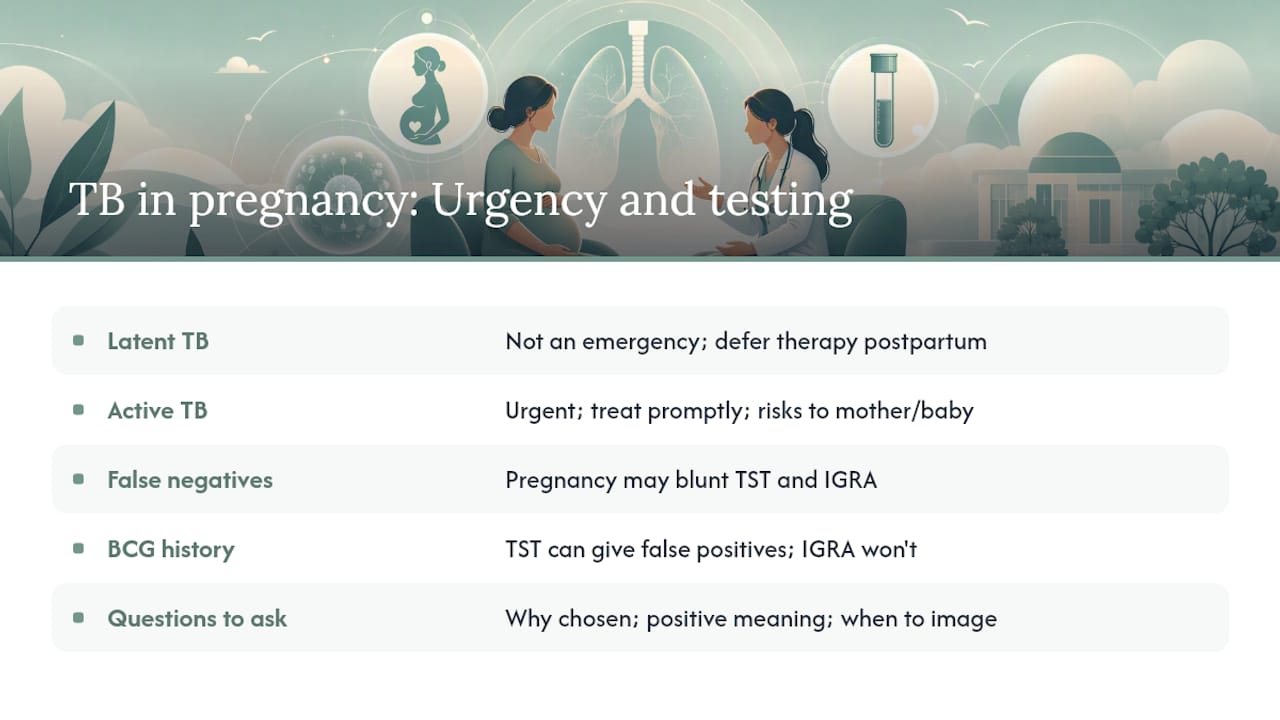
The standard advice on TB testing in pregnancy is technically accurate but practically incomplete. Most articles stop at “both tests are safe” and “see your doctor if positive.” That’s true, but it misses the question pregnant women actually need answered: how urgent is this, really?
Here’s the honest clinical picture. Latent TB infection in a healthy, low-risk pregnant woman is not an emergency. Deferring preventive therapy until postpartum is not negligence; it’s the evidence-based recommendation. The urgency calculus changes sharply, however, the moment active disease enters the picture. Untreated active TB during pregnancy carries genuine risks, and the window for acting matters.
What most guides also underplay is the false-negative problem. Pregnancy suppresses immune function in ways that can blunt both TST and IGRA responses. A negative test in a woman with a credible TB exposure history and symptoms should not be the end of the conversation. Clinicians who understand this will keep evaluating; those who don’t may close the case prematurely.
The other overlooked issue: BCG vaccination history. A large share of women who immigrated from high-burden countries received BCG as infants. A TST in a BCG-vaccinated person can produce a false positive. An IGRA won’t. That single fact should shift how providers choose between the two tests for this population, and yet it’s often not discussed until after a confusing positive TST result has already caused unnecessary anxiety.
The practical takeaway: push your provider to explain why they chose the test they chose, what a positive result means in your specific situation, and what the threshold is for moving to imaging. Those three questions will tell you whether you’re getting individualized care or a generic protocol.
This article is general information, not a substitute for advice from a qualified doctor. Consult a qualified healthcare professional about your own circumstances before acting on anything here.
Sources
The clinical recommendations in this article draw from the following authoritative guidelines. Bring specific questions to your clinician or TB specialist.
- Tuberculosis in Pregnancy | Tuberculosis (TB) | CDC
- WHO recommendations on antenatal care for a positive pregnancy experience: screening, diagnosis and treatment of tuberculosis disease in pregnant women
- Difficulties in diagnosing tuberculosis in pregnancy - PMC - NIH
- Tuberculosis in Pregnancy - CDPH
Recommended
- Understanding TB Testing for Immigration: QuantiFERON Gold Explained | ImmigrationMedicalExams.com
- TB Testing for Immigration Medical Exams — QuantiFERON & More | ImmigrationMedicalExams.com
- Is the Tdap Vaccine Required for Immigration? | Immigration Medical Exams
- Pregnancy and the Immigration Medical Exam — Vaccines, Deferrals & Safety | ImmigrationMedicalExams.com