Same-Week I-693 Appointment: How to Get Your Exam Done Fast

Yes, you can usually get an I-693 exam within the same week if you book with a clinic that does nothing else. What you cannot control is how fast lab results come back and how fast the sealed envelope is prepared, so plan around the full timeline, not only the day you see the doctor. Below we explain what “same week” really covers, how to prepare so one visit is enough, and which mistakes cost applicants far more time than a slow calendar.
TL;DR
- A same-week appointment is realistic with a civil surgeon who focuses only on immigration exams. The sealed Form I-693 comes after lab results, so ask about turnaround before you book.
- At our clinic, standard processing takes about 3 days and an expedited option takes 2 days.
- Bring your vaccination records and photo ID. Labs done by your own doctor beforehand are generally not accepted.
- Speed matters less than a correct, current form completed by an authorized civil surgeon. An error can trigger a Request for Evidence.
- Since June 11, 2025, an I-693 is generally valid only for the application it was filed with, so time your exam to your filing.
Table of Contents
- What “same week” actually means for an I-693
- Why people need an appointment this week
- The validity rule that changes your timing
- What the exam covers, so one visit is enough
- How to prepare so nothing delays your sealed envelope
- Speed versus accuracy: what really causes delays
- Questions to ask before you book
- Our perspective: why a specialist saves days
- Fitting the exam around your other appointments
- Book your I-693 exam in Southern California
- FAQ
- Sources
What “same week” actually means for an I-693
Three separate clocks run when you need an immigration medical exam:
- Getting the appointment. This depends on how full the civil surgeon’s calendar is. Practices that also see primary care or urgent care patients often squeeze immigration visits between sick visits.
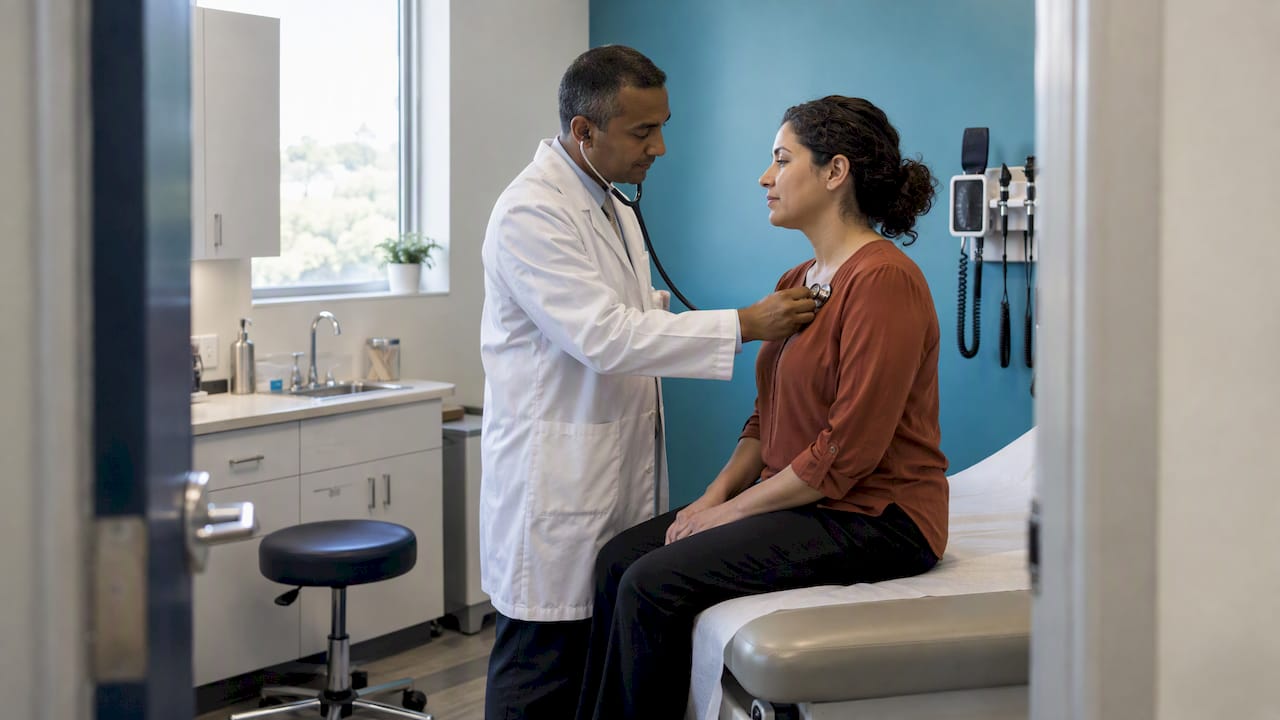
- The exam and lab work. The visit itself includes the medical history, physical, vaccination review and blood or other tests required by the CDC.
- Results and the sealed envelope. The civil surgeon must complete the form in full, sign it and place it in a sealed envelope. The CDC’s instructions say so explicitly in its guidance on completing and sealing Form I-693.
When a clinic advertises “same-week appointments,” it is describing the first clock only. The third clock is the one that decides when you can file. That is why we describe our service by turnaround: standard processing takes about 3 days and our expedited option takes 2 days. You can read how that works on our Standard 3-Day exam page and our 2-Day Expedited exam page.
Why people need an appointment this week
Most urgency comes from one of these situations:
- You are about to file Form I-485. Submitting the medical report with the initial filing helps avoid a Request for Evidence (RFE) for missing documentation. USCIS describes how officers review the report in Chapter 4 of its Policy Manual.
- You received an RFE or an interview notice. A missing or defective medical report is a common reason, and the deadline on the notice does not move.
- A previous exam was rejected or went wrong. The wrong form edition, an unsealed envelope or incomplete vaccination documentation can all send you back to start.
- Your earlier I-693 no longer works. More on that rule below.
If your date is fixed, work backward. Subtract the processing time (2 or 3 days at our clinic), then add a buffer for a possible vaccination follow-up, and book the earliest slot that leaves room for it.
The validity rule that changes your timing
Until recently, many applicants treated an I-693 as a document they could keep in a drawer. That is no longer safe. USCIS updated its policy so that a Form I-693 signed by a civil surgeon on or after Nov. 1, 2023 is only valid while the application it was submitted with remains pending, as stated in its alert on I-693 validity. A policy alert dated June 11, 2025 confirms the form is generally valid only for the immigration benefit application it supports.
In practice:
- If that application is denied or withdrawn, you should expect to need a new exam for any later application.
- Do not get an exam months before you are ready to file “just in case.” Book it close to your filing date.
- If you are unsure whether an older report still counts for your case, ask your attorney or check with USCIS through its Contact Center before paying for a second exam.
What the exam covers, so one visit is enough
The exam follows the CDC’s Technical Instructions for civil surgeons. According to the CDC guidance, civil surgeons also follow identification procedures set by the Department of Homeland Security to confirm that the person in the exam room is the actual applicant. Expect these components:
- Identity check. Bring a valid government-issued photo ID, and your passport if you have one.
- Medical history and physical exam. This is a review for conditions relevant to admissibility, not a general check-up.
- Communicable disease screening. Testing for tuberculosis is part of the exam. The CDC lists tuberculosis requirements, including that chest x-rays must be interpreted by a radiologist and reviewed by the civil surgeon.
- Syphilis and gonorrhea testing by age. According to the CDC, syphilis testing applies to applicants aged 18 to less than 45, and gonorrhea testing to those aged 18 to 24. Others are tested only when there is a clinical reason.
- Vaccination review. The civil surgeon reviews your records and records the vaccination history and any vaccines given during the exam on the form, per the CDC’s vaccination instructions.
For a walk-through of the visit itself, see our guide on what happens at an immigration medical exam.
Do you need to fast?
Generally no. Applicants are not required to fast unless the civil surgeon gives specific instructions for your individual health needs, according to the CDC’s civil surgeon guidance linked above. If your appointment confirmation says nothing about fasting, eat normally and take your regular medications.
Do not get labs done beforehand
This is the most expensive shortcut we see. Tests ordered by your primary care doctor before the exam are generally not accepted, because the civil surgeon must order and oversee the required labs and tie the results to the identity verified at your visit. Paying for outside tests in the hope of saving a day usually wastes money and does not shorten anything.
How to prepare so nothing delays your sealed envelope
The fastest exam is the one that needs no second visit. Before you go:
- Gather every vaccination record you have. Childhood records from another country, school records and previous immigration exam records all help. Missing or unclear documentation is a leading reason for follow-up visits.
- Know your application type. Tell the clinic whether you are filing an I-485, or responding to an RFE, so the form is prepared for that purpose.
- Bring ID and any prior I-693. If an earlier exam was done elsewhere and has a problem, bring the documents. Do not open a sealed envelope yourself.
- Wear clothing that is easy to move in and bring glasses or medication lists if relevant.
- Bring a family list. If your spouse and children also need exams, schedule everyone together. We offer family and group exams, exams for children and seniors.
- Keep the appointment. We charge a $210 missed appointment deposit, so reschedule early if something changes.
If vaccines are missing, a clinic that can review records and administer the required vaccines on site saves you a separate trip. If your records are incomplete, titer testing may be an alternative to repeat vaccination in some cases. Details of related services and fees are on our pricing page.
Speed versus accuracy: what really causes delays
Applicants often feel rushed into the first available slot. The first slot is not always the best one. Two checks matter more than calendar speed.
Is the civil surgeon currently authorized? Only physicians designated as civil surgeons can complete the form, with limited exceptions such as Public Health Service officers, as USCIS notes in Chapter 4 of its Policy Manual. Ask the clinic directly.
Are they using the current edition of Form I-693? An outdated edition can be rejected, which turns a one-week plan into a multi-week problem. We explain what to check in our guide to edition, vaccines and seal on the I-693.
A missing field is another trap. USCIS officers are told not to issue an RFE simply because a civil surgeon omitted an annotation of certain findings, per Chapter 7 of the Policy Manual, but that does not mean errors are harmless. Incomplete forms still create questions and delays, so the goal is a report that is complete before it leaves the clinic.

Questions to ask before you book
When you call or schedule online, a few questions separate a real same-week plan from a vague promise:
| Question | What a good answer sounds like |
|---|---|
| When will the sealed envelope be ready, not just when is the exam? | A specific number of days, with a faster option if you need it |
| Do you do labs, vaccines and the form in one place? | Yes, with no separate lab trip required for standard tests |
| Which edition of Form I-693 do you use? | The current edition, confirmed by the staff |
| What does the price include? | A clear flat package, with any extras named in advance |
| What if something is missing from my records? | A plan for vaccine review, titers or follow-up |
If you are comparing several types of providers, such as a general practice that does immigration exams on the side, a pharmacy-style clinic or a dedicated practice, our article on choosing an I-693 clinic lays out the trade-offs. We also explain how an immigration medical differs from a standard physical.
Our perspective: why a specialist saves days
We have performed immigration medical exams since 2007, and that is all we do. We do not run primary care, urgent care or sick visits. That choice shapes everything about how quickly an applicant gets a correct form.
In a general practice, an I-693 competes with flu season, injuries and chronic care for the same staff and the same exam rooms. At a specialist, every employee knows the Technical Instructions, the current form edition and the vaccination rules, and every appointment slot is built for that single task. The exam, labs, vaccine review, required vaccines and form preparation happen in one location, and an internal quality review checks the report before it is sealed.
We also see the other side. Applicants regularly come to us after a delay, an error, incomplete vaccination documentation or a problem with an exam performed elsewhere. Almost always the issue was not the doctor’s skill but a missed detail: an old form, a record nobody translated, a lab ordered by the wrong person. Our advice is simple. Book the earliest appointment that still lets a careful clinic do the job right the first time, and treat a fast exam with a rejected form as no exam at all.
— ImmigrationMedicalExams Medical Team
Fitting the exam around your other appointments
The medical exam is rarely your only deadline. You may also have a biometrics visit, an interview and, for some family-based cases, evidence of relationship to gather. If a biometrics appointment is scheduled, USCIS says applicants should arrive on or before the time on their notice, and failing to appear can lead to abandonment of the application unless a rescheduling request is granted, according to the USCIS Policy Manual. Online rescheduling requests generally must be submitted at least 12 hours ahead.
Book your medical exam so it does not collide with those dates, and keep the two days after the exam free in case the clinic needs you to return. If your case also involves proving a family relationship, it helps to understand how USCIS uses DNA evidence early, because that step has its own timeline and should not be left until the last week.

For questions about your case status, start with the USCIS online tools or Contact Center. Live assistance is available Monday through Friday, 8 a.m. to 8 p.m. Eastern Time, and automated self-service is available around the clock, according to the USCIS Contact Center page.
Book your I-693 exam in Southern California
We serve applicants across Los Angeles, Orange, Riverside, San Diego and San Bernardino counties, and you can schedule online 24/7. Choose the standard 3-day exam if your filing date has some room, or the 2-day expedited exam if it does not. Our flat-package approach is designed to limit surprise costs, and our Form I-693 exam page lists exactly what is included. Attorneys and employers can find our attorney and corporate services there as well.
If you want a closer look at turnaround, read our article on I-693 appointment wait times and the 2-day option.
FAQ
Can I get an I-693 exam and the sealed form in the same week?
Often yes, if you book early in the week with a dedicated civil surgeon. Our standard processing takes about 3 days and our expedited option takes 2 days after the exam, so a Monday or Tuesday visit can lead to a sealed envelope within the week. Timing still depends on your lab results and whether vaccine documentation is complete.
Do I need to fast before my immigration medical exam?
No, not unless your civil surgeon gives you specific instructions for your health. The CDC does not require fasting for the standard exam. Take your usual medications and bring your vaccination records.
Can my own doctor do my blood tests before the appointment?
Generally no. USCIS expects the civil surgeon to order and oversee the required tests, so outside lab results are typically not accepted. Doing them beforehand can cost you money without saving any time.
Is my old I-693 still valid for a new application?
Usually not. Since June 11, 2025, a Form I-693 is generally valid only for the application it was submitted with, so a denied or withdrawn case means a new exam for the next one. Check with your attorney or USCIS if your situation is unusual.
Sources
- USCIS Contact Center
- CDC Technical Instructions for Civil Surgeons
- CDC: Syphilis technical instructions
- CDC: Tuberculosis technical instructions
- CDC: Vaccination technical instructions
- USCIS Policy Manual, Volume 8, Part B, Chapter 4
- USCIS Policy Manual, Volume 8, Part B, Chapter 7
- USCIS Policy Manual, Volume 1, Part C, Chapter 2
- USCIS alert on I-693 validity
- USCIS policy alert, June 11, 2025