
If your naturalization case involves a disability, you're likely choosing between two very different tools: Form N-648 and a citizenship accommodation. Form N-648 asks USCIS to waive the English and civics testing requirements entirely because of a medical impairment, while a citizenship accommodation only changes how the interview or test is administered — think a sign language interpreter, extra time, or a ground-floor office — without removing any requirement. Confusing the two, or filing the wrong one, can cost you a rescheduled interview and months of delay in 2026.
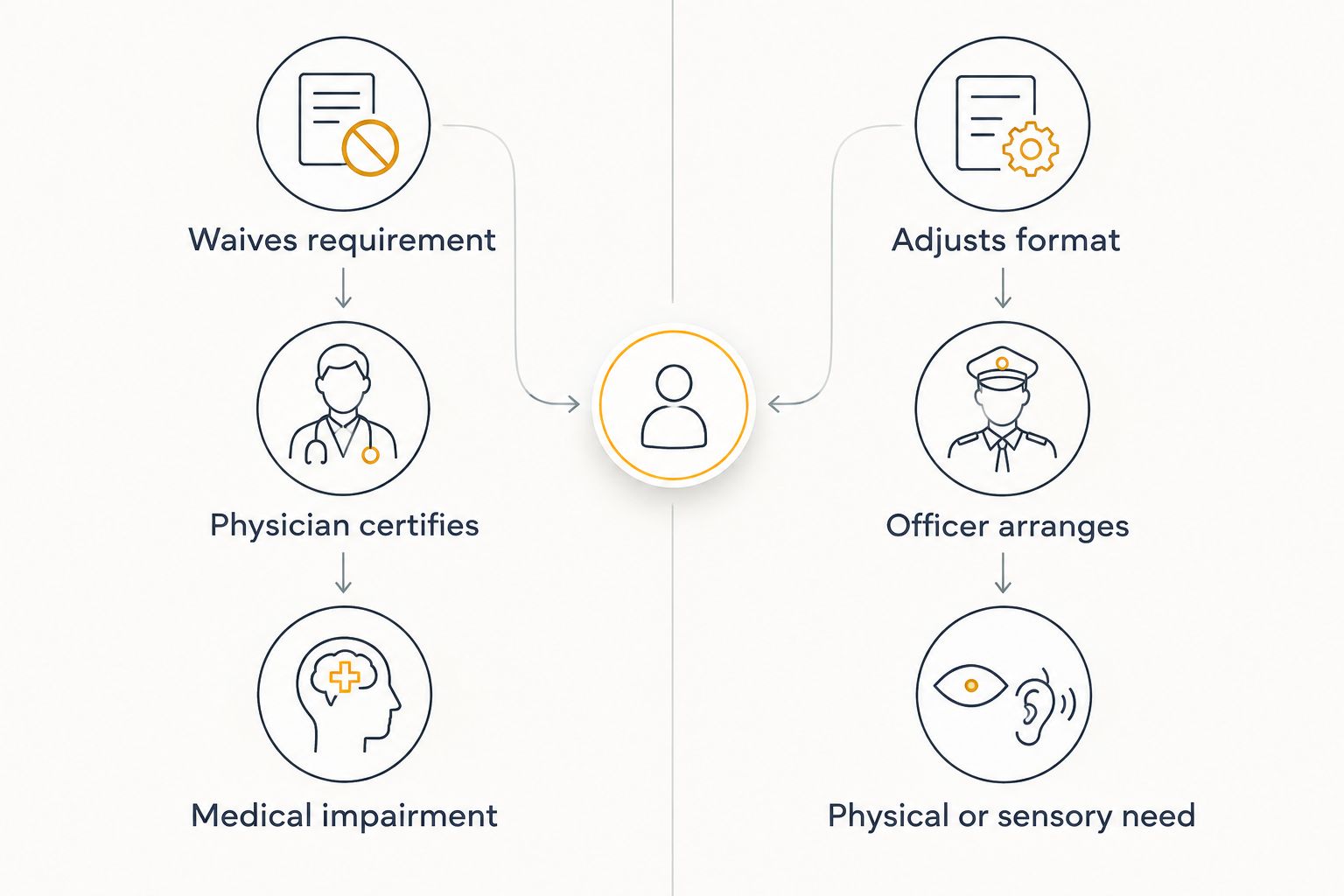
- Form N-648 waives the English and civics testing requirement for naturalization due to a medical disability, while a citizenship accommodation only changes how the test is given.
- N-648 requires a licensed medical doctor, doctor of osteopathy, or clinical psychologist to certify the impairment directly on the form.
- A citizenship accommodation, like an interpreter or extra time, is requested with USCIS and doesn't need a physician's signature.
- Applicants can request both at the same naturalization interview when disability and physical or sensory needs overlap.
- An incomplete or vague N-648 is the most common reason USCIS rejects the exception request in 2026.
Why This Matters
Misfiling this paperwork doesn't just get denied — it burns an interview slot. If you show up expecting a testing waiver and only requested an accommodation, you still have to sit for the English and civics test that day.
Getting the medical documentation right the first time matters just as much for Form N-693 as it does here — USCIS reviews both forms for completeness before it looks at anything else. A civil surgeon or licensed physician who understands exactly what USCIS wants to see on Form N-648 saves you a second appointment and a second delay.
N-648 Disability Exception vs Citizenship Accommodation: What's the Difference?
The two options solve different problems. One removes a requirement. The other adjusts how a requirement is met.
| Feature | Form N-648 | Citizenship Accommodation |
|---|---|---|
| What it changes | Removes the English and/or civics testing requirement entirely | Changes how the interview or test is conducted |
| Who completes it | Licensed MD, DO, or clinical psychologist certifies a medical impairment | No medical certification required; applicant requests it directly |
| Typical situations | Dementia, severe intellectual disability, traumatic brain injury | Deafness needing an interpreter, mobility limits needing ground-floor access, low vision needing large-print materials |
| How USCIS reviews it | Officer weighs medical evidence against the testing requirement | Officer arranges logistics; the testing requirement stays in place |
| Outcome if approved | Interview proceeds without English/civics testing | Interview happens with the requested adjustment, testing still required |
Verdict: if the goal is to skip the English or civics test itself, you need Form N-648. If the goal is to take the test in a way that works for your disability, you need an accommodation, not a waiver.
Getting the medical evaluation for Form N-648 done correctly matters just as much as the naturalization interview itself. USCIS reviews the medical narrative closely, and a form that only checks boxes without a specific clinical explanation is a common reason for denial in 2026.
Who Can Complete Form N-648?
Only a licensed medical doctor, doctor of osteopathy, or licensed clinical psychologist can sign Form N-648. USCIS does not accept a signature from a nurse practitioner, physician assistant, or general therapist, and it does not accept a form completed based only on a phone consultation. The Form N-648 medical disability exception guide walks through what documentation the examining professional needs before the appointment, including prior diagnostic records and treatment history.
Why the Right Option Varies
Which path fits your case depends on a handful of specific factors, not on preference:
- Type of impairment — cognitive conditions (dementia, intellectual disability, traumatic brain injury) point toward N-648; physical or sensory conditions usually point toward an accommodation.
- Whether testing is possible with adjustments — if the applicant can learn and demonstrate English and civics knowledge with an interpreter, large print, or extra time, an accommodation is the correct request, not a waiver.
- Available medical documentation — N-648 requires clinical evidence the impairment has lasted, or is expected to last, at least 12 months and directly affects the ability to learn or demonstrate the required knowledge.
- Sensory limitations — applicants who are blind or have low vision often need an accommodation like large-print or braille materials rather than a full testing exemption.
- Age-related decline — cognitive changes tied to age can support an N-648 request when documented, but age alone is never sufficient without a physician's clinical finding.
- Overlap between the two — some applicants qualify for both at once, such as a person with dementia who also needs a wheelchair-accessible interview room.
Can You Request Both N-648 and a Citizenship Accommodation?
Yes, you can request both N-648 and a citizenship accommodation at the same naturalization interview when your situation involves separate needs. For example, an applicant with a documented cognitive impairment who also uses a wheelchair can file Form N-648 for the testing exception and separately ask USCIS for a ground-floor interview room. The two requests don't cancel each other out because they address different parts of the process.
What Happens if USCIS Denies Your N-648 Request?
If USCIS denies your N-648 request, you're required to take the English and civics test at your naturalization interview as normal. A denial usually means the medical narrative didn't clearly connect the diagnosis to the applicant's inability to learn or demonstrate the required knowledge, or the form was incomplete. Applicants can submit a new, more detailed N-648 at a later interview if the impairment still applies and better documentation is available.
Get Your N-648 Evaluation Done Right
Accurate medical documentation the first time avoids a second interview.
FAQ
What is Form N-648 used for?
Form N-648 asks USCIS to waive the English and/or civics testing requirements for naturalization because a documented medical disability prevents the applicant from learning or demonstrating that knowledge. A licensed medical doctor, doctor of osteopathy, or clinical psychologist must complete and sign it.
What is a citizenship accommodation?
A citizenship accommodation is an adjustment to how the naturalization interview or test is conducted, such as a sign language interpreter, extra time, or an accessible interview location. It does not remove the English or civics testing requirement.
Do I need a civil surgeon to complete Form N-648?
No, Form N-648 can be completed by any licensed medical doctor, doctor of osteopathy, or licensed clinical psychologist, not only a USCIS-designated civil surgeon. The provider must have direct knowledge of the applicant's condition through an examination, not just a records review.
Can I request an interpreter without filing Form N-648?
Yes, requesting an interpreter or another accommodation does not require Form N-648 because it doesn't remove the testing requirement. You request the accommodation directly with USCIS as part of your naturalization case.
What conditions commonly qualify for an N-648 exception?
Conditions that commonly qualify include dementia, severe traumatic brain injury, and severe intellectual disability, provided a physician documents how the condition affects the applicant's ability to learn or demonstrate English and civics knowledge. The impairment must have lasted, or be expected to last, at least 12 months.
How long does USCIS take to review Form N-648?
USCIS reviews Form N-648 as part of the naturalization interview process, and processing time follows the same timeline as the underlying naturalization application. There's no separate published timeline just for the N-648 review.
Does an approved N-648 excuse me from the entire naturalization interview?
No, an approved N-648 only waives the English and/or civics testing portions of the process. The applicant still attends the naturalization interview and answers questions about the application itself.
What if my N-648 is denied?
If your N-648 is denied, you take the English and civics test at your naturalization interview as scheduled. You can submit a new, more detailed N-648 at a later interview if the medical impairment still applies.
One Last Thing
USCIS requires the medical professional to certify that the impairment has lasted, or is expected to last, at least 12 months — a short-term injury or a temporary condition doesn't qualify for Form N-648, no matter how severe it is at the time of the interview. That single detail is where many N-648 requests fail: the form describes a real condition but never establishes the 12-month standard clearly enough for the reviewing officer.
Schedule Your N-648 Evaluation with a provider who documents the clinical connection between the diagnosis and the testing requirement the first time.