
Immigration Medical Exam in the Inland Empire: A Practical Guide

If you are applying for a green card from Riverside, San Bernardino, Ontario, Temecula or anywhere else in the Inland Empire, you need an immigration medical exam performed by a USCIS-designated civil surgeon, who documents it on Form I-693. Only a designated civil surgeon can sign the form, and the results go into a sealed envelope that you submit to USCIS. This guide explains how to find the right doctor, what happens at the visit, what drives the cost and which mistakes cause delays.
TL;DR
- Only a USCIS-designated civil surgeon can complete Form I-693. A regular primary care doctor cannot, even if you are a longtime patient.
- Tests and vaccines are ordered at the exam itself. Results from other clinics or earlier visits are generally not accepted, though official vaccination records are.
- Ask for the total price in writing, including labs, vaccines and the form itself, before you book. Insurance usually does not cover this exam.
- Plan your timeline around lab results. At our practice, standard processing takes about 3 days and an expedited option takes 2.
- Do not sign Form I-693 yourself until the civil surgeon tells you to.
Table of Contents
- Who needs the exam, and why it matters in the Inland Empire
- How to find a civil surgeon near you
- What happens at the exam
- What to bring
- What the exam costs, and how to compare quotes
- Timing: when to schedule and how long it lasts
- Mistakes that delay Form I-693
- Our perspective: accuracy before speed
- Book your I-693 exam with us
- FAQ
- Sources
Who needs the exam, and why it matters in the Inland Empire
USCIS requires the medical exam to establish that applicants seeking immigration benefits are not inadmissible on health-related grounds. According to USCIS, the exam is required for most green card and adjustment of status applicants, and the civil surgeon must return the completed form in a sealed envelope.
The Inland Empire has a large population of families filing I-485 applications: spouses of U.S. citizens, employment-based applicants, and relatives of green card holders. Many live 40 to 90 minutes from the coastal counties, where clinics cluster. That distance matters because you may need a second visit, for example to pick up the sealed envelope or to fix a vaccination gap. When you choose a clinic, count the trips as well as the base fee.
How to find a civil surgeon near you
USCIS directs applicants to the myUSCIS Find a Civil Surgeon tool, and you can also call the USCIS Contact Center at 800-375-5283, as described on its Finding a Medical Doctor page. Searching “civil surgeon Riverside” or “civil surgeon San Bernardino” on a map will show clinics, but only the official locator confirms current designation. Check it before you pay a deposit. Our own guide to using the official civil surgeon locator walks through what else to verify.
The clinics you will find fall into a few types:
| Type of clinic | What it is good for | What to watch |
|---|---|---|
| Primary care or family practice with a civil surgeon | Convenient if you already see the doctor | Immigration exams may be squeezed between regular patients; labs and vaccines may be sent elsewhere |
| Urgent care with a civil surgeon | Long hours, walk-in style | Wait times, and add-on charges for each service |
| Immigration-only practice | Staff handle I-693 every day and know the form’s quirks | Confirm the location and hours work for your commute |
We are in the third group. Our practice has performed only USCIS immigration medical exams since 2007. We do not offer primary care, urgent care or sick visits, and we serve applicants across Southern California, including Riverside, San Bernardino, Los Angeles, Orange and San Diego counties. You can read more about the differences between clinic types on our site.
What happens at the exam
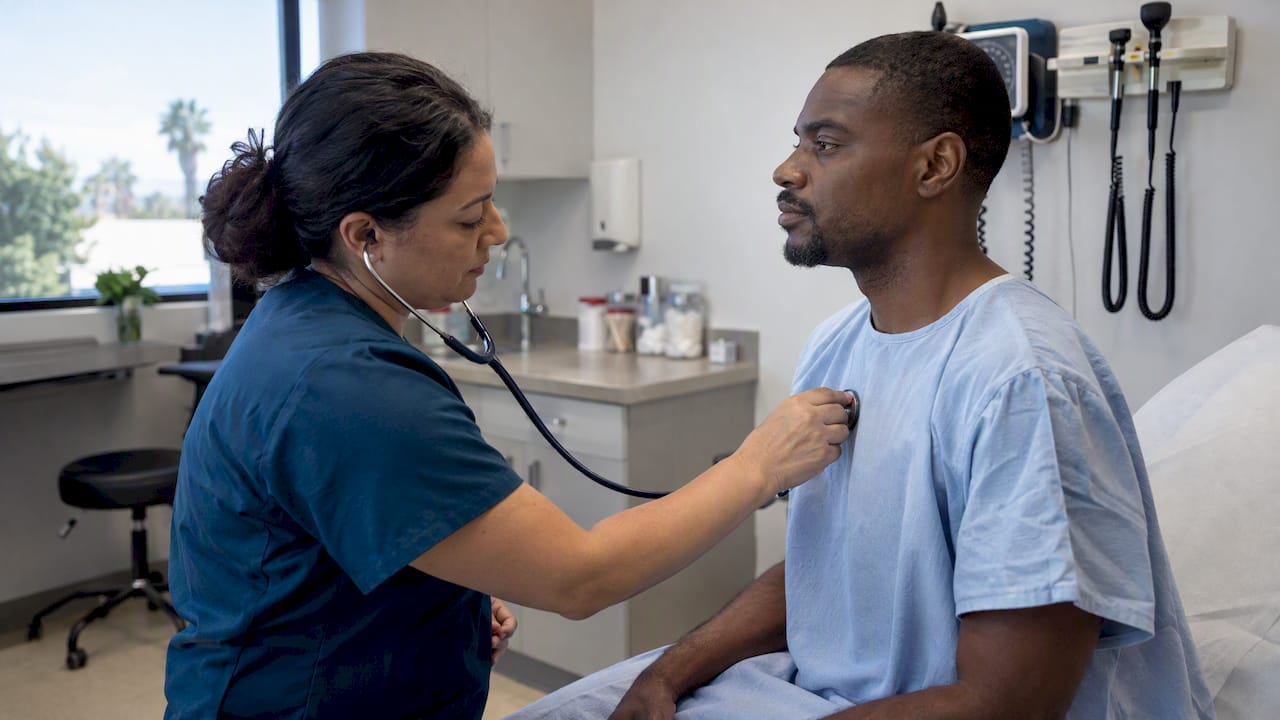
The civil surgeon follows the Technical Instructions published by the CDC. According to USCIS, the process includes a review of your medical history, a physical exam, testing for certain communicable diseases based on age, and an assessment of your vaccination status. Our step-by-step page on what happens at an immigration medical exam gives the appointment flow in more detail.
Required testing by age
The CDC’s civil surgeon guidance sets these rules:
- Tuberculosis screening for applicants age 2 and older.
- Syphilis testing for applicants age 18 to 44.
- Gonorrhea testing for applicants age 18 to 24.
The CDC also states that the civil surgeon must order testing at the time of the exam, and tests done elsewhere or before the appointment are generally not acceptable. If a friend suggests getting your blood drawn at your regular doctor first to save time, do not. It will likely have to be repeated.
Vaccinations
Vaccination requirements are age-appropriate and based on ACIP recommendations. The CDC’s vaccination instructions cover the full list, which includes MMR, polio, tetanus, diphtheria, pertussis, Hib, hepatitis A and B, meningococcal, varicella, pneumococcal and influenza vaccines, depending on your age. The civil surgeon reviews your records, and you receive any missing required vaccines or show proof of immunity, for example through titer testing.
A practical tip: gather every vaccination record you can before the visit, including childhood records from your home country and any U.S. records from schools, employers or clinics. Complete documentation is the single best way to shorten the appointment and reduce vaccine charges.
What to bring
- Government-issued photo ID (passport preferred).
- Vaccination records, translated if they are not in English.
- A list of current medications and any past medical history relevant to the exam, such as prior TB treatment.
- A printed copy of the most recent edition of Form I-693 with Part 1 filled in. USCIS instructs applicants to complete Part 1 but not sign it until the civil surgeon says so.
- Your payment method. Immigration exams typically operate outside medical insurance, so expect to pay directly.
If you are bringing children, bring their records too. We also see seniors and families together, and you can ask us about family, child and senior exams.
What the exam costs, and how to compare quotes
We do not publish a total exam price in this article, so use our pricing page and ask us for a current quote. What we can say is how to compare any clinic fairly.
Published guidance notes that most clinics do not accept insurance for the exam or I-693 completion, so the number you are quoted is the number you pay. That same guide also advises that the cheapest base fee is not always the best value: a low base price can be followed by high charges for labs and vaccines, while a flat package can cost less overall when you need several tests.
When you call around, ask each clinic:
- Does the quote include the exam, the form, the lab tests and the sealed envelope?
- What do TB, syphilis and gonorrhea tests cost separately, if they apply to your age?
- What is the price per vaccine, and will you accept records from a pharmacy or health department?
- Is there a charge for a follow-up visit, titer test or replacement envelope?
- What happens if you need to reschedule?
Asking for an itemized fee schedule is recommended in the same guide, because some clinics charge separately for each test and for administrative form completion. On our side, we use a flat-package approach to keep surprises to a minimum. Optional extras, such as titer testing, additional vaccinations, a replacement sealed envelope or printed record copies, are listed on our pricing page. We also charge a missed appointment deposit of $210.
One way to lower your out-of-pocket cost: the same guide says that getting required vaccines at a pharmacy or community clinic beforehand and bringing official documentation can save hundreds of dollars compared with clinic markups, since civil surgeons must accept official records. Check with your civil surgeon first that the vaccine and timing meet the CDC schedule. For a broader view, see our cost guide.
Timing: when to schedule and how long it lasts
The old rule that required the civil surgeon to sign within 60 days of filing is no longer in effect, according to a law firm’s 2026 overview. Once properly completed and submitted with your I-485, the form does not expire for that pending application. It will not carry over to a different application if the current one is denied or withdrawn.
USCIS also notes that Form I-693 remains valid for two years from the date of the civil surgeon’s signature. In practice, that means you should not have the exam too early if your filing is months away, and you should not delay it so long that your I-485 package is incomplete. USCIS says it may reject an I-485 that lacks the form, according to the same law firm summary. If you are unsure how this applies to your case, ask your immigration attorney. We cannot give legal advice.

For lab turnaround, we offer a standard 3-day exam and a 2-day expedited exam. Lab results drive the schedule, and a result that needs follow-up, such as a positive TB screen, will take longer.
Mistakes that delay Form I-693
- Signing too early. Part 1 is yours to fill in, but the signature waits until the civil surgeon instructs you.
- Using outside test results. Labs done before the visit are generally rejected.
- Missing vaccination documents. This is the most common reason a visit turns into two.
- Opening the sealed envelope. If it is opened or damaged, the form can be rejected. Replacement envelopes exist, but it is easier not to need one. See our note on sealed versus electronic I-693 handling.
- Choosing a doctor who is not designated. Confirm with the official locator before you pay.
We frequently help applicants who come to us after delays, errors, incomplete vaccination documentation or problems with exams done elsewhere. Those cases tend to start with one of the items above.
Our perspective: accuracy before speed
After years of doing only this one exam, we have learned that applicants rarely get stuck on the medical itself. They get stuck on paperwork: a missing signature, an unlisted vaccine, a test ordered at the wrong time. Because we do nothing but I-693 exams, we can put every form through an internal quality review before it is sealed. That is how we aim to complete the form correctly the first time.
We also think price clarity is part of care. Someone saving for a filing fee should not discover extra line items at the front desk. That is why we use flat packages and tell you what is included before you book.
For applicants in Riverside and San Bernardino counties, our advice is simple: collect your records first, book once, and ask about the total cost. If your case is urgent, ask whether the expedited option fits your lab schedule.
— ImmigrationMedicalExams Medical Team
Book your I-693 exam with us
If you want one place for the civil surgeon exam, lab testing, vaccine review and form preparation, see our USCIS Form I-693 exam page. You can schedule online 24 hours a day, and attorneys and employers can ask about attorney and corporate services.
FAQ
How do I find a civil surgeon in Riverside or San Bernardino County?
Use the myUSCIS Find a Civil Surgeon tool or call the USCIS Contact Center at 800-375-5283, as USCIS recommends. Then compare the total price, travel distance and whether labs and vaccines are handled at the same site. Confirm designation before you pay anything.
Will my insurance pay for the immigration medical exam?
Usually not. Industry guidance says most clinics do not accept insurance for the exam or for completing the I-693. Ask the clinic for a full quote, including labs and vaccines, before booking.
Can I use lab results or vaccines from my own doctor?
Tests performed elsewhere or before your appointment are generally not accepted, per the CDC’s civil surgeon guidance. Official vaccination records, however, can be reviewed by the civil surgeon, so bring them.
How long is Form I-693 valid?
USCIS states that the form remains valid for two years from the civil surgeon’s signature, and it must be submitted with the specific application to stay valid for that application. Ask your attorney how this applies to your filing date.
Sources
- USCIS: Report of Immigration Medical Examination and Vaccination Record (Form I-693)
- USCIS: Finding a Medical Doctor
- CDC: Technical Instructions for Civil Surgeons
- CDC: Vaccination Technical Instructions for Civil Surgeons
- Immigration Start Guide: Immigration Medical Exam Cost
- Modern Law Group: I-485 Medical Exam in 2026