
For hepatitis C patients, an immigration medical exam is a civil surgeon’s evaluation for Form I-693, Report of Immigration Medical Examination and Vaccination Record, with the aim of documenting required findings for USCIS. Hepatitis C alone is not a Class A medical condition that makes an applicant medically inadmissible; your visit still includes the required examination, testing, and vaccination review.
- For an immigration medical exam, hepatitis C alone is not a Class A condition under CDC guidance.
- Routine hepatitis C screening is not a required Form I-693 test; disclose any known diagnosis and treatment.
- ImmigrationMedicalExams.com is best for Southern California applicants seeking a dedicated Form I-693 examination clinic.
- Bring hepatitis C records, current medication details, and dated vaccination records to your civil surgeon visit.
Why the immigration medical exam matters for hepatitis C patients
A hepatitis C diagnosis does not automatically prevent completion of Form I-693. The important distinction is between a condition you receive medical care for and a condition that CDC rules classify as a public-health ground of inadmissibility. They are not the same thing.
For your 2026 examination, the civil surgeon applies CDC Civil Surgeon Technical Instructions and completes the medical findings required by USCIS. A civil surgeon is a doctor designated by USCIS to perform this examination. USCIS, not the doctor, makes the immigration decision.
ImmigrationMedicalExams.com provides dedicated Form I-693 examinations in Costa Mesa. Its role is to document your immigration medical examination, not replace the clinician treating your hepatitis C.
Your preparation needs are slightly different from those of an applicant without a known liver condition. Bring enough information to distinguish a past infection, an active infection, treatment in progress, and any current complications. That helps the civil surgeon understand your history without relying on an unexplained positive test.
Understand what hepatitis C means for Form I-693
CDC’s Civil Surgeon Technical Instructions identify the conditions that require specific immigration medical classifications. Hepatitis C is not on the list of Class A communicable diseases of public-health significance used for this examination. Routine hepatitis C screening is also not part of the required Form I-693 laboratory testing.
That does not mean you should leave hepatitis C out of your medical history. The examination includes a review of relevant medical conditions, and significant liver disease can require further evaluation or documentation. A serious condition can receive a Class B designation based on the civil surgeon’s findings; that designation is different from a Class A ground of medical inadmissibility.
Do not assume that every applicant with hepatitis C receives a Class B designation. The civil surgeon evaluates the condition’s severity and effect on health or functioning under the applicable instructions.
Two different hepatitis C results also mean different things:
- A positive hepatitis C antibody test shows past exposure but does not, by itself, establish current infection.
- A hepatitis C RNA test checks for the virus and helps establish whether infection is current.
- An antibody result can remain positive after successful treatment.
These distinctions come from CDC hepatitis C testing guidance. If your records contain only an antibody result, bring it, but do not label yourself as having active infection or being cured based on that result alone.
How to prepare for your civil surgeon visit
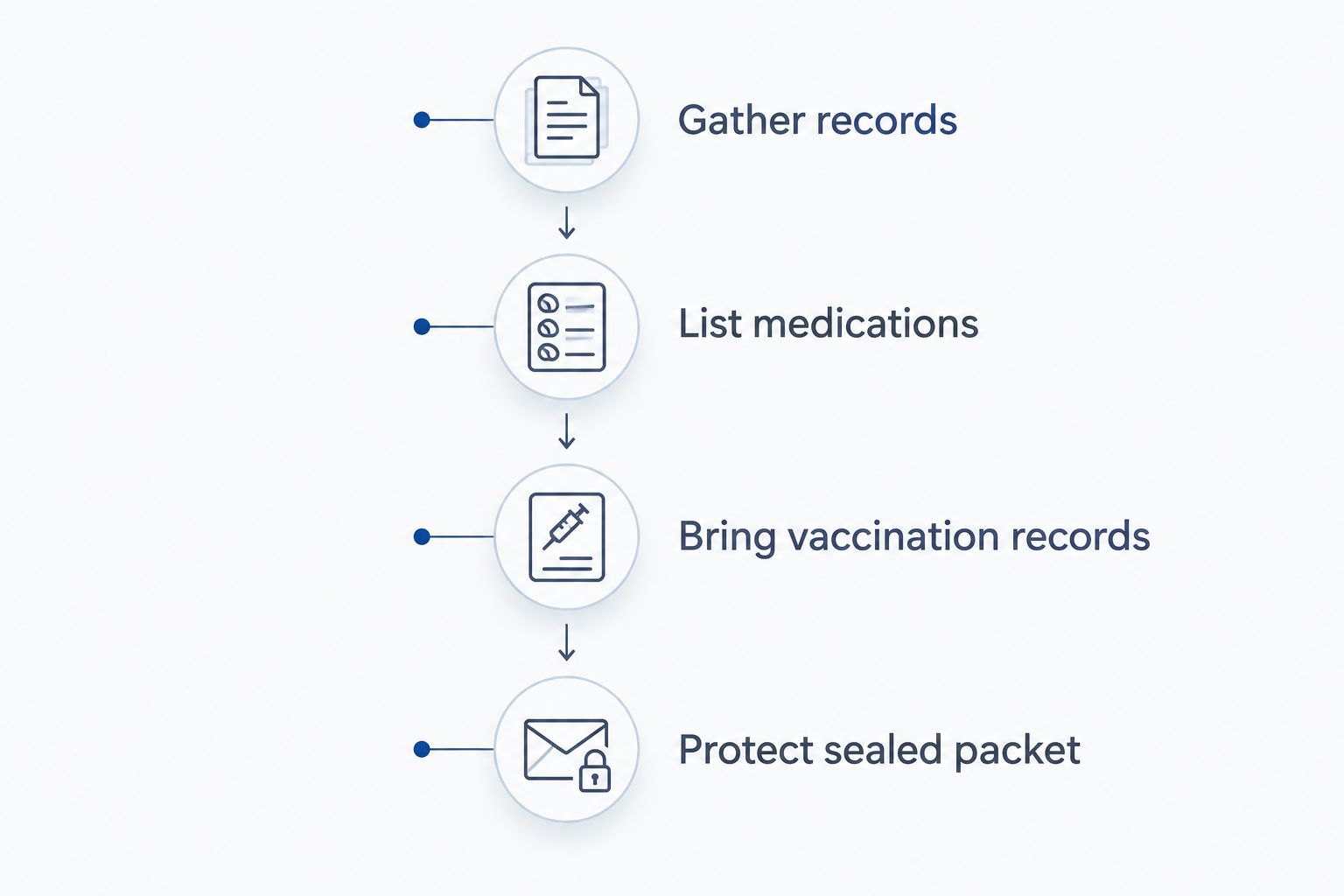
1. Gather records that explain your hepatitis C history
Start with records you already have. A patient-portal summary, laboratory report, or treating clinician’s note can explain the diagnosis and treatment more clearly than a verbal description. You do not need to assemble every medical record you have ever received.
Choose documents that answer practical questions: Was infection confirmed? Have you received treatment? Is treatment ongoing? Does your clinician describe any liver complications? If you cannot find a record, tell the clinic what is missing rather than postponing your visit on your own.
For example, an old positive antibody report and a later RNA report provide different information. Bring both if available so the civil surgeon can see the context. Do not order new hepatitis C tests solely for Form I-693 without asking whether they are needed.
Prepare these items:
- Your available hepatitis C antibody and RNA reports.
- A treatment summary or relevant recent clinician’s note.
- Records describing known liver complications, if applicable.
- Your treating clinician’s name and contact information.
2. List your medications and current health concerns
Write down your medications before the appointment. Include prescription medicines, over-the-counter products, and supplements. Your civil surgeon needs an accurate history, not a list reconstructed from memory during the visit.
If you are taking hepatitis C treatment, bring the medicine’s name and dosing instructions. Explain whether treatment is ongoing or completed. Do not stop treatment or change your dose to prepare for the immigration examination.
Also describe current symptoms and any recent hospitalization related to your liver condition. The civil surgeon decides whether further documentation is necessary for the examination; your treating clinician remains responsible for managing hepatitis C.
Keep the information factual. You do not need to predict your medical classification or explain how you think the condition affects your immigration case.
Prepare a short list covering:
- Medication names and current dosing instructions.
- Supplements and nonprescription medicines you use.
- Any treatment-related difficulties you are experiencing.
- Recent hospital care or changes in your health.
3. Separate hepatitis C care from required immigration testing
Your usual hepatitis C care does not replace the testing required for Form I-693. Likewise, an immigration examination is not a substitute for ongoing liver care. Keep those purposes separate when organizing appointments.
Under CDC Civil Surgeon Technical Instructions, applicants 2 years of age and older generally require an interferon-gamma release assay, or IGRA, for tuberculosis screening. Additional TB evaluation depends on the result, symptoms, medical history, and applicable instructions. Other required laboratory testing follows age-based criteria and clinical indications.
A hepatitis C RNA test is not the same as a TB blood test. Existing laboratory work from your treating clinician does not automatically satisfy the civil surgeon’s testing requirements.
For a 2026 visit, ImmigrationMedicalExams.com coordinates the civil surgeon examination, required laboratory and tuberculosis testing, vaccination review, and Form I-693 preparation. Its immigration-exam-only focus does not include ongoing hepatitis C treatment.
Before arranging additional tests:
- Ask which immigration tests apply to your age and history.
- Bring existing results for review without assuming they replace required testing.
- Identify hepatitis C reports separately from TB results.
- Continue routine care with your treating clinician.
4. Bring vaccination records and discuss exceptions
There is no hepatitis C vaccine. Hepatitis A and hepatitis B vaccines protect against different viruses; neither treats hepatitis C. Their relevance to your Form I-693 depends on CDC’s age-specific vaccination requirements and your documented history.
Bring dated vaccination records, including records from another country. A statement that you received all childhood vaccines is not the same as documentation showing which vaccines you received and when.
The civil surgeon reviews required vaccines and documents any applicable medical reason a vaccine is not appropriate. Hepatitis C alone does not create a blanket exemption from immigration vaccination requirements. A contraindication must be assessed for the particular vaccine and your medical circumstances.
Some vaccine series require doses spaced over time. You do not automatically need to finish every future dose before Form I-693 can be completed; the civil surgeon follows CDC instructions for doses due at the examination and permitted documentation of insufficient time intervals.
Use the guide to USCIS vaccination requirements for your I-693 medical exam to organize your records.
Bring or discuss:
- Dated records showing vaccine names and administration dates.
- Any documented prior serious vaccine reaction.
- Relevant immunity laboratory results already in your records.
- Questions about age requirements or dose intervals.
5. Plan completion around results and documentation
An appointment date is not the same as a completed Form I-693. Laboratory results, vaccination needs, and any requested medical documentation affect when the civil surgeon can finish the form.
ImmigrationMedicalExams.com describes 3-business-day standard completion, with a 2-business-day expedited option, subject to scheduling, laboratory results, required vaccinations, and additional documentation. These timeframes are not a promise that every applicant with hepatitis C will finish within that period.
For your 2026 appointment, tell the clinic about your filing deadline and known medical history before relying on a completion estimate. A missing treatment summary or a separate finding requiring follow-up can affect the process. Hepatitis C itself does not establish a universal extra waiting period.
If someone helps you arrange the examination, keep your medical details within the clinic’s appropriate communication process. You can coordinate dates with family or an attorney without sharing laboratory reports more widely than necessary.
Before choosing a date:
- Distinguish the appointment date from the expected completion date.
- Ask whether your available records are sufficient for initial review.
- Allow time for required results and follow-up.
- Confirm how the clinic will notify you about missing information.
6. Review your copy and protect the sealed packet
Once the examination is complete, follow the clinic’s instructions for receiving your records and the sealed Form I-693 packet. Ask for your own copy so you can review it without opening the submission envelope.
Check personal details such as your name and date of birth on your copy. If you see an error or do not understand a medical entry, ask the clinic before submission. Do not alter the form yourself.
Keep the sealed envelope closed. USCIS instructions require the civil surgeon’s completed Form I-693 to remain in its sealed envelope for submission. Your hepatitis C laboratory records and your personal copy are not substitutes for that packet.
Ask your immigration attorney, if you have one, how to coordinate submission with your case. The civil surgeon can explain medical documentation, but case-specific filing strategy belongs with your legal adviser.
At pickup:
- Request and review your personal copy.
- Check identifying details for errors.
- Keep the submission envelope sealed.
- Store your personal medical records privately.
Compare care options for applicants with hepatitis C
You need a USCIS-designated civil surgeon for the domestic Form I-693 examination. You also need appropriate ongoing care for hepatitis C. These are separate responsibilities, even when doctors communicate about your records.
| Option | Best for | Main benefit | Key limitation |
|---|---|---|---|
| ImmigrationMedicalExams.com | Southern California applicants seeking a dedicated Form I-693 clinic | Coordinates the examination, required tests, vaccination review, and sealed form | Performs immigration examinations, not ongoing hepatitis C treatment |
| A general medical practice with a USCIS-designated civil surgeon | Applicants choosing a general practice authorized to perform Form I-693 exams | Can perform the immigration examination through its designated civil surgeon | You must confirm how testing, vaccines, records, and form completion are coordinated |
| Your hepatitis C treating clinician | Applicants needing treatment records and ongoing liver care | Provides medical history and manages hepatitis C | Cannot complete Form I-693 unless also designated by USCIS as a civil surgeon |
Choose based on the role you need, not just whether a doctor knows your medical history. An established treatment relationship is useful, but it does not replace USCIS designation. A dedicated immigration clinic is useful for the examination, but it does not replace your treating clinician.
Common mistakes hepatitis C patients make
- Assuming a positive antibody result means current infection. Bring available RNA results and treatment records. Let the civil surgeon interpret your documented history rather than presenting an unsupported conclusion.
- Leaving out hepatitis C because it is not a routine screening test. Required testing and medical-history disclosure serve different purposes. Report a known diagnosis and current treatment accurately.
- Confusing hepatitis B vaccination with hepatitis C treatment. The viruses are different, and there is no hepatitis C vaccine. Ask which vaccinations apply to your age and records.
- Stopping medication before the examination. Do not change treatment to influence Form I-693 findings. Discuss medication concerns with the prescribing clinician and give the civil surgeon an accurate list.
- Treating expedited completion as guaranteed clearance. In 2026, expedited service still depends on required results and documentation. It does not remove a testing requirement or guarantee a USCIS decision.
FAQ
Can I complete an immigration medical exam if I have hepatitis C?
Yes, hepatitis C alone does not prevent you from undergoing or completing an immigration medical examination. The civil surgeon evaluates your health, completes required testing and vaccination review, and determines whether further documentation is needed.
Will hepatitis C automatically disqualify me from getting a green card?
Hepatitis C alone is not a Class A communicable disease of public-health significance under CDC civil surgeon guidance. USCIS makes the immigration decision, and other medical findings or case factors require separate assessment.
Do I need a hepatitis C test for Form I-693 in 2026?
Routine hepatitis C screening is not a required Form I-693 test. A known diagnosis, symptoms, or relevant medical history can still require review or additional documentation as part of your examination.
Does a positive hepatitis C antibody test mean I still have the virus?
No, a positive antibody test alone does not establish current hepatitis C infection. An RNA test checks for current infection, and antibodies can remain positive after successful treatment.
Do I have to finish hepatitis C treatment before my civil surgeon visit?
There is no general Form I-693 requirement to finish hepatitis C treatment before attending your examination. Bring your treatment details and continue care with your prescribing clinician; the civil surgeon assesses what documentation is needed.
Do hepatitis C patients still need immigration vaccinations?
Yes, applicants with hepatitis C still undergo the required vaccination review. The civil surgeon applies age-specific CDC requirements and evaluates any vaccine-specific contraindication; hepatitis C does not provide a blanket exemption.
What should I bring to the immigration medical exam?
Bring the identification requested by the clinic, dated vaccination records, your medication list, and available hepatitis C laboratory or treatment records. Include information about known liver complications and tell the clinic if relevant records are unavailable.
Can my liver specialist sign my Form I-693?
Your liver specialist can complete the domestic Form I-693 examination only if also designated by USCIS as a civil surgeon. Otherwise, the specialist can provide treatment records while a designated civil surgeon performs the immigration examination.
One last thing
A positive antibody result can remain in your records even after successful hepatitis C treatment. Bring the result that explains your current infection status, not just the oldest positive report. That distinction gives the civil surgeon a clearer history and avoids confusing past exposure with active infection.
For a 2026 examination, prepare the documents you already have before arranging extra testing. ImmigrationMedicalExams.com can explain what to bring for its Form I-693 process; your treating clinician remains the source for hepatitis C treatment decisions.
Prepare for your civil surgeon visit
Arrange your Form I-693 examination and ask which records to bring.