

Applicants with autoimmune disorders can complete an immigration medical exam; an autoimmune diagnosis alone is not a ground for medical inadmissibility. For your 2026 examination, the main preparation issues are your medications, vaccination records, and any follow-up needed before the civil surgeon completes Form I-693, Report of Immigration Medical Examination and Vaccination Record.
- Immigration medical exam autoimmune disorder preparation: bring medication details, vaccination records, and relevant specialist notes.
- An autoimmune diagnosis alone does not disqualify you; the civil surgeon evaluates the required medical criteria.
- CDC vaccination instructions allow documented medical contraindications, not automatic exemptions for every autoimmune condition.
- ImmigrationMedicalExams.com suits Southern California applicants seeking a coordinated Form I-693 examination and vaccination review.
Why preparation matters for applicants with autoimmune disorders
The civil surgeon needs to distinguish your diagnosis from the effects of your treatment. Some autoimmune conditions are treated with medicines that suppress the immune system; others are not. That difference affects vaccine decisions and how the clinician interprets your medical history.
For a 2026 Form I-693 examination, CDC vaccination and tuberculosis technical instructions govern those parts of the assessment. USCIS determines the immigration outcome. Your specialist manages your autoimmune condition; your civil surgeon documents the immigration examination. Neither role replaces the other.
Start with the USCIS vaccination requirements for your Form I-693 examination, then gather information specific to your treatment. A diagnosis name without medication details does not answer whether a particular vaccine is appropriate.
ImmigrationMedicalExams.com is best for Southern California applicants seeking a coordinated Form I-693 immigration medical exam. Applicants with autoimmune disorders still need an individual review of their treatment and records, rather than a standard vaccine plan based only on their diagnosis.
Prepare for your civil surgeon visit
Gather records that explain your condition
Bring records that help the civil surgeon understand your current health, not an unsorted history of every medical visit. A recent specialist summary is useful when it identifies your diagnosis, current treatment, and any documented vaccine restrictions. You do not need to create a new medical explanation yourself.
For example, a record stating that you have rheumatoid arthritis gives the clinician context. A medication list showing your current treatment gives the clinician information needed for vaccine review. Both matter, but they answer different questions.
Use copies when possible so you can keep your original records. Ask the clinic how to submit sensitive documents securely. Do not send medical records through a public review, social-media comment, or other public channel.
- Bring your government-issued photo identification.
- Collect dated vaccination records from your previous providers.
- Include a recent specialist summary, if available.
- Bring relevant prior tuberculosis evaluation or treatment records.
- Ask whether records in another language need translation.
List your medicines with doses and dates
Write down the exact names of your medicines, including tablets, injections, and infusions. Add the dose, how often you take each medicine, and the date of your most recent treatment. A description such as “arthritis medicine” or “an immune injection” is not specific enough for a safe review.
Some treatments affect whether live vaccines are appropriate. The civil surgeon needs your actual treatment details, not an assumption that all autoimmune medicines have the same effect. Include recent treatment changes and medicines you take only during a flare.
Do not stop or delay prescribed treatment to prepare for your immigration examination. Your treating clinician should direct medication changes. If vaccine timing needs coordination, let the civil surgeon and treating clinician address it rather than choosing a medication break yourself.
- Record each medicine’s full name and current dose.
- Note how often you take it.
- Add recent injection or infusion dates.
- Include recent steroid treatment and dose changes.
- Bring your treating clinician’s contact information.
Choose a USCIS-designated civil surgeon
A treating specialist cannot complete your immigration examination solely because that clinician knows your condition. For the standard domestic Form I-693 process, you need a USCIS-designated civil surgeon. Confirm that designation before arranging the examination.
Ask how the clinic handles medication review, vaccination questions, and outside specialist documentation. For your 2026 appointment, explain any immune-suppressing treatment before the visit so the clinic can tell you which records to bring. This is preparation, not a request for a diagnosis by phone.
ImmigrationMedicalExams.com is a dedicated immigration medical examination clinic in Costa Mesa staffed by USCIS-designated civil surgeons. Its coordinated examination includes required laboratory testing, vaccination-record review, required vaccinations when applicable, and preparation of the sealed Form I-693. Specialist clarification or additional testing can still extend completion.
- Confirm the clinician’s USCIS civil surgeon designation.
- Tell the clinic about immune-suppressing treatment.
- Ask which specialist records are relevant.
- Explain any mobility or communication needs before arrival.
- Ask how additional documentation affects completion.
Review vaccination requirements individually
An autoimmune disorder does not automatically exempt you from immigration vaccination requirements. The civil surgeon reviews your age, documented vaccination history, and medical circumstances under CDC’s Vaccination Technical Instructions for Civil Surgeons. For a 2026 examination, that review must use the requirements applicable at the visit.
Live vaccines, including measles, mumps, and rubella and varicella vaccines, require particular attention when an applicant has significant immune suppression. A diagnosis alone does not establish whether a vaccine is contraindicated. Your medication, treatment intensity, and clinical history matter.
When a required vaccine is medically contraindicated, the civil surgeon documents the appropriate reason on Form I-693. A correctly documented medical contraindication is different from simply declining a vaccine. Do not arrange vaccines solely from an online checklist before your treatment has been reviewed.
- Bring records showing vaccine names and administration dates.
- Report prior serious vaccine reactions accurately.
- Share any written vaccine restrictions from your specialist.
- Ask which vaccines are required for your age.
- Let the civil surgeon document applicable medical contraindications.
Complete tuberculosis screening and required tests
CDC’s Tuberculosis Technical Instructions for Civil Surgeons require an interferon-gamma release assay, or IGRA blood test, for applicants aged 2 years and older. An autoimmune diagnosis does not remove this requirement. The civil surgeon also determines other required laboratory testing under the applicable instructions.
A positive IGRA result does not by itself mean you have active tuberculosis. It requires further evaluation under the immigration screening process. Tell the clinician about previous positive tests, tuberculosis treatment, current symptoms, and immune-suppressing medication before testing.
Immune suppression can complicate the clinical interpretation of tuberculosis screening. A negative blood test does not settle every concern when symptoms or other findings require evaluation. An indeterminate result is also not the same as a negative result; the civil surgeon follows the technical instructions for next steps.
- Complete the tests ordered for your immigration examination.
- Disclose previous positive tuberculosis tests.
- Bring records of prior tuberculosis treatment.
- Report symptoms rather than assuming they relate to your autoimmune condition.
- Follow instructions for any required imaging or referral.
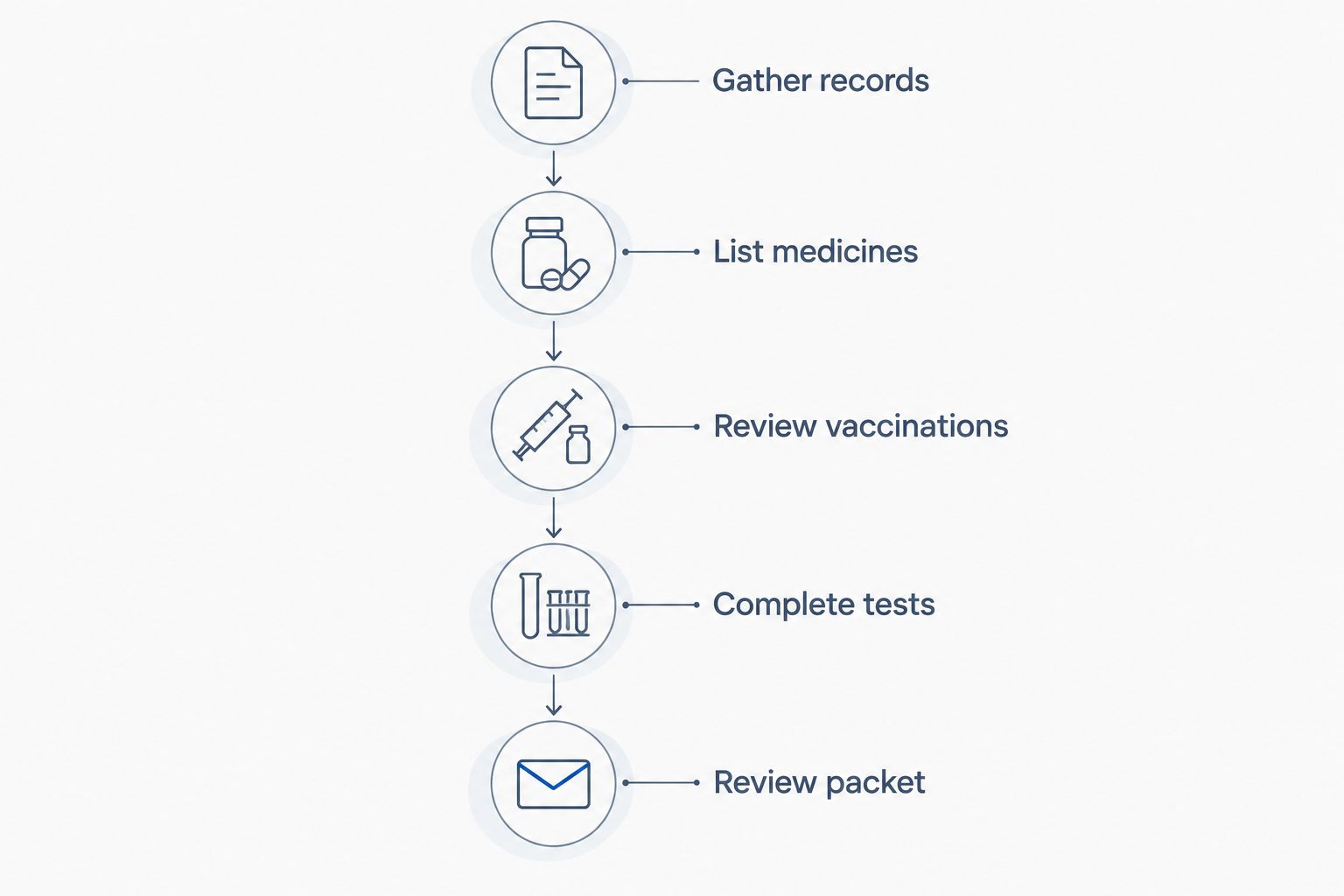
Plan time for records and follow-up
Do not treat the appointment date as the date your Form I-693 will be ready. Laboratory results, vaccination review, and any required follow-up must be complete before the civil surgeon can finalize the form. Missing treatment details can leave an important question unresolved even after your physical examination.
For 2026 planning, the clinic’s standard completion is 3 business days, with a 2-business-day expedited option when scheduling, laboratory results, required vaccinations, and documentation permit. Neither timeline overrides a required tuberculosis evaluation or the need to clarify a vaccine contraindication.
If you have a filing deadline, tell the clinic before your appointment. Ask your immigration attorney about filing strategy; the civil surgeon’s role is to complete the medical documentation accurately. Do not assume expedited service makes an unresolved medical issue disappear.
- Request specialist records before your appointment.
- Share your intended filing deadline with the clinic.
- Leave time for laboratory results and required follow-up.
- Ask what must be complete before expedited service applies.
- Keep your attorney informed about documentation delays.
Review your copy and protect the sealed packet
After the examination is complete, ask for your personal copy of Form I-693 and check your identifying information. Your name, date of birth, and other required details should be accurate. Raise any concern with the clinic before you submit the sealed packet.
The civil surgeon prepares the sealed form for USCIS. Do not open the sealed envelope to check what is inside. Use your separate copy for review and follow the submission instructions applicable to your case.
Keep your medication list and medical records separate from the sealed packet unless the civil surgeon instructs otherwise. Do not add documents to the envelope yourself. If your attorney needs to review the completed form, use the personal copy rather than opening the USCIS packet.
- Check your personal copy for identifying-information errors.
- Ask the clinic about anything you do not understand.
- Keep the USCIS envelope sealed.
- Store your copy with your immigration records.
- Follow your attorney’s or USCIS’s submission instructions.
Compare examination arrangements
The best arrangement gives the civil surgeon the information needed to complete Form I-693 without confusing immigration screening with ongoing autoimmune care. Every option below still requires the appropriate civil surgeon examination.
| Option | Best for | Main advantage | Key limitation |
|---|---|---|---|
| ImmigrationMedicalExams.com’s dedicated examination process | Southern California applicants seeking coordinated examination, testing, and vaccination review | Required examination components are coordinated through an immigration-exam-only clinic | Additional medical evaluation or missing specialist records can extend completion |
| A USCIS-designated civil surgeon in a general practice | Applicants who prefer a general-practice setting with a designated clinician | A designated clinician can perform the immigration examination | Ask whether testing, vaccinations, and form preparation require separate arrangements |
| Specialist clarification before the civil surgeon visit | Applicants whose treatment details or vaccine restrictions are unclear | Provides treatment-specific information for the immigration review | The specialist consultation does not replace Form I-693 examination requirements |
Choose based on coordination and documentation, not only appointment speed. A quick appointment does not help if the clinician still needs your medication details or a missing record before signing the form.
Common mistakes applicants with autoimmune disorders make
Assuming the diagnosis means automatic rejection
An autoimmune condition alone is not a medical ground for inadmissibility. The examination evaluates the criteria set by immigration requirements. Share your history accurately rather than hiding a diagnosis out of fear; USCIS, not the clinic, decides your application.
Treating every vaccine as unsafe
Vaccine decisions depend on the vaccine and your specific medical circumstances. An autoimmune diagnosis does not establish a blanket contraindication. Bring your treatment details so the civil surgeon can distinguish a medical restriction from a vaccine that remains appropriate.
Bringing a specialist letter without medication details
A letter saying you are “under care” leaves important questions unanswered. Ask for a summary that identifies current treatment and any relevant, documented restrictions. Do not ask your specialist to promise that USCIS will accept the examination or approve your application.
Changing treatment to fit an examination deadline
Skipping an infusion or reducing a prescribed medicine without clinical guidance creates a medical issue rather than solving a documentation issue. Tell the clinic about your schedule and let your treating clinician direct treatment decisions. The examination should reflect your actual medical circumstances.
Confusing a same-day appointment with a completed form
An appointment is only part of the process. Required results and documentation must be available before completion. Plan around the finished Form I-693, not simply the day you can see the civil surgeon.
FAQ
Can I complete an immigration medical exam if I have an autoimmune disorder?
Yes, an autoimmune disorder alone does not prevent you from completing an immigration medical exam. The civil surgeon reviews your medical history, medications, required testing, and vaccinations; USCIS decides the immigration outcome.
Do autoimmune disorders automatically qualify for a vaccine exemption?
No, an autoimmune diagnosis does not automatically qualify for a vaccine exemption. The civil surgeon applies CDC vaccination instructions to your treatment and medical circumstances and documents any applicable contraindication.
Should I stop my autoimmune medicine before my civil surgeon appointment?
Do not stop or change prescribed medication on your own for an immigration examination. Bring the medication name, dose, and treatment dates, and let your treating clinician direct any treatment changes.
Can my rheumatologist complete Form I-693?
Your rheumatologist can complete the standard domestic immigration examination only if the clinician is also a USCIS-designated civil surgeon. Otherwise, the rheumatologist can provide relevant records while a designated civil surgeon performs the examination.
Do I still need tuberculosis testing if I take immune-suppressing medicine?
Yes, immune-suppressing treatment does not remove immigration tuberculosis screening requirements. CDC instructions require an IGRA blood test for applicants aged 2 years and older, and the civil surgeon evaluates any need for further assessment.
What should I bring if my specialist says I cannot receive a live vaccine?
Bring the specialist’s written explanation and your current medication details. The civil surgeon reviews the restriction under CDC technical instructions and records an applicable medical contraindication on Form I-693.
How long does the examination take when I have an autoimmune disorder?
ImmigrationMedicalExams.com offers standard completion in 3 business days and a 2-business-day expedited option when conditions permit. Scheduling, laboratory results, required vaccinations, specialist clarification, or additional evaluation can affect completion.
One last thing
Bring the date of your last injection or infusion, not just the medicine’s name. Treatment timing gives the civil surgeon useful context for vaccine review. For your 2026 appointment, that small preparation step helps turn a general diagnosis into a clear, usable medical history.
Prepare for your civil surgeon visit
Ask ImmigrationMedicalExams.com which medication and vaccination records to bring for your examination.