
Your I-693 Checklist for Green Card Applicants
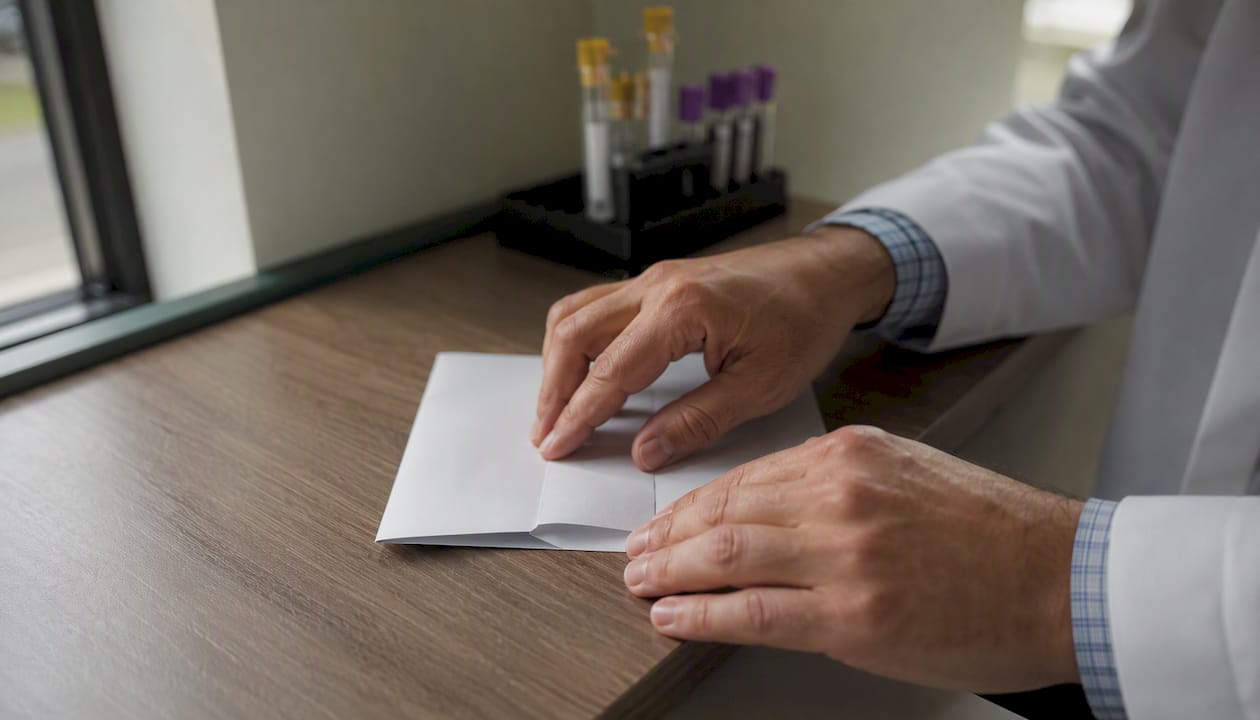
To file a valid Form I-693 with your I-485, do this: complete Part 1 yourself, book a USCIS-designated civil surgeon, bring your government-issued ID and vaccination records to the appointment, have the civil surgeon complete Parts 5–11 and sign the form, and submit the sealed envelope with your I-485 package — or open it and upload the form if you are filing online.
Here is what to confirm before and at the appointment:
- Government-issued photo ID (passport strongly preferred)
- Original vaccination records from any country
- Part 1 of Form I-693 completed in advance, but NOT signed until you are in the civil surgeon’s presence
- Prior TB test results or chest X-rays, if you have them
- List of current medications and any chronic-condition records
- Payment ready (ask the clinic in advance whether they accept cards)
- Confirm the civil surgeon is currently designated by USCIS before you pay
Pro Tip: Use the USCIS Find a Civil Surgeon tool to verify your doctor’s designation before booking. Also ask the clinic which edition of Form I-693 they use — USCIS will reject an outdated edition, and this is one of the most common avoidable errors.
Key Takeaways
Submitting a valid, sealed Form I-693 with your I-485 requires a USCIS-designated civil surgeon, the current form edition, complete vaccination documentation, and a properly sealed envelope — filed at the time of your I-485 submission.
| Point | Details |
|---|---|
| File I-693 with I-485 | Effective December 2, 2024, USCIS may reject an I-485 missing the required I-693 or partial I-693. |
| Verify your civil surgeon first | Use the USCIS Find a Civil Surgeon tool before booking — designation is tied to the individual doctor, not the clinic. |
| Validity is now case-specific | Forms signed on or after November 1, 2023 follow updated validity rules; get your exam close to your filing date. |
| Check the sealed envelope before leaving | Confirm your name, A-Number, civil surgeon signature, form edition, and intact seal before you walk out. |
| Immigrationmedicalexams | Offers USCIS-approved exams with on-site labs, vaccines, and a 2–3 business-day sealed-form turnaround in Southern California. |
Table of Contents
- What is Form I-693 and who must submit it with I-485?
- What should you prepare and bring before the appointment?
- How do you find and verify a USCIS-designated civil surgeon?
- What happens at the immigration medical exam, step by step?
- What vaccines are required, and how do waivers work?
- How does the civil surgeon complete and seal Form I-693?
- When should you submit I-693, and how long is it valid?
- What mistakes cause I-693 rejections, and how do you fix them?
- What do immigration medical exams typically cost and how long do they take?
- How Immigrationmedicalexams simplifies the I-693 process
- A note from the clinic on what we see most often
- Ready to book your immigration medical exam?
- Sources
What is Form I-693 and who must submit it with I-485?
Form I-693, officially titled the “Report of Immigration Medical Examination and Vaccination Record,” is the document USCIS uses to determine whether an applicant is inadmissible to the United States on health-related grounds. Without it, your I-485 application for adjustment of status is incomplete.
Most applicants filing Form I-485 must submit I-693. That includes family-based, employment-based, and diversity-visa applicants adjusting status inside the United States. A limited set of categories — certain refugees, derivative asylees, and some K-visa holders — may submit only a partial I-693 covering vaccination records, rather than the full exam. The I-693 instructions PDF specifies which categories qualify for a partial submission.
The form divides responsibility clearly:
- Part 1 (applicant): Your name, date of birth, A-Number (or “N/A” if none), and contact information. You fill this out before the appointment.
- Parts 5–11 (civil surgeon): The physical exam findings, lab results, vaccination record, Class A or Class B medical findings, and the civil surgeon’s certification and signature. The civil surgeon completes all of these.
- Applicant signature: You sign Part 1 in the civil surgeon’s presence during the appointment — not before.
The Form I-693 PDF lays out every field the civil surgeon must complete, including the vaccination record format and the certification block. Download it and review the structure before your appointment so nothing surprises you at the clinic.
What should you prepare and bring before the appointment?
Arriving unprepared is the single most common reason applicants need a second visit. A missing vaccination card or an unsigned Part 1 can delay your sealed form by days or weeks. Here is the full pre-appointment checklist:
- Passport or government-issued photo ID. A passport is the gold standard because it confirms identity and nationality in one document. A state ID or driver’s license works, but bring your passport if you have it.
- Vaccination records. Bring every record you have, from any country. School immunization cards, stamped health booklets, and records from foreign clinics are all acceptable as long as the civil surgeon can read and verify them.
- Prior TB test results or chest X-rays. If you have had a tuberculin skin test (TST), IGRA blood test, or chest X-ray in the past two years, bring those results. They can reduce the number of tests needed at the appointment.
- Medication list. Write out all current prescriptions, dosages, and the conditions they treat. Mental-health medications and treatments for communicable diseases are particularly relevant to the exam.
- Chronic-condition records. If you have a history of tuberculosis, syphilis, or any condition that could be classified as a Class A or Class B finding under USCIS health inadmissibility rules, bring documentation of treatment and current status.
- Completed Part 1 of Form I-693 (unsigned). Fill in your identifying information at home, but leave the signature line blank. You must sign in the civil surgeon’s presence.
- Payment. Ask the clinic upfront whether they accept credit cards or require cash. Immigration medical exams are not covered by most health insurance plans.
Pro Tip: Foreign vaccination records in another language do not need a certified translation for the civil surgeon to accept them — but bring a simple written translation of vaccine names and dates if the records are in a non-Latin script. The civil surgeon needs to match vaccine names to the required list, and a handwritten note from you clarifying what each entry is can prevent a waiver being applied unnecessarily. For a detailed pre-appointment checklist, Immigrationmedicalexams has a downloadable version on their site.
How do you find and verify a USCIS-designated civil surgeon?
Not every doctor who advertises “immigration physicals” is authorized to sign Form I-693. USCIS designates civil surgeons individually, and only a currently designated civil surgeon’s signature is valid. A form signed by an unauthorized physician will be rejected outright, no matter how thorough the exam was.
Follow these steps before booking:
- Go to the USCIS Find a Civil Surgeon tool and search by ZIP code or city.
- Confirm the physician’s name matches the listing exactly. Designation is tied to the individual doctor, not the clinic.
- Call the clinic and ask directly: “Is Dr. [Name] currently a USCIS-designated civil surgeon?” A legitimate clinic will answer without hesitation.
- Ask whether they use the current edition of Form I-693. USCIS updates the form periodically, and old editions are rejected.
- Ask about lab turnaround time, vaccine availability (especially if you need multiple vaccines), and whether they can complete the exam in a single visit.
Red flags to watch for:
- The clinic does not appear in the USCIS locator at all.
- Staff cannot confirm the physician’s designation status.
- The clinic offers to complete the form without a physical exam.
- The physician’s medical license has lapsed or been disciplined (check your state’s medical board website if you have any doubt).
The USCIS Finding a Medical Doctor page explains the designation system and reinforces why verification before payment matters.
What happens at the immigration medical exam, step by step?
The exam follows a structured sequence. Knowing what comes next reduces anxiety and helps you catch any missed steps before the civil surgeon seals the form.
- Check-in and identity verification. Staff confirm your photo ID and review your completed Part 1. You sign Part 1 in the civil surgeon’s presence at this stage.
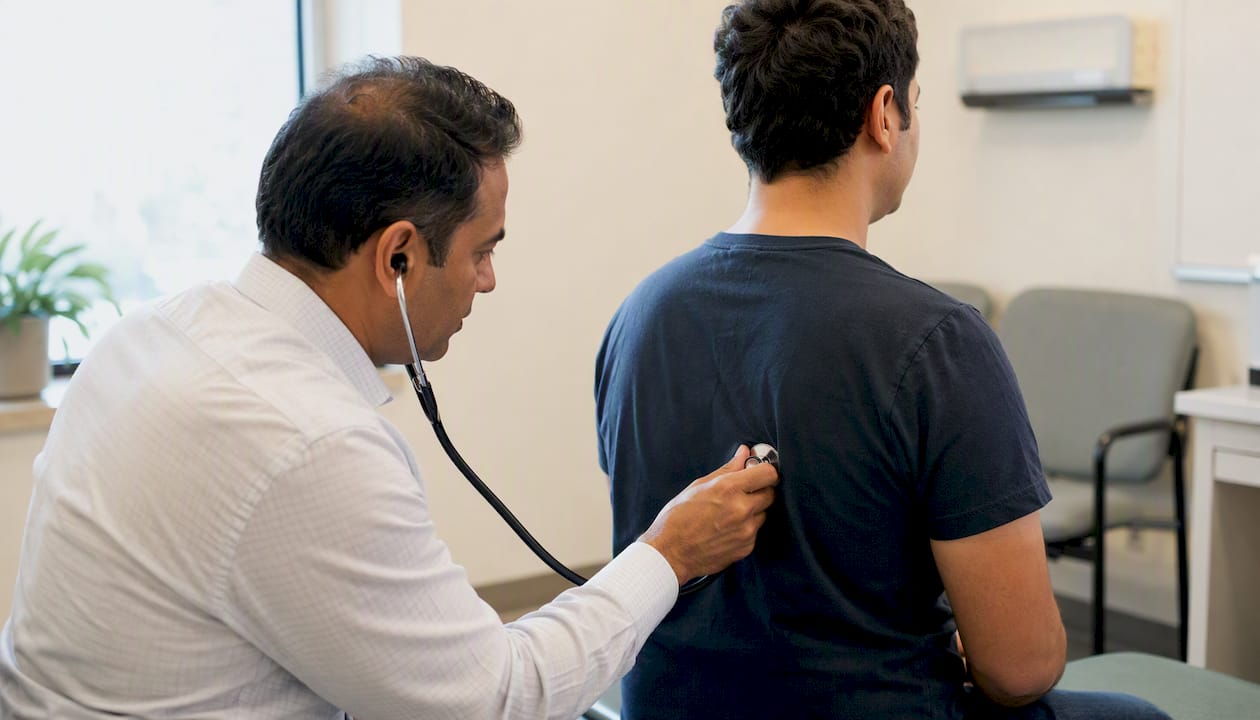
- Physical examination. The civil surgeon conducts a head-to-toe review: vitals (blood pressure, height, weight), eyes, ears, nose, throat, lungs, abdomen, skin, and lymph nodes. A mental-health screening and substance-use questions are also part of the standard exam.
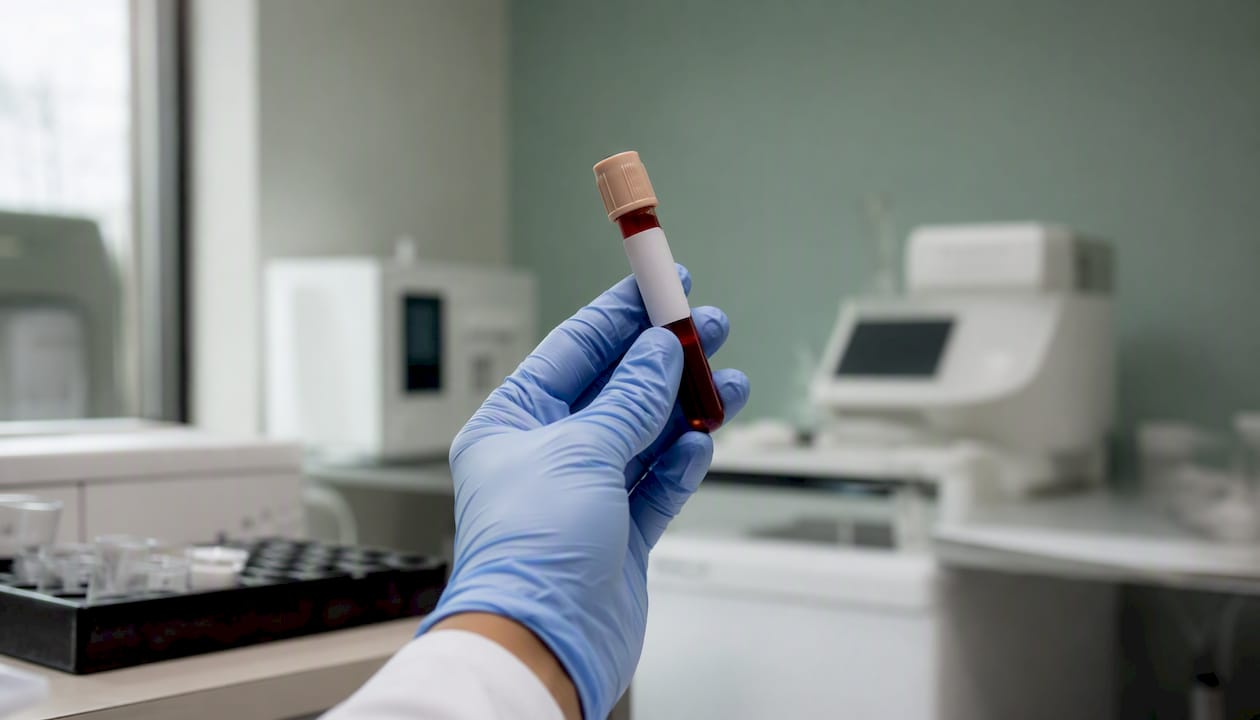
- TB screening. Per the CDC Technical Instructions for Civil Surgeons, the IGRA blood test is the primary TB screen for applicants aged 2 and older. A positive IGRA result triggers a chest X-ray. If the X-ray shows active disease, further evaluation and specialist referral are required before the form can be completed.
- Lab work. Syphilis testing is required for applicants aged 15 and older. Gonorrhea testing applies to certain age groups and risk categories. Results typically take 1–3 business days depending on the lab.
- Vaccination review and administration. The civil surgeon reviews your records against the required vaccine list and administers any missing vaccines on the spot if available. Vaccines given at the appointment are recorded directly on the form.
- Form completion. The civil surgeon completes Parts 5–11, records all findings, and enters the vaccination data. Any Class A or Class B findings are noted in Part 9 along with referral instructions.
- Sealing. Once all results are in and the form is complete, the civil surgeon places it in an envelope, seals it, and signs across the seal.
Pro Tip: Before you leave the clinic, ask the staff to confirm that all required lab results and vaccine entries have been recorded and that the form is ready to seal. If lab results are still pending, ask exactly when the sealed form will be available for pickup or mailing.
| Exam Component | Who Performs It | Typical Timing |
|---|---|---|
| Physical exam and mental-health screen | Civil surgeon | Same day |
| IGRA blood draw | Lab technician | Same day (results in 1–3 days) |
| Chest X-ray (if IGRA positive) | Radiology | Same day or referred out |
| Syphilis / gonorrhea lab | Lab technician | Results in 1–3 business days |
| Vaccination administration | Clinical staff | Same day if vaccines are in stock |
| Form sealing | Civil surgeon | After all results are received |
What vaccines are required, and how do waivers work?
The required vaccine list comes from the CDC Technical Instructions for Civil Surgeons, which civil surgeons must follow. The list is age-based and updated periodically, so always confirm current requirements with your civil surgeon.
Commonly required vaccines include:
- MMR (measles, mumps, rubella)
- Tdap or Td (tetanus, diphtheria, pertussis)
- Varicella (chickenpox)
- Polio
- Influenza (seasonal, for applicants aged 6 months and older)
- Hepatitis A and Hepatitis B
- Pneumococcal, meningococcal, and HPV vaccines (age-appropriate)
For a full breakdown of USCIS vaccination requirements, including age thresholds and documentation standards, Immigrationmedicalexams maintains a detailed resource on their site.
Three types of waivers apply when a required vaccine cannot be given:
- Medical waiver: The civil surgeon documents a contraindication — an allergy, immune-compromising condition, or pregnancy-related deferral — directly on the form. No separate filing is needed.
- Vaccine not routinely available: If a required vaccine is genuinely unavailable in the United States (rare), the civil surgeon marks this on the form with an explanation.
- Religious or moral waiver: This requires filing Form I-601 with substantial supporting evidence. It is the hardest waiver to obtain and is rarely granted without strong documentation.
The civil surgeon marks blanket waivers directly on the vaccination record section of I-693. Supporting documentation for medical waivers stays in the sealed envelope; the applicant does not receive a separate copy.
COVID-19 vaccine note: The CDC Technical Instructions have been updated to reflect current COVID-19 vaccine policy. Check the COVID-19 vaccine requirements page for the current status, as requirements have changed since the initial rollout.
| Vaccine | Typical Age Requirement | Proof Accepted |
|---|---|---|
| MMR | 6 months and older | Documented dates or serologic immunity |
| Varicella | 6 months and older | Documented dates, serologic immunity, or prior disease |
| Hepatitis B | Birth through 17 years (adults age-appropriate) | Documented dates or serologic immunity |
| Influenza | 6 months and older (seasonal) | Documented date of current-season dose |
| Tdap | 7 years and older | Documented dates |
Pro Tip: Serologic immunity — a blood test showing you already have antibodies — counts as proof for several vaccines, including MMR and varicella. If you do not have vaccination records but believe you were vaccinated as a child, ask the civil surgeon about titer testing before assuming you need to repeat the full series.
How does the civil surgeon complete and seal Form I-693?
The sealing step is where many applicants get tripped up. A form that is improperly sealed, signed on the wrong date, or missing a field will be rejected by USCIS regardless of how thorough the exam was.
Here is what the civil surgeon must do:
- Complete Parts 5–11 in full, including the physical exam findings, TB results, lab results, vaccination record, and the civil surgeon certification block.
- Sign and date the form. The signature date must reflect when the exam was actually completed, not when the form was printed.
- Place the completed form in an envelope, seal it, and sign or stamp across the seal so any tampering is visible.
- For military facilities, a raised seal or official stamp is required in addition to the physician’s signature.
What to check before you accept the sealed envelope:
- Your name and A-Number on the form match your ID exactly.
- The civil surgeon’s signature and medical license number are present.
- The form uses the current edition listed on the USCIS I-693 page. Old editions are rejected.
- The envelope is sealed and unaltered. Do not open it.
- Your initials appear on the seal where required by the I-693 instructions.
For more on what a properly sealed form looks like and what USCIS checks, the sealed Form I-693 service page at Immigrationmedicalexams walks through the requirements in detail.
When should you submit I-693, and how long is it valid?
Submit Form I-693 with your I-485 at the time of filing. Effective December 2, 2024, USCIS may reject an I-485 that does not include the required I-693 or partial I-693. This is not a soft deadline — a missing medical form can result in your entire adjustment-of-status application being sent back.
Paper filing: Place the sealed envelope inside your I-485 mailing packet. Do not open it.
Online filing: Open the sealed envelope, scan and upload the form with your I-485 package, and keep the original sealed envelope. USCIS may request it during adjudication.
On validity: USCIS changed how I-693 validity works for forms signed on or after November 1, 2023. The old rule of indefinite validity is gone. Treat your I-693 as a case-specific document tied to the I-485 filing it accompanies. Getting the exam done close to your filing date is the safest approach. For a detailed explanation of how long Form I-693 remains valid under current rules, Immigrationmedicalexams has a dedicated resource.
If your adjustment-of-status interview is delayed or rescheduled after you file, you generally do not need a new exam as long as the form was submitted with the I-485 and the civil surgeon’s signature date falls within the applicable validity window. If your case is significantly delayed and USCIS questions the form’s currency, they will issue an RFE specifying what is needed. Do not preemptively redo the exam without an RFE.
Key timing rule: Get your exam, receive the sealed form, and file your I-485 in sequence. Do not get the exam months before you are ready to file — the closer the exam date is to your filing date, the lower the risk of a validity issue.
What mistakes cause I-693 rejections, and how do you fix them?
Most I-693 problems are preventable. These are the errors that generate RFEs or outright rejections most often:
- Non-designated civil surgeon. The form is invalid if the signing physician is not currently listed in the USCIS civil surgeon database. Remedy: repeat the exam with a verified designated surgeon.
- Unsealed or altered envelope. If the envelope arrives at USCIS opened, torn, or with signs of tampering, the form is rejected. Remedy: return to the civil surgeon for a new sealed envelope.
- Wrong form edition. USCIS updates I-693 periodically. Clinics using an outdated edition will have the form rejected. Remedy: the civil surgeon must reissue the form on the current edition.
- Missing vaccination entries. Every required vaccine must either have a documented date or a valid waiver notation. Blank fields are not acceptable. Remedy: return to the clinic to update the vaccination record and reseal.
- Applicant signature missing or signed outside the surgeon’s presence. The applicant must sign Part 1 while physically at the clinic. Remedy: return to sign in person; the civil surgeon may need to re-certify.
- Missing lab results. If syphilis or other required lab results are not recorded, the form is incomplete. Remedy: obtain results and have the civil surgeon update and reseal the form.
- Class B findings without referral documentation. If the civil surgeon notes a Class B condition, the form must include referral or follow-up information. Remedy: complete the specialist evaluation and have findings added before sealing.
Pro Tip: Make digital scans of every document you receive back from the clinic — your vaccination records, any referral letters, and the outside of the sealed envelope. Do not submit scans in place of the original sealed form unless USCIS specifically requests them in an RFE. The scans are your backup if anything is lost in transit.
Before mailing your I-485, run through this quick red-flag check:
- Civil surgeon designation verified on the USCIS locator? ✓
- Current form edition confirmed? ✓
- All required vaccines documented or waived? ✓
- Applicant signature present (signed at the clinic)? ✓
- Envelope sealed and unaltered? ✓
What do immigration medical exams typically cost and how long do they take?
Immigration medical exam fees vary by state, clinic, and what tests or vaccines you need. Prices depend widely on location and services included, often varying significantly from one clinic to another.
What a standard clinic fee usually covers:
- Civil surgeon examination
- Basic required lab work (syphilis test, IGRA blood draw)
- Review of vaccination records
- Administrative fee for sealing the completed form
What typically costs extra:
- Vaccines administered at the appointment (charged per vaccine)
- Chest X-ray if triggered by a positive IGRA
- Specialist referrals for Class A or Class B findings
- Expedited sealed-form processing
Questions to ask the clinic before you book:
- What is the total cost if I need all age-appropriate vaccines?
- How long after the appointment will the sealed form be ready?
- Do you have all required vaccines in stock, or will I need a second visit?
- What is your lab turnaround time for syphilis and IGRA results?
- Do you accept credit cards, or is cash required?
On timing: a straightforward exam with no abnormal findings and vaccines already in stock can result in a sealed form within 2–5 business days. If lab results are delayed or a specialist referral is needed, the timeline extends to 2–4 weeks or longer. Laboratory testing turnaround details vary by clinic and lab partner.
How Immigrationmedicalexams simplifies the I-693 process
Immigrationmedicalexams operates multiple clinics across Southern California, including Orange County and Los Angeles, and focuses exclusively on immigration medical exams. That specialization matters: the staff knows the I-693 form requirements, the current CDC Technical Instructions, and the USCIS sealing rules without needing to look them up.
What the clinic provides:
- USCIS-approved civil surgeon examination
- On-site lab testing for syphilis, IGRA, and other required tests
- Vaccination review and same-visit administration of required vaccines
- Sealed Form I-693 with a guaranteed 2–3 business-day processing time
- Multilingual staff to assist applicants who are not fluent in English
- Same-day and weekend appointments for applicants with tight schedules
For applicants with specific circumstances, Immigrationmedicalexams has dedicated resources covering seniors and the immigration medical exam, pregnancy-related vaccine deferrals, and medical conditions that affect I-693 findings. The complete Form I-693 guide on their site covers the full process from scheduling through submission.
A note from the clinic on what we see most often
The applicants who have the smoothest exams are almost always the ones who called ahead. Not to ask about price — to ask about their vaccination records. Missing childhood immunization documentation is the most common reason a visit takes longer than expected or requires a follow-up. When records are unavailable, the civil surgeon has to either administer the full vaccine series or order titer testing to check for existing immunity, both of which add time and cost.
For children, older adults, and applicants managing chronic conditions, a brief phone call to the clinic before the appointment can prevent a lot of unnecessary stress. Ask whether your child’s school immunization records are sufficient, whether your blood pressure medication needs to be disclosed, or whether your prior TB treatment history will require additional documentation. These are not complicated questions, but they are much easier to answer before you are sitting in the exam room.
Ready to book your immigration medical exam?
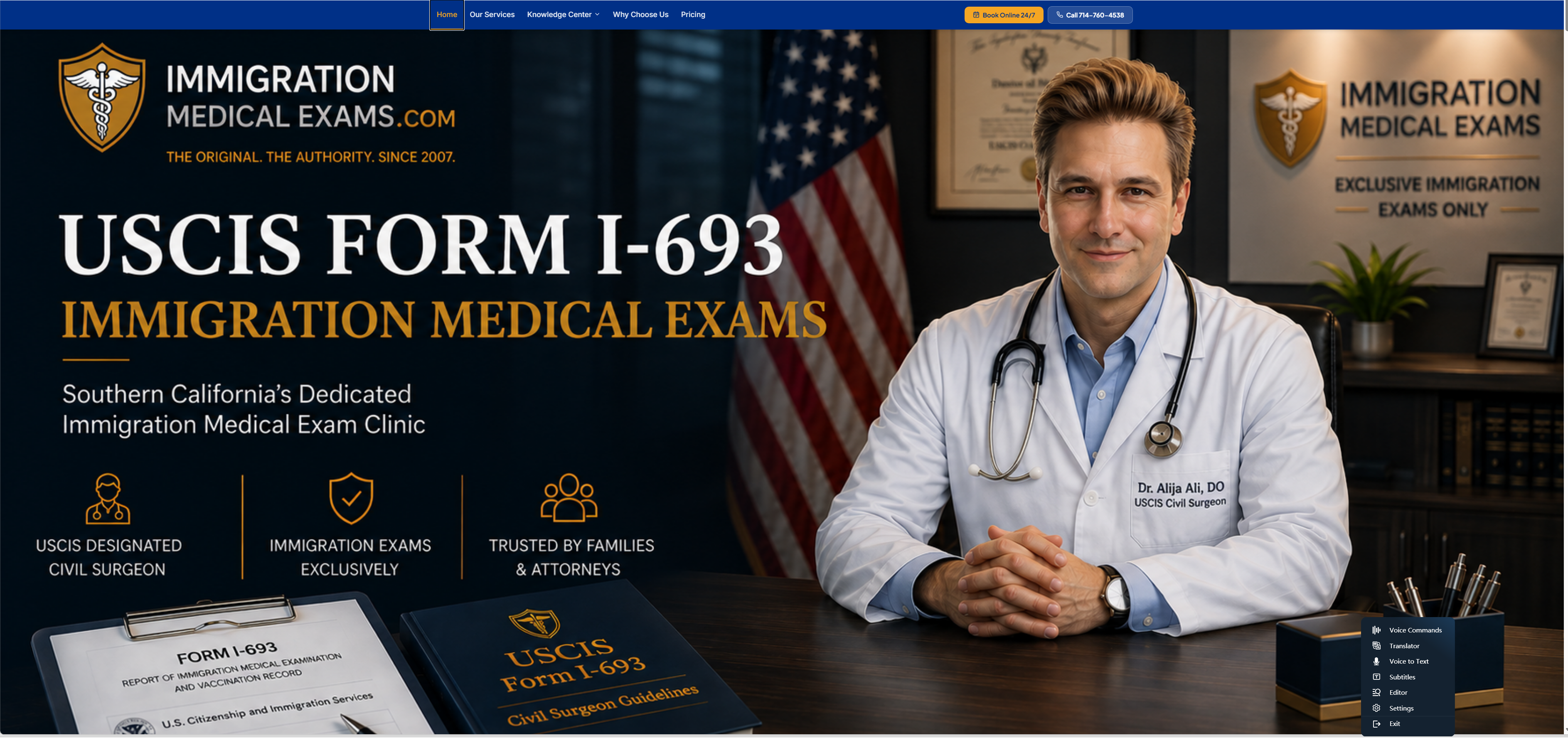
Immigrationmedicalexams offers USCIS-approved civil surgeon exams at multiple Southern California locations, with on-site labs and vaccinations handled in a single visit when possible. The sealed Form I-693 is ready in 2–3 business days, multilingual staff are available, and same-day or weekend appointments keep your filing timeline on track.
To get started, visit the immigration medical exam services page to review what the appointment includes and book directly. If you are ready to schedule now, the main booking page has availability for all Southern California clinic locations.
Sources
These are the primary official sources to consult for authoritative I-693 guidance:
- I-693 | Report of Immigration Medical Examination and …
- Form I-693, Instructions for Report of Immigration Medical …
- Finding a Medical Doctor | USCIS
- CDC Technical Instructions for Civil Surgeons
This article is general information, not a substitute for advice from a qualified doctor. Consult a qualified healthcare professional about your own circumstances before acting on anything here.
Recommended
- What to Bring to Your Immigration Medical Exam (I-693 Checklist) | ImmigrationMedicalExams.com
- The Complete Guide to USCIS Form I-693 — ImmigrationMedicalExams.com
- What Is USCIS Form I-693? | Immigration Medical Exam Guide
- 5 Common Mistakes That Delay Green Card Applications | ImmigrationMedicalExams.com