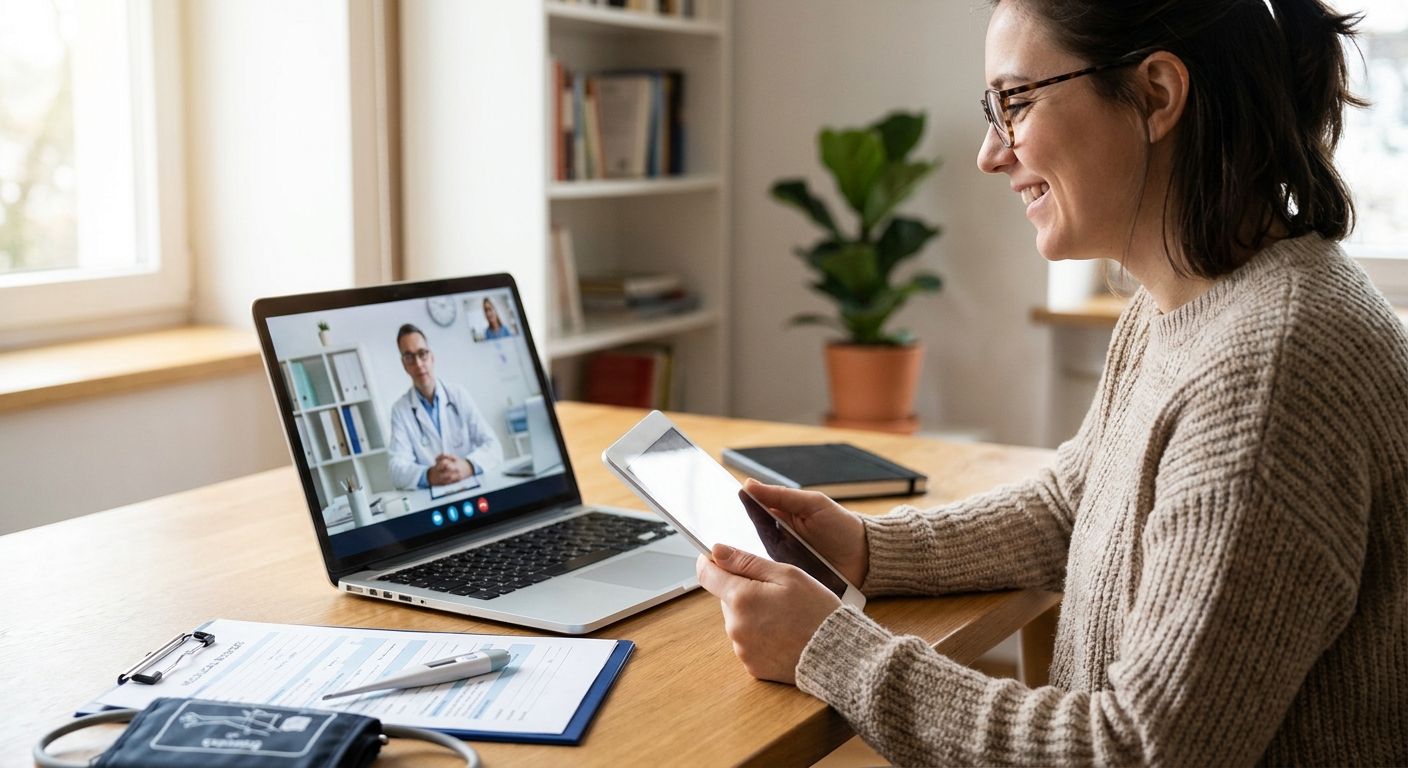
A telehealth pre-screening for your immigration medical exam is a phone or online intake you complete before your in-person visit with a civil surgeon. It covers your medical history, current medications, and vaccination records, so the civil surgeon's office can flag missing documentation before you walk in the door. USCIS still requires the physical exam, tuberculosis test, and any required vaccinations to happen in person — a video call or online form cannot replace that part of Form I-693. Getting the pre-screening step right in 2026 is what keeps your in-person appointment short instead of turning into a second visit.
- Telehealth pre-screening reviews your history and vaccination records before your in-person Form I-693 exam.
- It cannot replace the physical exam, TB test, or required vaccinations — those happen in person with a USCIS-designated civil surgeon.
- Missing or incomplete vaccination records are the most common reason pre-screening flags a problem early.
- ImmigrationMedicalExams.com offers online scheduling so you can submit information ahead of your Costa Mesa visit in 2026.
Why this matters
Form I-693 gets returned or delayed more often because of missing vaccination records than any other single issue. A telehealth pre-screening call or intake form catches that gap before your appointment, not after.
If you show up to your in-person exam without a vaccination record, without a prior Form I-693 (if one exists), or without knowing your TB test history, the civil surgeon has to stop and sort it out on the spot. That slows down your visit and can push your paperwork past the timeline you were counting on. ImmigrationMedicalExams.com offers online scheduling 24 hours a day specifically so applicants can handle this ahead of time instead of in the waiting room.
How to complete a telehealth pre-screening before your exam
Follow these steps in order. Rushing the intake is the most common reason applicants end up needing a second visit.
- Schedule your appointment online. Book your visit and confirm whether standard 3-business-day completion or the 2-business-day expedited option fits your USCIS deadline.
- Gather your documents before the call. You'll need a government-issued photo ID, your vaccination records (shot records, immunization cards, or a prior civil surgeon's Form I-693), and any past chest X-ray or TB treatment paperwork.
- Answer the intake questions honestly and completely. Include your medical history, current medications, chronic conditions, and any prior positive TB test result. Leaving something out doesn't skip a step — it just moves the delay to your in-person visit.
- Review your vaccination record with the office. This is where most gaps show up. If a record is missing a date or a specific vaccine, staff can tell you now rather than at check-in.
- Get your in-person visit instructions. Based on what came up in pre-screening, you'll know what to bring and roughly how long the visit will take.
- Attend your in-person exam. The physical exam, tuberculosis testing, vaccination-record review, and any required vaccinations happen here. This is the part telehealth cannot cover.
“A telehealth call can review your paperwork, but it can't listen to your lungs or read your tuberculosis test.”
Why telehealth pre-screening steps vary
Not every applicant goes through the same pre-screening. What applies to you depends on a few specific factors:
- Age. Children and adults follow different USCIS vaccination schedules, so a child's pre-screening asks different questions than an adult's.
- Completeness of your vaccination record. Applicants with a full, dated immunization record move through pre-screening faster than those working from memory.
- Prior TB history. A previous positive TB skin or blood test, or past TB treatment, changes what testing and documentation your civil surgeon needs to review.
- Whether you've had a prior Form I-693. If a previous Form I-693 was returned or came back incomplete, pre-screening should identify what went wrong the first time.
- Country of origin and available records. Some countries issue standardized immunization booklets; others don't, which changes how much verification is needed.
- Pregnancy or conditions affecting vaccine eligibility. These can change which required vaccinations apply and when they can be given.
See the guide to USCIS vaccination requirements for a full breakdown of which vaccines USCIS requires and which exceptions apply.
Can a telehealth call complete my Form I-693 exam?
No, a telehealth call cannot complete your Form I-693 exam. USCIS requires a USCIS-designated civil surgeon to perform the physical exam and required tuberculosis testing in person. Telehealth covers only the history review and documentation check that happens before that visit.
What should I have ready for my telehealth pre-screening?
Have your photo ID, your complete vaccination record, and any prior Form I-693 or TB test results ready before the call. With those in hand, the civil surgeon's office can tell you exactly what's missing instead of guessing.
Does telehealth pre-screening speed up my in-person appointment?
Yes, a completed pre-screening speeds up your in-person appointment because the civil surgeon's office already knows your history and any documentation gaps. Applicants who leave the intake incomplete are the ones most likely to need extra time or a follow-up visit.
Working against a tight deadline
If USCIS has given you a short response window, pre-screening matters even more, because it is the only step that can happen before you're physically in the clinic. Applicants in that situation should read about the same-day immigration medical exam option and be clear about their deadline when they book. Same-day appointment availability is not the same thing as same-day completion of Form I-693 — standard completion is 3 business days in 2026, with a 2-business-day expedited option when scheduling, laboratory results, required vaccinations, and documentation allow.
Schedule Your Immigration Medical Exam
Book online any time and get your paperwork reviewed before your Costa Mesa visit.
FAQ
What is a telehealth pre-screening for an immigration medical exam?
A telehealth pre-screening is a phone or online intake completed before your in-person Form I-693 exam. It reviews your medical history, medications, and vaccination records so the civil surgeon's office can prepare for your visit.
Is telehealth pre-screening required for Form I-693?
No, telehealth pre-screening is not a USCIS requirement. It is an optional intake step some civil surgeon offices use to reduce delays at the in-person exam.
Can I get my vaccinations during a telehealth visit?
No, required vaccinations must be given in person by a USCIS-designated civil surgeon. Telehealth only reviews your existing vaccination record ahead of time.
Can a civil surgeon sign Form I-693 without seeing me in person?
No. A civil surgeon must examine you in person before completing and sealing your Form I-693, and required tuberculosis testing must also be done in person.
What if I do not have my vaccination records?
Tell the civil surgeon's office during pre-screening if your vaccination records are missing or incomplete. They can explain what documentation or testing will be needed at your in-person visit instead of you finding out that day.
Does pre-screening affect how fast my exam is completed?
Completing pre-screening accurately helps keep your exam on the standard 3-business-day timeline, or the 2-business-day expedited option when scheduling, labs, and vaccinations allow it.
Can a parent complete pre-screening for a child?
Yes, a parent or guardian can complete the intake on behalf of a child. The child still needs the in-person exam and any required vaccinations.
Do I still need pre-screening if I had an immigration exam before?
Yes, and it matters more in that case. A prior Form I-693 and its vaccination page are useful records, and pre-screening is when the office confirms what still needs to be repeated.
One last thing
The applicants who skip pre-screening almost always lose more time than the intake would have taken. A short call that surfaces one missing vaccine record in 2026 is far faster than discovering it mid-exam, when the civil surgeon has to pause, give the vaccine, and rework part of the visit.