Finish Your I-693 in 2–3 Days: HIV, TB Screening, and Avoiding RFEs
No, HIV is not a health-related ground of inadmissibility, and HIV testing is not part of the Form I-693 immigration medical exam. This has been settled policy since January 4, 2010, when the CDC removed HIV from the list of communicable diseases of public health significance. Applicants with HIV still need to disclose it to their civil surgeon, though, because it affects how tuberculosis screening is handled during the exam.
TL;DR:
- HIV is no longer a health-related ground of inadmissibility, and HIV testing is not part of the Form I-693 exam since 2010.
- Civil surgeons document prior HIV diagnoses only to facilitate TB screening, not as a disqualifying condition or inadmissibility factor.
- The I-693 exam now includes TB testing, syphilis and gonorrhea testing if indicated, vaccination review, and a physical exam, but not HIV testing.
- Disclosing a known HIV diagnosis does not affect immigration eligibility, and civil surgeons handle HIV-related notes confidentially, with no implications for admissibility.
- Timelines for I-693 processing are generally around three days for standard service, but TB follow-up through health department referrals can cause delays.
Table of Contents
- HIV and I-693: The Legal Change Behind Today’s Policy
- What the I-693 Exam Includes Now
- How Known HIV Changes the TB Screening Process
- Disclosure, Privacy, and What “Class B” Actually Means
- Your I-693 Checklist if You Have Known HIV
- Common Misconceptions Worth Correcting
- Our Perspective on Helping Applicants With Known HIV
- Get Your I-693 Exam Done Right the First Time
- Sources
- FAQ
HIV and I-693: The Legal Change Behind Today’s Policy
The rule change didn’t happen quietly. On November 2, 2009, the Department of Health and Human Services and CDC published a final rule removing HIV infection from the definition of a communicable disease of public health significance, effective January 4, 2010. Before that date, a positive HIV test could trigger inadmissibility findings and force applicants into waiver requests. After it, that entire framework disappeared for HIV specifically.
The practical effect on adjudication is straightforward. USCIS officers are instructed to disregard an HIV diagnosis entirely when assessing medical inadmissibility, according to the USCIS Policy Manual. That means:
- No waiver is required for a known HIV diagnosis.
- Civil surgeons do not report HIV status as a bar to approval.
- Adjudicating officers cannot deny a green card application on the basis of HIV status alone.
This wasn’t a minor technical adjustment. It reversed a policy that had shaped U.S. immigration medicine since the late 1980s, when HIV was first added to the inadmissible conditions list during a period of widespread public misunderstanding about how the virus spreads. The CDC’s own rationale, laid out in the Federal Register final rule, cites the absence of casual-contact transmission risk as the driving reason for the removal. If you’re researching HIV and I-693 requirements today, that 2010 rule is the entire foundation of current policy, and nothing since has reversed it.
What the I-693 Exam Includes Now
Form I-693 still requires a defined set of tests, and it’s worth knowing exactly what stays on the list and what came off it. The exam generally includes:
- An interferon-gamma release assay (IGRA) blood test for tuberculosis in applicants age 2 and older.
- Syphilis and gonorrhea testing when clinically indicated.
- A full review of vaccination records against current requirements.
- A physical exam and mental health screening component.
Serologic HIV testing is not on that list. It hasn’t been required as part of the immigrant medical examination since the CDC’s rule took effect, a point confirmed directly in the agency’s Technical Instructions for Civil Surgeons. Civil surgeons don’t order it, and applicants don’t need to seek it out before their appointment.
Where does known HIV status show up on the form, then? If an applicant discloses a prior HIV diagnosis, the civil surgeon documents it in the Remarks section tied to the applicable class notation, primarily because it changes the tuberculosis workup. It is not recorded as a disqualifying finding. Form I-693 itself requires civil surgeons to note chest x-ray determinations, and immunosuppression, including HIV, is one of the triggers for ordering one, per the official I-693 form instructions.
How Known HIV Changes the TB Screening Process
This is the part of the I-693 immigration and HIV relationship that surprises a lot of applicants. HIV doesn’t affect admissibility, but it does affect the tuberculosis workup, because immunosuppression changes how reliably an IGRA blood test can detect latent TB.
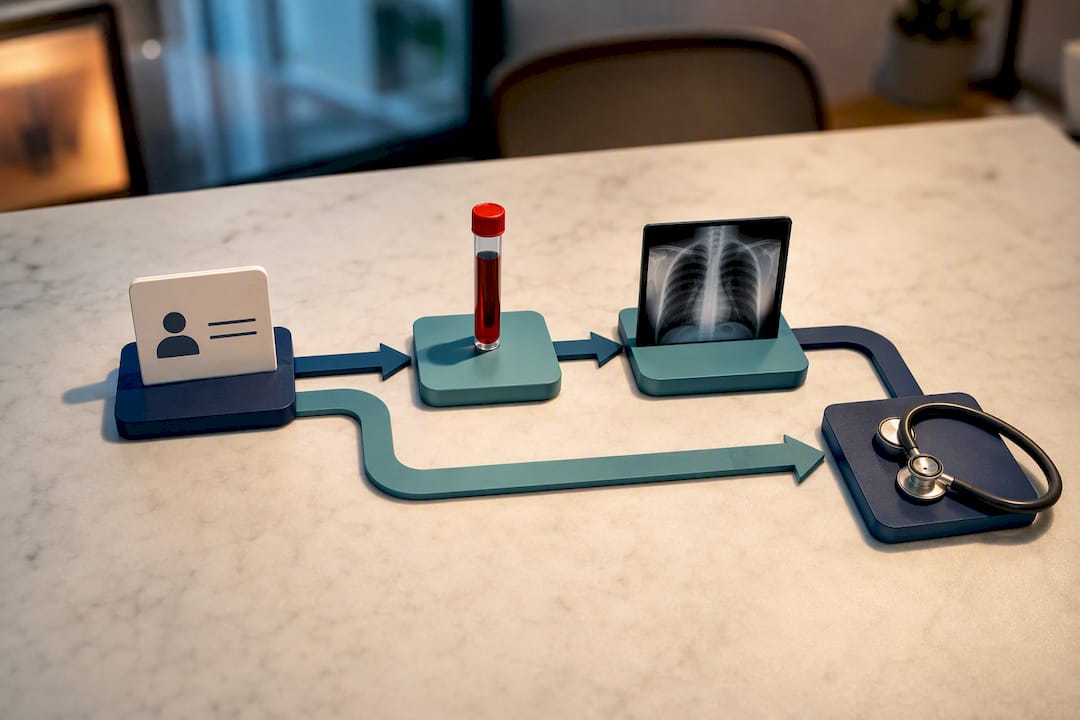
The typical sequence looks like this:
- The civil surgeon administers the standard IGRA blood test, required for applicants 2 years and older.
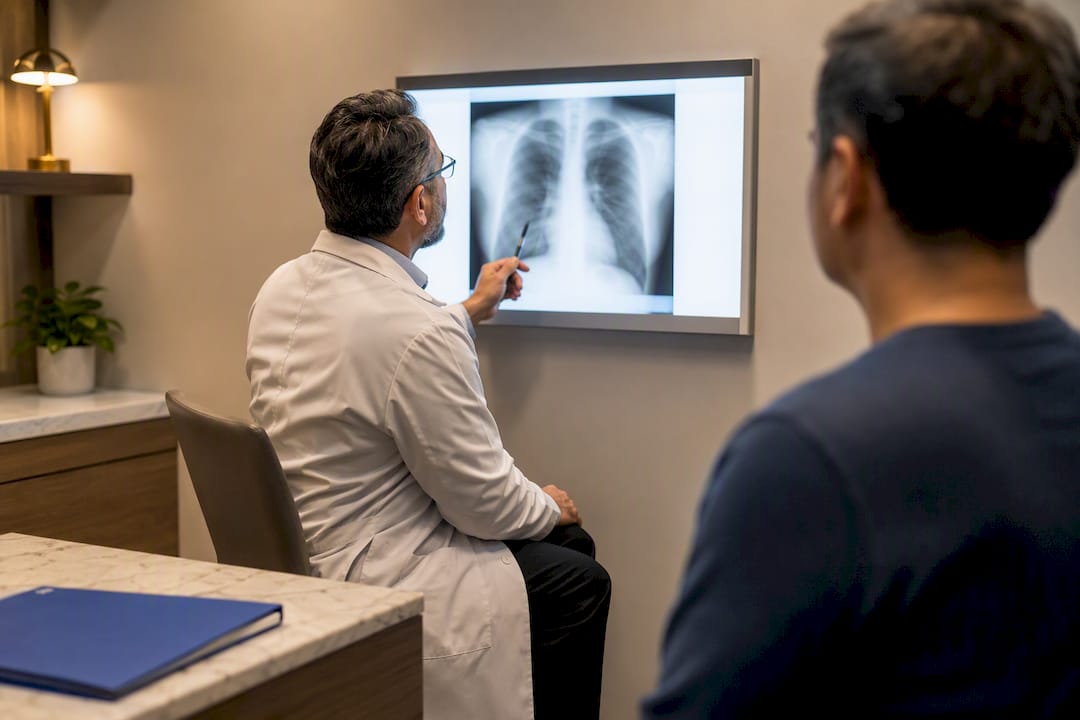
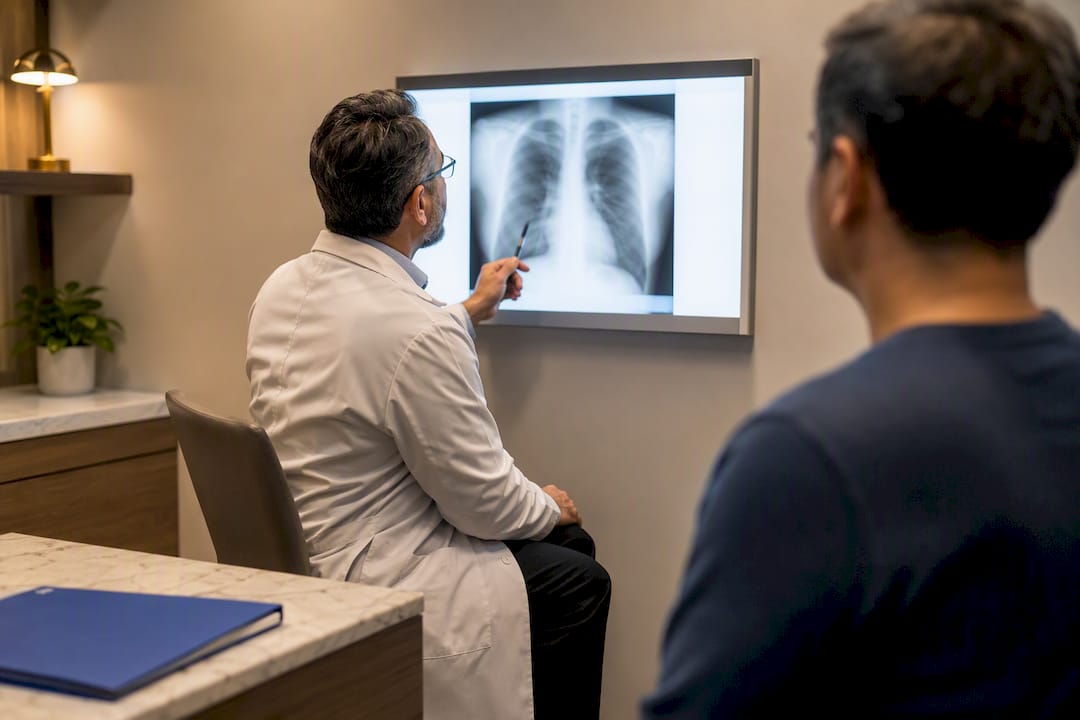
- If the applicant has disclosed known HIV infection, the civil surgeon often orders a chest x-ray regardless of the IGRA result, since immunosuppression is a recognized trigger for imaging under current CDC TB technical instructions.
- If the chest x-ray shows findings suggestive of active TB, the case gets referred to the local health department for sputum testing and further workup, following the CDC’s TB Technical Instructions.
That third step is where timelines can stretch. A health department referral can add days or weeks to your case depending on local scheduling, lab turnaround, and how quickly records move between providers.
Pro Tip: Bring your most recent HIV care summary and any prior chest x-ray results to your I-693 appointment. A civil surgeon who can review documented, stable treatment history sometimes avoids ordering duplicate imaging, which keeps your case moving instead of sitting in a health department queue.
Disclosure, Privacy, and What “Class B” Actually Means
Answer your civil surgeon’s medical history questions honestly. That’s the single most useful thing you can do if you’re managing HIV during an I-693 exam, because it lets the clinician follow the correct TB protocol from the start instead of catching a gap midway through the appointment.
A few things worth knowing about how this information is handled:
- Disclosing HIV status does not make you inadmissible. The condition was removed from that category in 2010, and it stays removed regardless of what a civil surgeon documents.
- Civil surgeons operate under standard medical confidentiality rules, and HIV-related notes in your I-693 file are handled the same way any other private health information would be.
- A “Class B” notation on immigration medical forms indicates a condition civil surgeons should note for follow up. It is not the same as a Class A finding, and it does not equal inadmissibility.
Applicants sometimes worry that any written notation is a red flag for USCIS. It isn’t. The form exists to document medical facts accurately, not to flag people for denial based on a manageable, treated condition.
Your I-693 Checklist if You Have Known HIV
A little preparation goes a long way toward avoiding a repeat appointment. Before your exam:
- Gather a current HIV care summary from your treating provider, including your most recent viral load and CD4 count if available.
- Bring copies of any prior TB tests, whether IGRA, TST, or chest x-ray reports, especially from the last two years.
- Collect your complete vaccination records so the civil surgeon isn’t guessing at your immunization history.
- Ask that any Remarks entries be worded precisely, since vague documentation is one of the leading causes of USCIS requests for evidence on I-693 forms.
Pro Tip: A civil surgeon who specializes in immigration exams, rather than one who sees them occasionally between primary care visits, is far more likely to write Remarks language that satisfies USCIS the first time. That single detail prevents a lot of unnecessary repeat testing.
Applicants exploring expedited processing timelines can also review options for avoiding TB-related delays and speeding up an I-693 to two days when a chest x-ray or referral is already in progress.
Common Misconceptions Worth Correcting
A surprising amount of outdated information about HIV and immigration medical exams still circulates online, often on forums and unofficial guides that predate 2010 and were never updated.
- Some older posts claim HIV testing is required for a green card medical exam. It is not, and hasn’t been since the CDC’s rule took effect.
- Others suggest an HIV diagnosis automatically disqualifies an applicant. That was true before January 2010. It has not been true since.
- A number of third-party immigration forums still reference “HIV waivers,” a process that no longer applies because HIV was removed from the inadmissible conditions list entirely rather than made waivable.
If a source you’re reading doesn’t cite a date, or cites anything before 2010, treat it as unreliable. The only sources worth trusting on this topic are the USCIS Policy Manual, CDC’s civil surgeon technical instructions, and the official I-693 form and instructions themselves.
Our Perspective on Helping Applicants With Known HIV
One pattern shows up constantly for applicants with HIV: they worry more about the exam than they need to, while underestimating how much the TB screening step actually matters for their timeline.
The medical policy question was settled in 2010. The operational question, how a civil surgeon documents your case and handles the TB workup, is where outcomes still diverge. Clear Remarks language, correctly sequenced chest x-rays, and sealed-envelope handling done right the first time make the difference between a 3-day turnaround and a case stuck waiting on a health department referral. We see the second scenario often, usually from applicants who had exams performed elsewhere and came to us to fix incomplete documentation. Privacy is handled the same way for every applicant, regardless of diagnosis, and our focus stays on getting the form right the first time.
— ImmigrationMedicalExams Medical Team
Get Your I-693 Exam Done Right the First Time
Some clinics specialize only in immigration medical exams, never primary care or urgent care visits, which means every appointment is built around one goal: a correctly completed, USCIS-compliant I-693 with no guesswork on TB protocol or documentation wording.

Our standard processing runs about 3 days, with a 2-day expedited option available when your timeline is tight. Both include the civil surgeon exam, required lab testing, vaccination review, and a properly sealed I-693 form ready for submission with your I-485. If you are managing HIV and want a civil surgeon who documents TB findings accurately and writes Remarks language that holds up under USCIS review, our immigration medical exam service covers the full appointment in one visit. We routinely work with applicants who had incomplete records or errors from a previous exam elsewhere, and pricing details for additional services like titer testing are listed on our pricing page. Schedule your appointment online, any time, and get your exam handled correctly from the start.
Sources
For direct verification, review the USCIS Policy Manual chapter on communicable diseases, the official Form I-693 and its instructions, and CDC’s Technical Instructions for Civil Surgeons. These sources reflect current policy effective since January 4, 2010, and supersede anything published before that date.
This article is general information, not a substitute for advice from a qualified doctor. Consult a qualified healthcare professional about your own circumstances before acting on anything here.
- Communicable Diseases of Public Health Significance | USCIS Policy Manual
- Technical Instructions for Civil Surgeons | CDC
FAQ
Does HIV Status Affect U.S. Immigration Eligibility?
No. HIV was removed from the list of communicable diseases of public health significance effective January 4, 2010, and USCIS officers are instructed to disregard it when determining medical inadmissibility.
What Medical Conditions Are Checked on Form I-693?
The exam covers tuberculosis screening (IGRA), syphilis and gonorrhea testing when indicated, a vaccination record review, and a general physical and mental health assessment. HIV testing is not included.
Can I Get a Green Card if I Have HIV?
Yes. HIV status alone cannot be used to deny a green card application, and no waiver is required, since HIV is no longer classified as a health-related ground of inadmissibility.
Does USCIS Check for HIV?
USCIS does not require HIV testing as part of the I-693 exam. If an applicant has a known HIV diagnosis, the civil surgeon documents it only to guide the tuberculosis screening process, not to assess inadmissibility.
How Long Does the I-693 Process Take if I Have HIV?
Timelines depend on whether TB follow-up is needed. Immigrationmedicalexams offers standard processing in about 3 days and a 2-day expedited option, though a health department referral for further TB workup can extend that window.