

How to Find a Civil Surgeon for Your I-693 Exam

The fastest way to find a civil surgeon is to use the official USCIS “Find a Civil Surgeon” locator, which lets you search by address, city, state, or ZIP code. If the tool is down or you’d rather talk to a person, call the USCIS Contact Center at 1-800-375-5283. Either way, remember the one rule that trips up a lot of applicants: only a USCIS-designated civil surgeon can complete Form I-693 for adjustment of status. Your regular family doctor cannot sign it, no matter how long you’ve been their patient.
Here’s what to do right now:
- Search online: Go to the USCIS locator and enter your ZIP code or city and state. It returns names, addresses, and phone numbers for designated physicians near you.
- Call if needed: Dial 1-800-375-5283 (TTY 800-767-1833) if you can’t access the site or want to confirm a listing by phone.
- Call two or three offices before booking: Fees and appointment availability vary a lot between practices, and a quick call saves you from a bad surprise later.
USCIS updates its civil surgeon list weekly, so a name that was accurate last month could already be outdated. Confirm designation close to your actual appointment date, not just when you first start researching.
Key Takeaways
Finding a valid civil surgeon means using the official USCIS locator or Contact Center, confirming designation by phone, and arriving with complete documentation to avoid delays or a rejected I-693.
| Point | Details |
|---|---|
| Start with the official locator | Use the USCIS “Find a Civil Surgeon” tool or call 1-800-375-5283 to get a verified list near you. |
| Confirm designation by phone | The list updates weekly, so call the office directly before booking to verify current status. |
| Bring complete records | Vaccination history, prior test results, and unsigned Part 1 of Form I-693 prevent repeat visits. |
| Compare fees before booking | USCIS doesn’t regulate pricing, and most offices don’t accept insurance for the exam. |
| Choose a specialist clinic | Immigrationmedicalexams focuses exclusively on I-693 exams with flat pricing and 3-day standard or 2-day expedited turnaround. |
Table of Contents
- How Do You Use the USCIS “Find a Civil Surgeon” Tool?
- Where Do You Go If No Civil Surgeon Is Nearby?
- What Should You Bring to Your Immigration Medical Exam?
- What Do Civil Surgeon Fees and Insurance Actually Look Like?
- How Do You Confirm a Doctor’s Civil Surgeon Status?
- What Happens to Form I-693 After the Exam?
- What Should You Look for in a Specialized Immigration Medical Exam Clinic?
- What Applicants Consistently Get Wrong (and How to Avoid It)
- Ready for a Fast, Flat-Rate I-693 Exam?
- Sources
- FAQ
How Do You Use the USCIS “Find a Civil Surgeon” Tool?
You find a civil surgeon by entering your location into the official locator, then narrowing your options with a phone call. It sounds simple because it is, but a few steps make the difference between a smooth booking and a wasted trip.
- Open the USCIS locator. Go to the Find a Civil Surgeon page on uscis.gov. Avoid third-party sites that claim to offer the “same” directory. USCIS is the only authoritative source.
- Enter your address, city, state, or ZIP code. The tool returns a list of designated physicians sorted by distance. Widen your search radius if your area shows few results.
- Note the details for each listing. Write down office hours, listed languages, and phone numbers. Some listings include specialties or notes about walk-in availability.
- Call before you book. This step matters even though it feels redundant. Ask directly: “Are you still a USCIS-designated civil surgeon, and do you complete Form I-693?” Designations do change, and the list only refreshes weekly.
- Ask the practical questions during that same call. Confirm whether they accept insurance, what the total fee covers, whether they administer vaccines you might be missing, and how long it takes to get your sealed I-693 back.
- Book the appointment that fits your paperwork readiness, not just your calendar. If you’re still waiting on a vaccination record from a former doctor, push the date a few days rather than showing up without it.
Pro Tip: Book the earliest available slot at a clinic that offers same-day or next-day vaccine administration if you’re missing records. Vaccination catch-up sometimes requires a second visit, so starting early protects your filing timeline.
Calling to confirm designation, even for a doctor who appears on the official list, is not a wasted step. Civil surgeons must notify USCIS within 15 days of a change like retiring or moving offices, and that gap between a change and the list catching up is exactly where applicants get burned.
Where Do You Go If No Civil Surgeon Is Nearby?
Rural applicants and people in small metro areas sometimes find the locator comes up nearly empty. You have a few legitimate paths forward before assuming you’re stuck.
- Check blanket-designated civil surgeons. Some state and local health departments hold a blanket designation, meaning their staff physicians are automatically authorized without appearing individually on the standard list. Call your county or state health department to ask.
- Ask about military treatment facilities. Certain military physicians hold civil surgeon designation for eligible applicants, typically service members, veterans, or their dependents going through adjustment of status.
- Broaden your search radius. Try the next largest city rather than staying fixed on your immediate ZIP code. Many applicants drive 30 to 60 minutes for an exam that only happens once.
- Call the USCIS Contact Center directly. If the online tool shows nothing usable, an agent at 1-800-375-5283 can sometimes point you toward blanket-designated options in your area.
Don’t confuse a civil surgeon with a panel physician. If you’re filing Form I-485 inside the United States for adjustment of status, you need a civil surgeon. If you’re going through consular processing from overseas, you’ll see a Department of State panel physician instead, a separate list entirely. Mixing these up is one of the more common and costly mistakes applicants make when they start researching online without knowing which process applies to them.
Timing and eligibility differences matter too. Refugees sometimes have different exam and vaccination timing rules than standard adjustment-of-status applicants, and military-affiliated applicants may have access to facilities that civilian applicants don’t. If your situation is anything but a standard adjustment case, it’s worth a quick call to confirm which route applies before you book anything.
What Should You Bring to Your Immigration Medical Exam?
Showing up prepared is the single biggest factor in whether your visit takes one appointment or three. Civil surgeons can only work with what you bring them, and gaps in documentation almost always mean extra cost or a return trip.

Start with your paperwork. Bring Form I-693 with Part 1 filled out, but do not sign it. USCIS instructions are explicit on this: you complete Part 1 but wait to sign until the civil surgeon tells you to, and each applicant needs a separate I-693, even within the same family.
You’ll also need a government-issued photo ID, your passport, and any documentation of your current immigration status. If your birth certificate or prior medical records are in another language, bring certified translations. And bring every vaccination record you can find, even old paper cards from childhood or a previous country. Written proof of past vaccinations often avoids repeat shots entirely, since a civil surgeon will only administer vaccines when records are missing or incomplete, and repeat vaccinations cost money and time you don’t need to spend.
| Document | Why bring it | Clinic note |
|---|---|---|
| Form I-693, Part 1 completed | Required for the exam to proceed | Do not sign until instructed by the civil surgeon |
| Photo ID and passport | Confirms identity for the official record | Bring both if available, not just one |
| Vaccination records | Avoids unnecessary repeat vaccinations | Bring originals, not just a verbal history |
| Prior TB test or chest x-ray results | Speeds up TB screening if recent | Bring results even if from a different provider |
| Current medication list | Helps the surgeon assess your health accurately | Include dosages, not just drug names |
If you have a chronic condition or you’re pregnant, mention it when you book, not when you arrive. Some tests and vaccines get deferred or adjusted for pregnancy, and the surgeon needs to know in advance to schedule your visit correctly.
Pro Tip: Once the civil surgeon seals your completed I-693 in an envelope, leave it sealed. Never open or tamper with it. Ask the clinic directly how long they typically take to complete and seal the form, and confirm whether you should submit it sealed alongside Form I-485 or hold it until your filing date; the timing rules can affect whether USCIS accepts it.
What Do Civil Surgeon Fees and Insurance Actually Look Like?
USCIS does not set or regulate civil surgeon fees, which means prices for the exact same exam can swing widely from one office to the next. Calling around before you commit isn’t just smart, it’s the only way to know if you’re getting a fair price.
A typical bill includes the exam itself, required lab work, any vaccines you need, and TB testing when applicable. Offices that find missing records or need to administer extra vaccines will usually charge more, which is exactly why arriving with complete documentation saves money as well as time.
- Ask for a full breakdown of the fee before you book, not just a headline number.
- Ask specifically whether the quoted price includes vaccines, or whether those are billed separately.
- Ask if there’s an added charge for expedited turnaround on your I-693.
- Confirm whether the office bills you directly or requires payment at time of service.
On insurance, expectations need a reality check. Many civil surgeons don’t accept insurance for the immigration medical exam because it’s considered an administrative service rather than standard medical care, and insurers often don’t classify it as a covered benefit. If a provider does accept insurance for part of the visit, such as a specific vaccine, ask for that in writing so you have documentation if a coverage question comes up later.
Can insurance cover the I-693 exam? Usually not. USCIS guidance confirms fees vary by provider and that insurance coverage isn’t standard, so budget for an out-of-pocket cost and treat any insurance acceptance as the exception rather than the rule.
How Do You Confirm a Doctor’s Civil Surgeon Status?
Verifying designation takes five minutes and can save you from a rejected I-693 months down the line. Run through this before you book:
- Check the physician’s name against the current USCIS locator listing.
- Call the office directly and ask them to confirm their designation verbally, since the online list only refreshes weekly.
- If anything feels off, verify the physician’s medical license through your state’s medical board website.
- Keep a record of who you spoke with and when, in case you need to reference the call later.
A civil surgeon who is legitimate will never ask you to sign Part 1 of Form I-693 before your exam is complete, will never hand you an unsealed I-693, and will never route your case through a third-party “broker” promising a faster designation. Any of those should stop you cold.
If you suspect a provider isn’t legitimately designated, call the USCIS Contact Center at 1-800-375-5283 and describe what you observed. Keep copies of any paperwork, emails, or texts related to the visit. Rejected or fraudulent I-693s create delays that are far more painful than the extra ten minutes it takes to verify a physician up front.
What Happens to Form I-693 After the Exam?
Once your exam is complete, the civil surgeon fills out and signs Form I-693, then seals it in an envelope along with your supporting lab results and vaccination documentation. That seal is not decorative. USCIS treats an opened or tampered envelope as a red flag, and it can lead to your form being rejected outright, forcing you to repeat the entire exam.
The sealed envelope you walk out with is the only version of Form I-693 that USCIS will accept as valid. Once it’s sealed, it stays sealed until a USCIS officer opens it.
Turnaround time varies by clinic. Some offices take a week or more to finalize and hand over your sealed I-693; others move faster. Immigrationmedicalexams processes I-693 forms in about 3 days on a standard timeline, with a 2-day expedited option for applicants working against a filing deadline. That difference matters if you’re assembling a full adjustment-of-status package and every other document is already in hand.
Ask your civil surgeon whether to submit the sealed I-693 together with Form I-485 or hold onto it, since current filing instructions can vary depending on your case type. If your sealed envelope gets lost or damaged before submission, don’t try to recreate it yourself. Contact the clinic that performed your exam; most can reissue a new sealed form faster than starting the entire exam over. And if USCIS later requests additional medical evidence, that request goes back to the civil surgeon, not to you alone, so keep your clinic’s contact information handy well after your appointment ends.
What Should You Look for in a Specialized Immigration Medical Exam Clinic?
Not every doctor who holds a civil surgeon designation treats immigration exams as a core part of their practice. Some see one or two I-693 patients a month between regular primary care visits. That distinction matters more than most applicants realize.
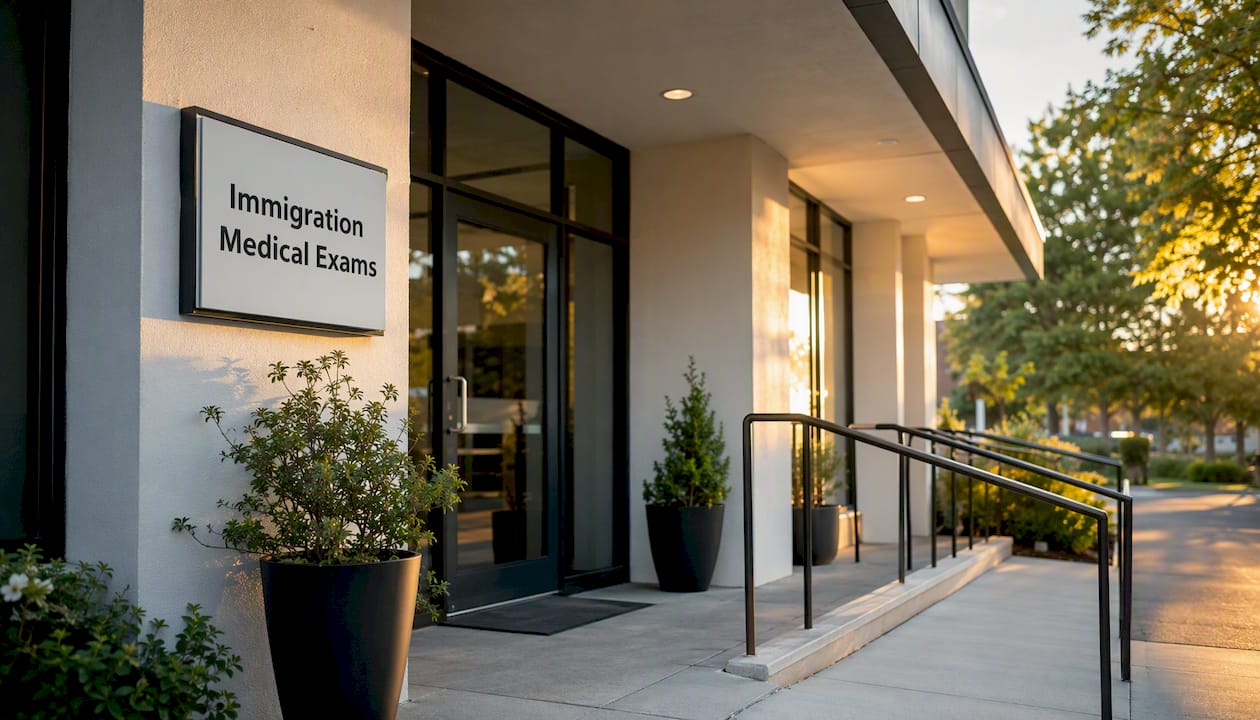
A clinic that focuses exclusively on immigration medical exams, rather than treating them as a side service, tends to make fewer documentation errors, understands current CDC vaccination technical instructions without needing to look them up mid-visit, and moves your sealed I-693 through processing faster because the staff does this every single day. Immigrationmedicalexams has specialized exclusively in Form I-693 exams since 2007, with no primary care, urgent care, or sick visits diluting that focus.
When you’re vetting any provider, whether it’s Immigrationmedicalexams or another practice, ask these questions during your booking call:
- What’s your standard turnaround time for a sealed I-693, and is expedited processing available?
- Do you handle lab testing and vaccine administration on-site, or will I need a separate appointment elsewhere?
- What’s included in your fee, and are there any circumstances where I’d be charged more?
- Can I book outside normal business hours if I have a tight schedule?
Our flat-package pricing is built to remove surprise charges, our standard I-693 turnaround runs about 3 days with a 2-day expedited option, and we handle sealed-envelope processing in-house so nothing about your form’s handling is left to guesswork.
The practical payoff of choosing a specialist clinic shows up most clearly when something has already gone wrong elsewhere. Immigrationmedicalexams frequently sees applicants who experienced delays, incomplete vaccination documentation, or outright errors from a prior exam performed by a general practice unfamiliar with USCIS requirements. Fixing that the second time around usually costs more than getting it right the first time would have.
What Applicants Consistently Get Wrong (and How to Avoid It)
The single most common mistake we see is arriving without vaccination records, not because applicants don’t have them, but because they didn’t think to dig them out. A parent’s old immunization card from childhood, a school enrollment form, even a record from a previous country, all of these count as documentation, and bringing them can mean the difference between walking out the same day and coming back for a second visit weeks later.
Family bookings are another spot where a little planning pays off. If you’re bringing a spouse and children for their exams, ask the clinic to schedule everyone back-to-back rather than on separate days. It cuts down on repeated paperwork and gets the whole family’s I-693s moving through processing together instead of staggered.
We’ve also seen cases where an applicant brought serology test results showing existing immunity, rather than assuming they needed a fresh vaccine. That single document avoided an unnecessary shot and the added cost that comes with it. It’s a small thing, but it’s the kind of detail that only comes up when you ask the right questions before your appointment instead of during it.
One reminder is worth repeating on its own, separate from any pitch for a particular clinic: once your I-693 is sealed, it stays sealed. If you’re ever unsure whether something about your exam or your form is correct, the right move is calling USCIS directly, not opening the envelope to check.
Ready for a Fast, Flat-Rate I-693 Exam?
If you’ve called around and you’re tired of vague pricing quotes or clinics that treat your immigration exam as an afterthought between regular patients, Immigrationmedicalexams is built specifically for this exam and nothing else. No primary care visits competing for the doctor’s time, no guessing what your final bill will look like.

Immigrationmedicalexams has handled I-693 immigration medical exams exclusively since 2007, with on-site lab testing and vaccine administration so you’re not sent to a separate facility mid-process. Our flat-package pricing is designed to avoid the surprise add-on charges that catch a lot of applicants off guard elsewhere, and our sealed Form I-693 handling follows USCIS requirements precisely, with standard processing in about 3 days and a 2-day expedited option when your filing deadline is close. If you’re missing vaccination records, we can review what you have and administer what’s needed during the same visit in most cases.
Scheduling is open 24/7 online, so you can book an appointment tonight without waiting for office hours. If you’re in Los Angeles, Orange, Riverside, San Bernardino, or San Diego County, check our service areas and book the next available slot that fits your filing timeline.
Sources
The USCIS “Find a Civil Surgeon” tool is the authoritative starting point for locating a designated physician by address, city, state, or ZIP code. For the rules governing how the list is maintained, the USCIS Policy Manual chapter on civil surgeons explains the weekly update cycle and designation requirements.
If you need the exact filing instructions for Form I-693, including signing rules and per-applicant requirements, refer directly to the official I-693 instructions. For vaccination-specific technical guidance that civil surgeons are required to follow, the CDC civil surgeons page covers the clinical requirements behind the exam. And for a broader explanation of how civil surgeons differ from consular panel physicians, USCIS’s guidance on finding a medical doctor lays out which process applies to your situation.
This article is general information, not a substitute for advice from a qualified doctor. Consult a qualified healthcare professional about your own circumstances before acting on anything here.
- Find a Civil Surgeon | USCIS
FAQ
How do I find a designated civil surgeon?
Use the USCIS “Find a Civil Surgeon” locator by entering your address, city, state, or ZIP code, or call the USCIS Contact Center at 1-800-375-5283. Always confirm designation by phone before booking, since the list updates weekly.
How much do civil surgeons charge?
USCIS does not regulate civil surgeon fees, so prices vary widely by provider and location. Call several offices to compare exam fees, lab costs, and any vaccine-related charges before booking.
Does insurance cover a civil surgeon visit?
Most civil surgeons do not accept insurance for the immigration medical exam, since it’s typically treated as an administrative service rather than standard medical care. Ask directly during booking and get any coverage confirmation in writing.
Is a civil surgeon the same as a regular doctor?
No. A civil surgeon is a physician specifically designated by USCIS to complete Form I-693, while a general practice doctor without that designation cannot sign or complete the form for adjustment of status.
What’s the difference between a civil surgeon and a panel physician?
A civil surgeon performs the exam for applicants filing Form I-485 inside the United States, while a panel physician handles the exam for applicants going through consular processing overseas. The two lists are separate and shouldn’t be confused.