

You generally need a new TB blood test for your immigration medical examination if your old positive result was a skin test, but a documented previous positive TB blood test can exempt you from another blood test. That exception does not remove the chest X-ray requirement: your civil surgeon must review your records and follow the CDC’s tuberculosis instructions before completing your Form I-693, Report of Immigration Medical Examination and Vaccination Record.
- New TB test after old positive result immigration: the answer depends on whether your previous test was skin or blood.
- CDC requires TB blood testing for applicants age 2 years and older, except those with documented previous positive IGRA results.
- A documented positive TB blood test avoids repeat blood testing, not the required chest X-ray.
- ImmigrationMedicalExams.com provides Form I-693 examinations for Southern California applicants who need prior TB records reviewed.
Do I need a new TB test if I tested positive years ago?
The type of test matters more than how many years ago you tested positive. For a 2026 Form I-693 examination, the CDC’s Tuberculosis Technical Instructions for Civil Surgeons require an interferon-gamma release assay, or IGRA, for applicants age 2 years and older unless they have written documentation of a previous positive IGRA.
An IGRA is a TB blood test. A tuberculin skin test, sometimes called a TST or PPD, is different and does not provide the same exemption.
| Your previous TB history | Is another TB blood test required? | What happens next? |
|---|---|---|
| Documented positive skin test only | Yes, for applicants age 2 years and older | The civil surgeon uses the IGRA result and your medical history to determine the next steps. |
| Documented positive IGRA | No repeat IGRA under the CDC exception | A chest X-ray is required, along with review of symptoms and history. |
| You remember a positive result but have no written report | Your recollection does not establish the IGRA exception | Request the original report; the civil surgeon applies the testing requirements to the available documentation. |
| Previous treatment for TB infection or TB disease | Treatment alone does not establish an exemption from IGRA testing | Bring the original test result and treatment records for review. |
If your current blood test is positive, the separate guide to positive TB blood test next steps for Form I-693 explains the follow-up process.
Why this matters
A positive TB test does not, by itself, establish that you have active TB disease. It also does not automatically mean that your immigration medical examination cannot be completed.
The civil surgeon must determine whether your records establish a previous positive IGRA and whether you need further evaluation. Bring the actual report rather than relying on a statement that you once tested positive. That distinction can prevent unnecessary repeat testing without skipping required screening.
The CDC sets the clinical screening instructions, while USCIS sets the requirements for Form I-693. Routine workplace screening advice is not a substitute for the civil surgeon’s immigration-exam instructions.
If your old positive result was a skin test
A previous positive skin test does not replace the required immigration TB blood test for applicants age 2 years and older. Even a clearly documented skin-test result is not the same as a documented positive IGRA.
This distinction often affects applicants who remember returning to a clinic so someone could examine a raised area on their arm. That describes a skin test, not an IGRA. A blood draw sent to a laboratory suggests an IGRA, but the laboratory report is still needed to confirm the test and result.
What if I received the BCG vaccine?
Tell your civil surgeon if you received the BCG vaccine. BCG can affect a TB skin-test result, but it does not cause a positive IGRA result.
The benefit of IGRA testing is that it avoids this BCG-related skin-test issue. Its limitation is equally important: a positive IGRA cannot distinguish inactive TB infection from active TB disease. The civil surgeon needs the rest of the required evaluation to make that distinction.
For your 2026 examination, do not assume that a childhood BCG vaccination explains away every positive TB result. Bring your records and let the civil surgeon interpret the correct test.
If your old positive result was a TB blood test
Written documentation of a previous positive IGRA is the key exception to repeat blood testing. Under the CDC’s civil surgeon instructions, that documentation must include the test date, test type, result, and the required physician information, including the physician’s name, signature, and office information.
Request a complete laboratory report and supporting medical documentation from the office that evaluated you. A patient-portal message saying only that your TB screening was positive might not establish everything the civil surgeon needs.
The exception prevents repeating a blood test that is already documented as positive. It does not clear the rest of the examination: applicants with a documented positive IGRA still require a chest X-ray.
Why not repeat the blood test to see whether it became negative?
A TB blood test can remain positive after treatment. Repeating it is not a reliable way to prove that treatment worked or that you no longer need an immigration evaluation.
Your treatment-completion records answer a different question from your original laboratory result. Bring both when available. The civil surgeon needs to understand what was diagnosed, what treatment you received, and whether you completed it.
What changes the testing plan?
Your civil surgeon follows a defined screening process, not a rule based only on the age of your previous result. These factors determine what must happen at your visit:
- Test type: A positive skin test and a positive IGRA have different consequences for repeat blood testing.
- Written documentation: The previous positive IGRA exception depends on adequate records, not memory alone.
- Age: Routine IGRA testing applies to applicants age 2 years and older; younger children have separate evaluation instructions.
- Symptoms and medical history: Symptoms suggesting TB disease or known HIV infection can require evaluation beyond routine screening.
- Treatment history: Records must distinguish treatment for inactive TB infection from treatment for active TB disease.
- Chest X-ray findings: Findings suggesting infectious TB require further evaluation through the health department.
Two applicants who both say they tested positive years ago can therefore have different examination steps. The difference comes from their documented histories and current findings, not from a clinic choosing a shorter process.
What should I bring to my civil surgeon visit?
For a 2026 Form I-693 visit, organize your TB records before the appointment. Start with the office, laboratory, or health department that performed your earlier evaluation.
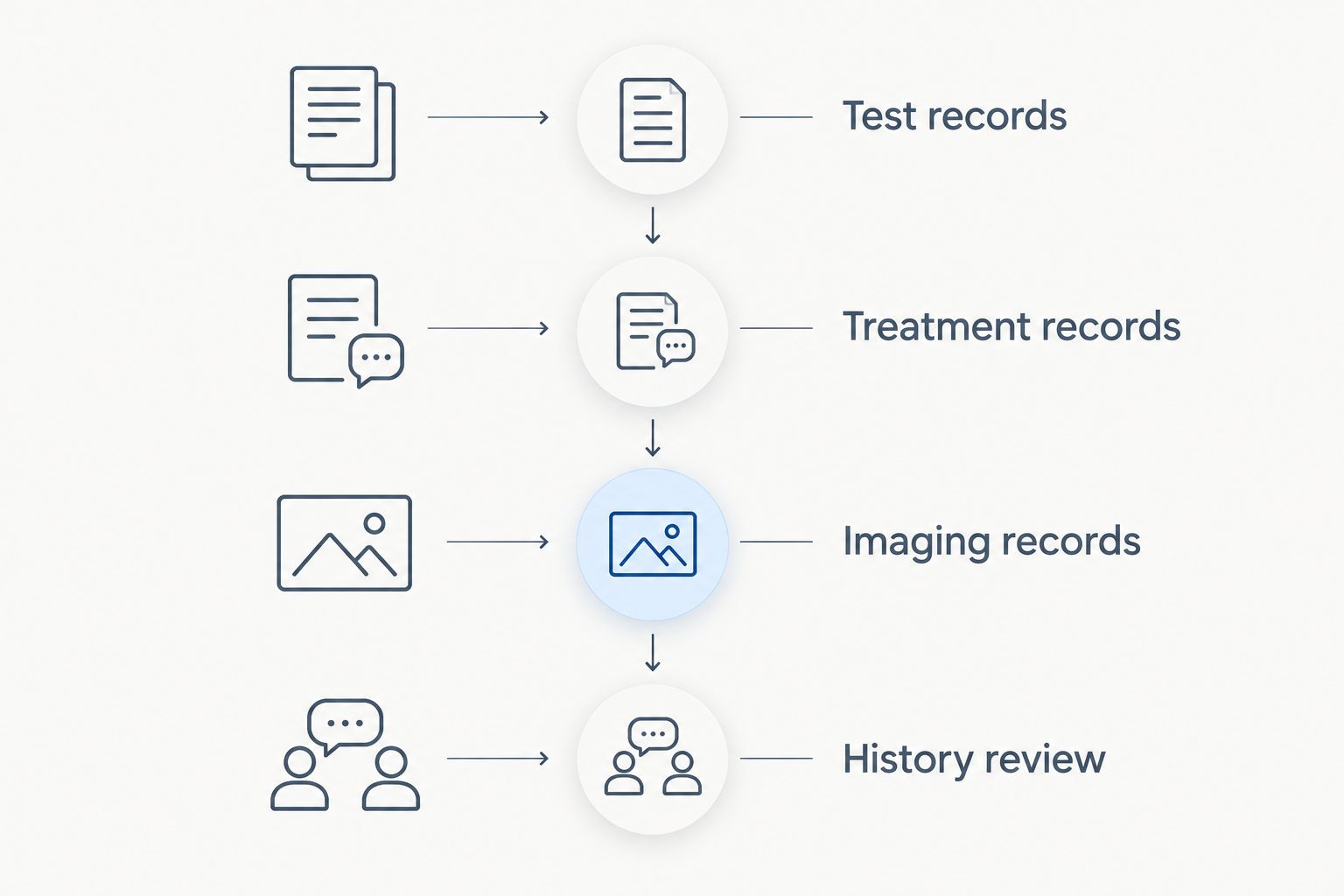
- Test records: Request the original positive report. Look for the test name, collection date, result, and identifying information that connects the report to you.
- Treatment records: Bring documentation naming the condition treated, medicines used, treatment dates, and whether treatment was completed.
- Imaging records: Bring previous chest X-ray reports and any related specialist or health-department evaluations. An old report provides useful history but does not automatically replace imaging required for the current examination.
- History review: Tell the clinic about current symptoms, previous TB disease, and any incomplete treatment. Do not wait until the form is ready to mention them.
Keep these materials separate from your vaccination record so each part of the examination is easy to review. TB testing and vaccination review serve different purposes; proof of vaccination does not establish a previous TB test result.
What if I cannot find my old records?
Tell the clinic what you know, including where the test occurred and whether it involved a blood draw or a skin injection. Request records from the original provider rather than scheduling another test on your own.
An incomplete history does not give the civil surgeon permission to waive required testing. It also does not mean that every applicant needs the same additional evaluation. The civil surgeon determines the required steps from the records available and the examination findings.
Do I still need a chest X-ray if I finished TB treatment?
A documented previous positive IGRA still requires a chest X-ray for the immigration examination, even when you report completing treatment. Treatment records remain important because they help the civil surgeon interpret your history and document it correctly.
Do not treat an old normal chest X-ray as permanent clearance. It describes your condition when that image was taken; the civil surgeon must follow the requirements for the present examination.
Treatment for inactive TB infection and treatment for active TB disease are not interchangeable. If you are unsure which diagnosis you had, bring the treatment summary rather than guessing. A medication list without a diagnosis or completion record leaves important questions unanswered.
Does a positive TB blood test mean my Form I-693 will be delayed?
A positive TB blood test requires a chest X-ray, but it does not automatically require active-TB treatment. If your evaluation shows inactive TB infection rather than active disease, the civil surgeon follows the CDC’s documentation, reporting, and counseling instructions.
When inactive TB infection is diagnosed, treatment is recommended for your health but is not required before the civil surgeon can complete Form I-693. That is different from suspected or confirmed infectious TB, which requires health-department evaluation and can prevent completion until the required process is finished.
For 2026 scheduling, the practical distinction is whether your examination needs routine follow-up imaging or a more involved TB evaluation. Do not assume that a positive result means either an immediate signature or a fixed delay.
How does an old positive result affect my child’s examination?
Age 2 years is the routine IGRA threshold in the CDC’s civil surgeon instructions. Children at or above that age generally need the blood test unless they have qualifying documentation of a previous positive IGRA.
Children younger than that threshold still need a medical history and examination. Symptoms, known HIV infection, or other findings can trigger additional TB evaluation under the applicable instructions.
If you are arranging examinations for several family members, keep each person’s reports separate. A parent’s positive result or treatment record does not establish a child’s result, and one child’s documentation cannot stand in for a sibling’s records.
Common mistakes that complicate an old positive TB history
The most useful preparation is accurate paperwork, not extra testing arranged without the civil surgeon’s direction. Avoid these common sources of confusion:
- Calling every previous TB test a skin test or every blood draw an IGRA.
- Bringing a general clearance letter without the underlying positive test report.
- Assuming a normal chest X-ray means the TB blood test became negative.
- Assuming treatment completion removes every immigration screening requirement.
- Omitting previous TB treatment because it happened years ago.
- Booking around a filing deadline without allowing time for required follow-up.
Before leaving your appointment, make sure you understand which records or tests are still outstanding. A clear explanation of the next step is more useful than assuming the entire examination is complete because the physical examination has ended.
FAQ
Do I need another TB blood test if my old skin test was positive?
Yes, applicants age 2 years and older generally need an IGRA for the immigration medical examination even with a previous positive skin test. The exception applies to a documented previous positive IGRA, not a skin test.
Can I skip the blood test if I have an old positive QuantiFERON result?
A documented previous positive QuantiFERON result can meet the positive-IGRA exception to repeat blood testing. Your civil surgeon must review the documentation, and a chest X-ray is still required.
Does a positive TB test mean I have active tuberculosis?
No, a positive TB blood test does not by itself establish active TB disease. Your civil surgeon uses the required chest X-ray, symptom review, and any additional evaluation to determine the next steps.
Will my TB blood test become negative after treatment?
A TB blood test can remain positive after treatment. Bring treatment-completion records rather than relying on a repeat test to prove that treatment worked.
Can my old normal chest X-ray replace the immigration TB blood test?
No, a normal chest X-ray does not replace a required IGRA. The blood test and chest X-ray answer different questions, and the civil surgeon applies the requirements for your current examination.
What if I remember a positive TB result but have no paperwork?
Your recollection alone does not establish the documented positive-IGRA exception. Request the original laboratory report and related records before your appointment.
Can ImmigrationMedicalExams.com review my previous TB records?
ImmigrationMedicalExams.com reviews relevant medical history as part of its Form I-693 immigration medical examinations. Bring your previous TB test report, treatment-completion documentation, and chest X-ray reports for the civil surgeon to assess.
One last thing
A repeat positive blood test is not proof that previous treatment failed. The more useful document is often the treatment-completion record that explains what you were treated for and confirms completion.
For a 2026 visit, ImmigrationMedicalExams.com is a dedicated Form I-693 clinic for Southern California applicants who need their immigration examination and prior TB records reviewed together. Standard completion is 3 business days, with a 2-business-day expedited option, subject to scheduling, laboratory results, required vaccinations, and additional documentation. A TB evaluation requiring further work cannot be shortened simply by choosing an expedited appointment.
Contact the clinic with questions about which previous TB records to bring before arranging your examination.